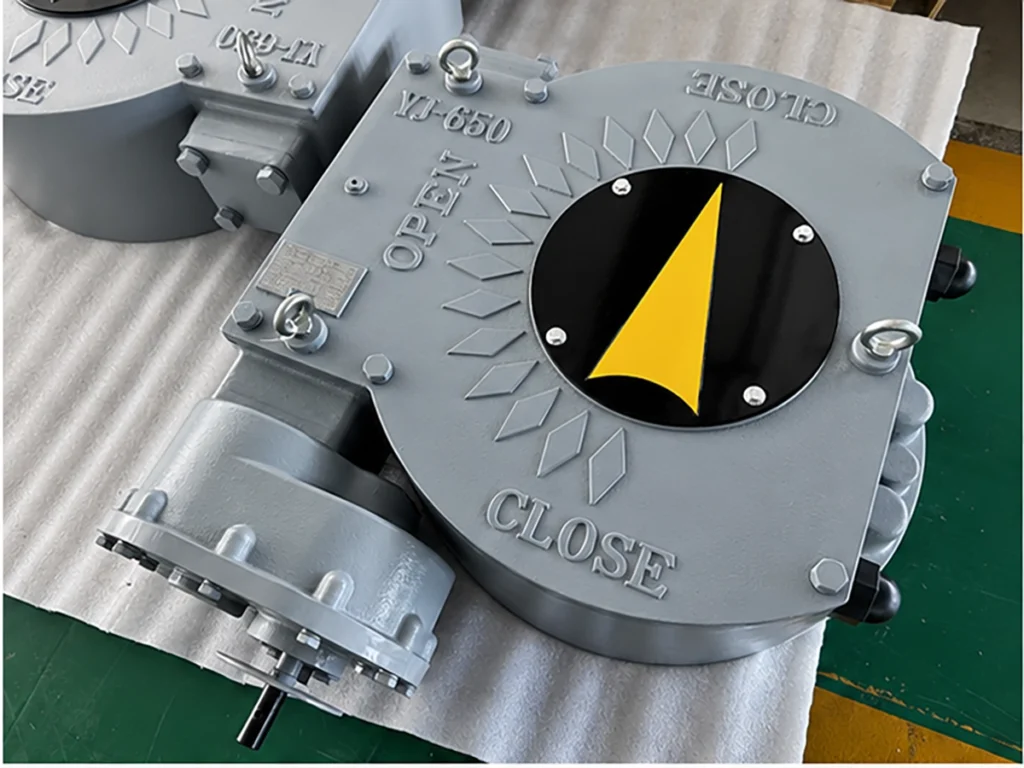
I see buyers lose time when this choice looks simple. A wrong operator can raise cost, delay projects, and create unsafe valve operation.1
I choose between manual and actuated operators by comparing total cost, operating risk, access, frequency, torque, speed, safety rules, and control needs. Manual suits simple and rare operation. Actuated suits remote, fast, precise, or automated operation.2
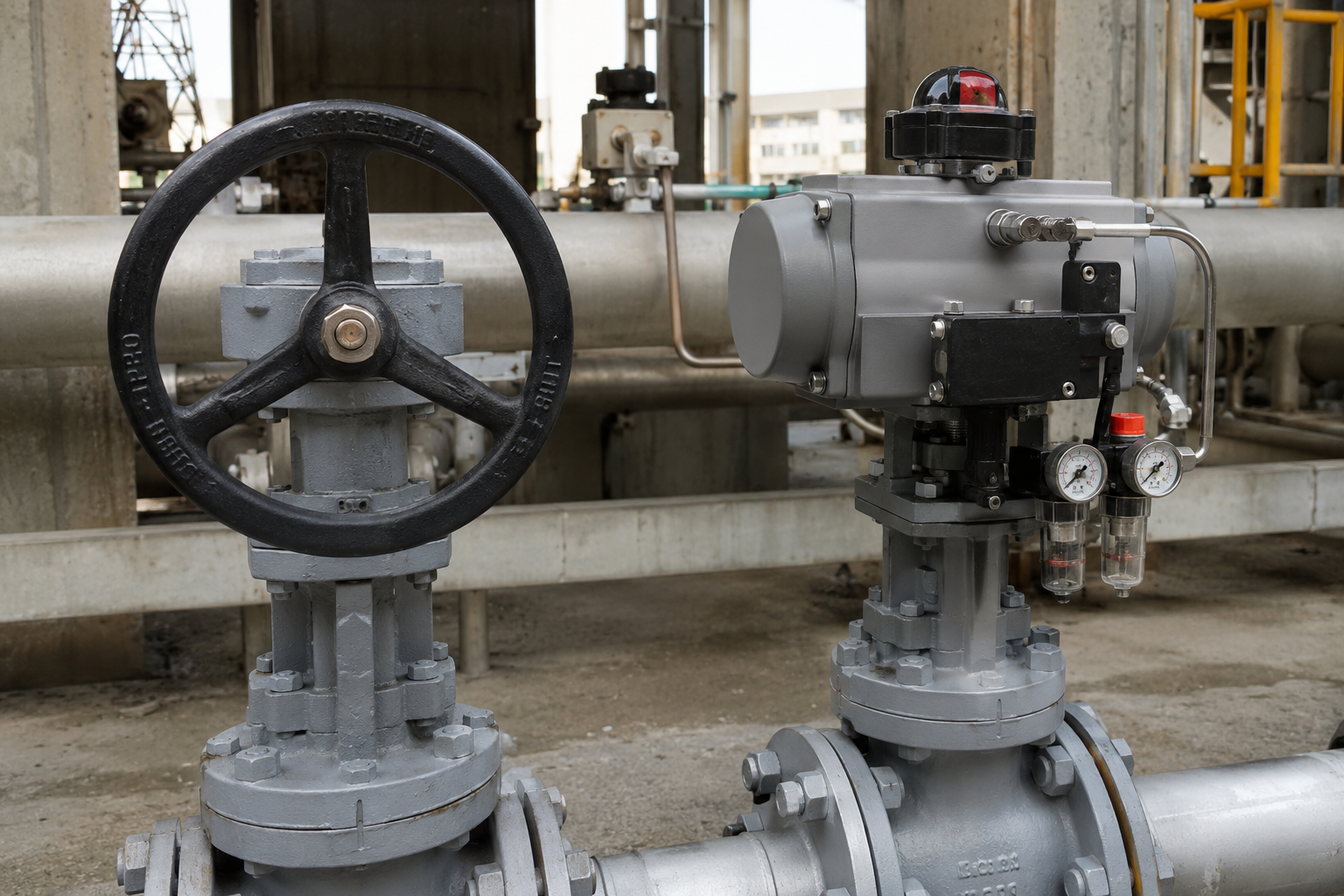
A common question I get from valve manufacturers and EPC buyers is, “Should I use a manual gearbox or an actuated operator?” I usually do not answer with one product first. I first ask where the valve will work, how often it will move, who will operate it, and what failure would cost. I have seen many purchasing discussions focus only on the first price. I think that is too narrow. The better question is about the full life of the valve package, from installation to operation to maintenance3. If we keep that view, the choice becomes much clearer.
How Should I Reframe Manual vs Actuated Operators?
I see many teams compare price first. That can hide real risk. A low initial cost can become expensive after installation.
I reframe the choice as a total cost and risk question. I compare purchase price, operation labor, maintenance, downtime, safety needs, control needs, and site limits before I decide whether manual or actuated operation is better.
I Do Not Treat This as a Simple Product Choice
When a buyer asks me for a manual operator or an actuated operator, I often ask several questions before I quote. I ask how many times the valve opens each day. I ask whether the valve is in a safe and easy place. I ask whether the operator must support ISO 5211 mounting4. I ask whether the valve must connect with a plant control system. These questions matter because the operator is not just an accessory. It controls how the valve behaves in real work.
I Look at Cost Over Time
A manual gearbox often has a lower first cost. It can also have low maintenance needs. That does not always mean it is the cheapest choice over ten years. If the valve must be operated many times per shift, labor cost grows. If the valve is high above the floor or in a hazardous area, access cost and safety risk grow. An actuated operator has a higher first cost. It may reduce labor, improve response time, and reduce exposure to danger.5
| Question I Ask | Why I Ask It | What It Usually Points To |
|---|---|---|
| How often will the valve operate? | Operation frequency changes labor cost | Manual for rare use, actuated for frequent use |
| Is the valve easy to reach? | Access affects safety and time | Manual for easy access, actuated for poor access |
| Is fast response required? | Speed can protect the process | Actuated when timing matters |
| Is power available and reliable? | Power changes design risk | Manual when power is not available |
| Is remote control needed? | Control integration changes value | Actuated when system control is required |
I Focus on Risk, Not Only Price
I have found that technical buyers usually need to justify the choice to other people inside their company. They may need to explain it to engineering, procurement, quality, or project teams. A clear risk table helps. It shows why a higher first cost may be reasonable. It also shows why a manual operator may be the smarter choice when simple operation and high reliability matter more than automation.
When Does a Manual Operator Make Better Sense?
I see manual operators dismissed as cheap choices. That view can be wrong. In some valve duties, simple design is the safer choice.
I choose a manual operator when the valve is operated rarely, power is limited, the site is harsh, the access is safe, and the project values simple maintenance and long service life.
I Use Manual Operation When Simplicity Has Value
Manual operation is not only a budget option. I often treat it as a deliberate engineering choice. A worm gearbox on a butterfly valve or ball valve can give controlled quarter-turn operation.6 A bevel gearbox on a gate valve, sluice gate, or globe valve can reduce handwheel effort for multi-turn movement.7 The value is simple. The operator has fewer control parts. It does not need power.8 It can keep working in sites where electrical systems are not ideal.
I Consider Operation Frequency First
If a valve only moves during maintenance, commissioning, isolation, or rare process changes, a manual operator can be very practical. The buyer does not pay for automation that the site will not use. The maintenance team also has a clear and familiar way to operate the valve. This matters in remote water, chemical, mining, or utility areas where the site may prefer strong mechanical parts.
| Manual Operator Strength | Business Meaning | Typical Application Context |
|---|---|---|
| Lower system complexity | Fewer parts to maintain | Isolation valves and standby valves |
| No power requirement | Useful in remote or simple sites | Outdoor lines and non-powered stations |
| Strong mechanical control | Better feel during slow operation | Large butterfly valves and gate valves |
| Lower initial cost | Easier budget control | Projects with many low-frequency valves |
| Simple spare parts planning | Lower support burden | OEM valve packages and distributor stock |
I Also Check the Hidden Limits
I do not recommend manual operation when the site needs fast action, repeated movement, remote control, or strict interlock logic. I also check torque carefully. A manual gearbox must match the valve torque with a safe margin. The handwheel effort must stay reasonable. If the operator is too hard to turn, the site may add long levers or use unsafe methods. That creates risk. For this reason, I prefer to discuss valve type, size, pressure class, seat material, and expected torque before I confirm the gearbox model.
I See Manual as Robust, Not Basic
In my work with valve manufacturers, I see manual gearboxes used on serious industrial valves. The reason is not always price. The reason is often trust. A mechanical gearbox can be simple to inspect, simple to install, and easy to match with standard valve interfaces. For OEM buyers, this can reduce after-sales problems. For distributors, it can reduce product variation. For EPC teams, it can support simple site handover when automation is not required.
When Does an Actuated Operator Justify Its Cost?
I see teams avoid actuation because the first cost is higher. That can create slow response, more labor, and more site exposure.
I choose an actuated operator when the valve needs remote operation, frequent movement, fast response, position control, process system integration, or safer operation in difficult locations.
I Connect Actuation to Operational Gain
An actuated operator is not just a motor added to a valve. It changes how the valve fits into the plant. It can allow remote open and close commands. It can support signal feedback. It can help the control room know valve position. It can reduce the need for workers to climb platforms, enter hot areas, or walk long pipeline routes. These gains may be more important than the actuator price.
I Think About Frequency and Speed
If a valve operates many times per day, manual work becomes a process cost. It also creates variation. One operator may open a valve faster than another. One person may stop before the correct position. An actuated operator can give more repeatable movement. In process systems, that can support stable operation. In emergency or interlock duties, speed can be critical. I would not judge this only by torque or voltage. I would ask what the process loses when the valve does not move at the right time.
| Actuated Operator Value | Business Result | Where I Usually See It |
|---|---|---|
| Remote operation | Less field labor | Large plants and distributed sites |
| Faster response | Lower process risk | Emergency shutoff or process change |
| Position feedback | Better control visibility | SCADA, DCS, and PLC systems |
| Repeatable movement | More stable operation | Frequent open-close duties |
| Safety integration | Better rule compliance | Hazardous or hard-to-access areas |
I Check Interface and Control Needs Early
For valve manufacturers and actuator manufacturers, interface details matter. I check whether the valve top flange follows ISO 5211. I check stem dimensions, torque, rotation angle, and mounting height. I also check whether a worm gearbox is needed between the valve and actuator to increase torque or reduce speed. For multi-turn valves, I check whether a bevel gearbox fits the actuator output and valve stem design. These details can decide whether installation is smooth or painful.
I Do Not Ignore Maintenance and Complexity
Actuation adds value, but it also adds parts. There may be motors, limit switches, torque switches, wiring, controls, seals, and local hand override systems.9 The site must be ready to maintain them. The project team must confirm power supply, control signals, enclosure rating, duty cycle, and environmental needs. If the site cannot support these needs, actuation may create problems. This is why I do not say actuated is always better. I say it is better when its control value is greater than its added cost and support needs.
What Factors Should I Compare Before I Specify the Operator?
I see unclear specifications cause rework. A missing torque value or interface detail can delay orders and create fit-up problems.
I compare operating frequency, valve access, torque, speed, fail-safe needs, power availability, control integration, environment, interface standards, and maintenance ability before I specify the operator.
I Start With the Valve Duty
I first ask what the valve does in the system. A butterfly valve used for simple isolation has different needs from a control-related valve in a process line. A gate valve on a water project has different needs from a valve in a chemical plant. The duty tells me whether the operator must be simple, strong, fast, or connected to a control system. It also tells me how much risk the buyer carries if the valve cannot move on time.
I Review Torque With a Safety Margin
Torque is one of the first technical points I check. I do not only look at nominal torque. I also ask about break torque, running torque, seating torque, pressure condition, temperature, and media effect. If a valve sits in one position for a long time, starting torque may be higher.10 If the media causes buildup or corrosion, torque may rise over time.11 A gearbox or actuator should not be selected at the edge of its capacity.
| Specification Factor | What I Ask the Buyer | Why It Matters |
|---|---|---|
| Valve type | Is it butterfly, ball, gate, globe, or gate? | It decides quarter-turn or multi-turn operation |
| Torque | What is the maximum required torque? | It prevents undersizing and failure |
| Operation frequency | How often will it move? | It affects manual labor and actuator duty |
| Access | Can a person safely reach it? | It affects safety and operating time |
| Speed | How fast must the valve move? | It affects process response |
| Control | Is remote or feedback signal needed? | It affects actuator selection |
| Environment | Is it outdoor, dusty, wet, or corrosive? | It affects material and protection level |
| Interface | Does it follow ISO 5211 or other standards? | It affects fit and assembly |
I Ask About Safety and Fail-Safe Needs
Safety rules can change the decision quickly. Some systems need fail-open, fail-close, or fail-in-place behavior. Some sites need local manual override even when the main operator is actuated. Some sites need lockable handwheels or position indicators. I do not treat these as small options. They affect the operator design and the final approval process. For EPC projects, this can also affect documentation, inspection, and handover.
I Match the Decision to the Buyer Type
A valve manufacturer may care most about repeatable fit, standard interfaces, and stable supply. An OEM valve company may care about long-term model consistency and private label support. A distributor may care about documentation, packaging, and spare parts. An EPC buyer may care about project compliance and clear technical data. I adjust the discussion based on that role. The operator choice is still technical, but the buying risk is different for each customer type.
How Can I Build a Practical Selection Process?
I see many teams jump to quotation too early. That can create wrong models, extra emails, and unclear responsibility.
I build a practical selection process by collecting valve data, defining operation needs, checking site limits, comparing manual and actuated cost over time, and confirming interface and documentation before ordering.
I Use a Step-by-Step Method
When I support a buyer, I prefer a short and clear process. I do not want the buyer to send only valve size and ask for a quick price. That may work for a repeat item, but it is weak for a new project. I need enough information to avoid wrong selection. I usually ask for valve type, valve size, pressure class, torque, stem drawing, flange standard, operation angle or turns, site condition, and control need. This information helps both sides make a safer decision.
I Separate Must-Have Needs From Nice-to-Have Needs
Some needs are fixed. The valve torque must be covered. The interface must fit. The operator must survive the environment. Other needs may be flexible. The buyer may prefer faster operation, but the process may not require it. The buyer may prefer automation, but the site may only need rare isolation. When I separate these points, the decision becomes less emotional and more practical.
| Selection Step | Manual Choice Check | Actuated Choice Check |
|---|---|---|
| Define valve duty | Is occasional hand operation acceptable? | Is remote or automatic operation required? |
| Confirm torque | Can gearbox ratio keep hand effort safe? | Can actuator output cover torque with margin? |
| Check site access | Can staff reach it safely? | Does remote operation reduce risk? |
| Review power | Is no-power operation important? | Is power stable and approved? |
| Confirm interface | Does the gearbox fit valve top works? | Does actuator and gearbox stack fit? |
| Review maintenance | Can site maintain simple mechanical parts? | Can site support electrical or control parts? |
| Compare total cost | Does low complexity save cost? | Does labor and risk reduction justify cost? |
I Recommend Documentation Before Purchase
Technical documentation reduces later conflict. I like to confirm drawings, torque data, mounting dimensions, rotation direction, material notes, protection needs, and packing requirements before mass production. For OEM valve companies, this supports repeat orders. For EPC projects, it supports approval and inspection. For distributors, it helps sales teams answer questions without waiting for the factory each time.
I Keep the Door Open for Hybrid Solutions
Sometimes the answer is not only manual or only actuated. A valve may use a manual gearbox now, with an interface that allows later actuator mounting. A motorized operator may also include manual override. A large quarter-turn valve may use a worm gearbox with an electric actuator to reduce required actuator size. A multi-turn valve may use a bevel gearbox between the actuator and stem. I find these hybrid designs useful when the project has future automation plans, limited budget now, or high torque needs.
Conclusion
I choose the right valve operator by matching risk, cost, access, torque, safety, and control needs to the real working conditions.
"Safety and reliability improvements of valves and actuators for the ...", https://www.academia.edu/110745534/Safety_and_reliability_improvements_of_valves_and_actuators_for_the_offshore_oil_and_gas_industry_through_optimized_design. Engineering literature on valve actuation identifies actuator selection as a factor in valve reliability, maintenance requirements, and operational safety, supporting the claim that an unsuitable operator can create lifecycle cost and safety consequences. Evidence role: general_support; source type: paper. Supports: A neutral engineering or safety source should support that actuator/operator selection affects valve reliability, maintenance burden, and safe operation.. Scope note: This would provide general engineering support rather than proof of a specific project delay or cost increase. ↩
"[PDF] Valves - West Virginia University", https://actat.wvu.edu/files/d/d353ea42-6626-46eb-92c3-4d4dbacbe902/valves.pdf. Technical valve-control references distinguish manually operated valves from actuated valves by the latter's ability to provide powered, remote, or automated motion, supporting this general selection distinction. Evidence role: expert_consensus; source type: education. Supports: A technical education or engineering source should explain the typical use cases for manual valves and actuated valves.. Scope note: The source would support the general principle, while the correct choice still depends on site-specific duty, torque, safety, and control requirements. ↩
"[PDF] Pump Life Cycle Costs: A Guide to LCC Analysis for Pumping Systems", https://www1.eere.energy.gov/manufacturing/tech_assistance/pdfs/pumplcc_1001.pdf. Lifecycle-cost and asset-management guidance treats equipment cost as including acquisition, operation, maintenance, and related support costs, supporting evaluation of valve operators beyond purchase price alone. Evidence role: mechanism; source type: institution. Supports: A lifecycle costing or asset-management source should support evaluating equipment decisions across acquisition, operation, maintenance, and disposal phases.. Scope note: This supports the cost-evaluation framework rather than giving valve-operator-specific cost values. ↩
"[PDF] INTERNATIONAL STANDARD ISO 5211", https://cdn.standards.iteh.ai/samples/62594/99f2c2aed9e24049bf1985c541d19143/ISO-5211-2017.pdf. ISO 5211 specifies dimensions and requirements for the attachment of part-turn actuators to industrial valves, supporting its relevance as a valve-actuator mounting interface standard. Evidence role: definition; source type: institution. Supports: A standards source should define ISO 5211 as covering attachments between part-turn valve actuators and valves.. Scope note: The standard establishes interface dimensions and requirements, not the suitability of any particular gearbox or actuator model. ↩
"OSHA Technical Manual (OTM) - Section IV: Chapter 4 - OSHA", http://www.osha.gov/otm/section-4-safety-hazards/chapter-4. Occupational-safety and process-automation guidance recognizes remote operation as a means of reducing personnel exposure to hazardous locations, and powered actuation can shorten or standardize response compared with manual field operation. Evidence role: mechanism; source type: government. Supports: A safety or automation source should support that remote or automated operation can reduce the need for personnel to access hazardous areas and can improve response consistency.. Scope note: The degree of labor reduction or response improvement depends on the specific valve duty, actuator sizing, control architecture, and site procedures. ↩
"(PDF) Worm Gear vs. Traveling Nut Type actuators - Academia.edu", https://www.academia.edu/12470160/Worm_Gear_vs_Traveling_Nut_Type_actuators. Mechanical engineering references describe worm gearing as a compact speed-reducing transmission, and valve references identify butterfly and ball valves as quarter-turn valves, supporting the use of worm gearboxes for controlled quarter-turn operation. Evidence role: mechanism; source type: education. Supports: A mechanical or valve engineering source should explain that worm gears transmit rotary motion with speed reduction and are used in quarter-turn valve operation.. Scope note: This supports the operating principle; actual suitability depends on torque, service conditions, and the valve manufacturer's design. ↩
"Multi Turn Bevel Gearbox Manufacturer & Supplier in USA", https://www.viralindustriesindia.com/multi-turn-bevel-gearbox-manufacturer/. Gear-mechanism references describe bevel gears as transmitting rotary motion between intersecting shafts and, when used with reduction ratios, reducing required input effort; multi-turn valve references identify gate and globe valves as requiring repeated stem rotation. Evidence role: mechanism; source type: education. Supports: A mechanical engineering or valve reference should support that bevel gearing can change direction and provide mechanical advantage in multi-turn valve operation.. Scope note: This is contextual support for the mechanism, not confirmation of the exact torque reduction for any particular gearbox. ↩
"Valve actuator - Wikipedia", https://en.wikipedia.org/wiki/Valve_actuator. Valve references define manual operation as direct human operation by handwheel, lever, or gearbox, supporting the statement that such operators do not require external power for normal actuation. Evidence role: definition; source type: encyclopedia. Supports: A neutral reference should define manual valve operation as human-powered rather than powered by an actuator system.. Scope note: This does not address auxiliary powered devices or site-specific accessories that may be installed with a manual valve. ↩
"[PDF] 0421 - E112 - Motor Operated Valves Course - 05", https://www.nrc.gov/docs/ml1134/ml11347a392.pdf. Technical descriptions of electric valve actuators commonly identify motors, limit or torque switches, control wiring, enclosures, seals, and manual override mechanisms as actuator subassemblies, supporting the article's claim that actuation adds maintainable components. Evidence role: definition; source type: institution. Supports: A technical institution or engineering reference should describe common electric actuator components such as motors, limit switches, torque switches, wiring, and manual override.. Scope note: The exact component set varies by actuator type, duty class, certification, and manufacturer. ↩
"[PDF] 3.3 Design Basis Valve Stem Torque", https://www.nrc.gov/docs/ml1134/ml11347a386.pdf. Valve engineering literature distinguishes breakaway or starting torque from running torque and notes that static friction, seating forces, or sticking can make initial movement require greater torque than continued travel. Evidence role: mechanism; source type: paper. Supports: A valve engineering source should support that breakaway or starting torque can exceed running torque, especially after static service or sticking effects.. Scope note: The source would support the mechanism generally; the magnitude depends on valve type, materials, pressure, temperature, media, and time in service. ↩
"[PDF] Effect of a Simulated Butterfly Valve on the Erosion-Corrosion Rate ...", https://vtechworks.lib.vt.edu/bitstreams/33801f70-7670-44d3-946f-6ec27ad28c12/download. Maintenance and corrosion literature describes deposits, fouling, and corrosion products as causes of sticking, friction increase, or impaired valve movement, supporting the possibility of rising operating torque over time. Evidence role: mechanism; source type: research. Supports: A corrosion, fouling, or valve maintenance source should support that deposits and corrosion can impair movement and increase force or torque required for operation.. Scope note: This supports the degradation mechanism but does not quantify torque increase for a particular medium or valve design. ↩