Wrong gearbox sourcing creates valve assembly delays. A cheap quote looks safe first. The real cost appears when torque, interface, or sealing fails.
I find a reliable Chinese quarter-turn worm gearbox manufacturer by checking application fit, drawing confirmation, process control, inspection evidence, and batch consistency, not by comparing price alone. Price matters only after valve type, torque, interface, environment, and test requirements are clear.
I have handled many overseas inquiries for quarter-turn worm gearboxes. I have seen buyers ask for price first, then send drawings later, and then discover that the gearbox does not match the valve or actuator. I also have seen smooth sample orders become difficult repeat orders because the sample was checked, but the batch control was not clear. In 2026, I would treat gearbox sourcing as a risk-control job. I would not treat it as a fast price comparison.
Why Should I Not Start With The Lowest Price?
A low price can hide missing details. I may save money on paper, but I may lose time when the gearbox does not fit the valve.
I start with risk, not price. I first confirm torque, valve type, interface, use condition, protection level, and inspection needs. I compare price only after the technical base is clear.
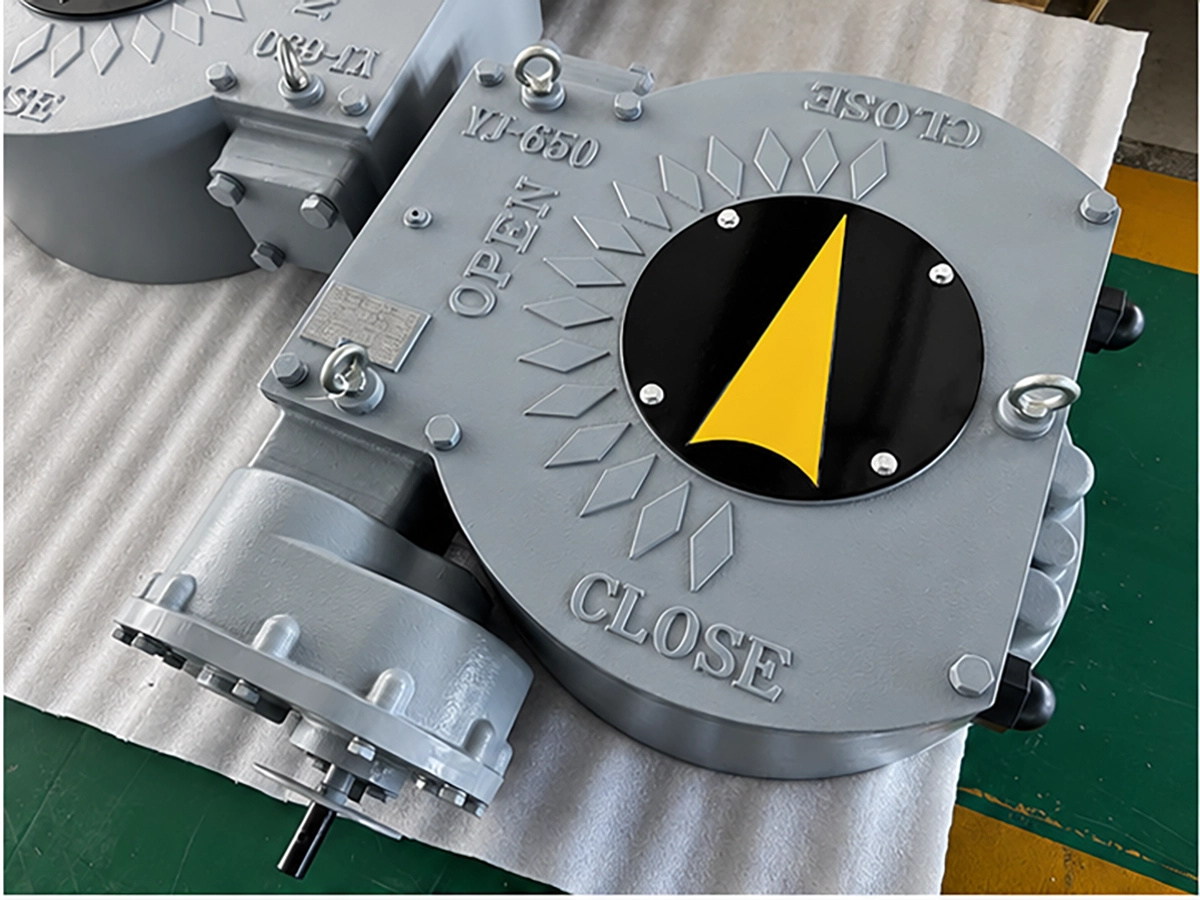
When I receive an inquiry that only says “please quote this model,” I know the sourcing risk is still open. A model number can mean different things in different factories. It may not show the real output torque, flange details, input connection, handwheel size, travel stop range, or sealing structure. A quarter-turn worm gearbox is often used on butterfly valves, ball valves, plug valves, and dampers.1 These valves may look simple from the outside, but the operating load can be very different.
I would use price as the last comparison point. I would first ask whether the gearbox can do the valve task in a stable way.
| Price-first question | Risk-control question |
|---|---|
| What is your best price? | What valve type will the gearbox operate? |
| Can you match this model? | Can you confirm torque and safety margin? |
| Do you have a certificate? | Can you provide process and inspection evidence? |
| Can you ship fast? | Can you repeat the same quality in batch orders? |
In my experience, the lowest price is only meaningful when two suppliers are quoting the same technical condition. If one supplier assumes indoor use and another supplier quotes for outdoor IP67 use, the price comparison is not fair. If one supplier uses better process control for worm and gear parts, the early price may look higher, but the long-term assembly risk may be lower.
What Application Details Should I Confirm Before Asking For A Quotation?
Missing application details create wrong gearbox selection. I have seen interface mismatches happen because flange, shaft, or actuator details were not confirmed early.
I confirm valve type, required torque, operation angle, operation frequency, safety margin, ISO 5211 flange2, stem connection, actuator interface, site environment, and IP67 or IP68 needs before quotation.
I would not ask a manufacturer to quote only from a photo. A photo helps, but it cannot replace drawings and working conditions. For a quarter-turn worm gearbox, I need to know whether the valve is a butterfly valve, ball valve, or another 90° valve. I also need to know if the gearbox must work beyond 90°, such as 180° or 360° operation. The output torque must match the valve torque with a reasonable safety margin.3 The safety margin should be discussed with the valve maker because the valve design, seat material, pressure, and service condition affect torque.4
I also pay close attention to interface dimensions. During drawing confirmation, I often see problems from missing details.
| Detail I confirm | Why I confirm it |
|---|---|
| Valve type | Different valves create different load patterns |
| Output torque | The gearbox must operate the valve safely |
| ISO 5211 flange | The gearbox must fit the valve top flange |
| Stem bore and keyway | The gearbox must connect to the valve stem |
| Input connection | The gearbox must match handwheel or actuator needs |
| Operation angle | Stops must match the valve travel |
| Site environment | Outdoor, corrosive, or submerged use changes sealing needs |
| Protection level | IP67 or IP68 may be needed for harsh service5 |
I also ask about manual or electric operation. If an electric actuator will be mounted, I confirm the actuator interface and input torque. I do this before price discussion because the gearbox is part of a complete valve assembly. A small mismatch can stop final assembly.
What Evidence Should I Request Beyond Certificates And Samples?
A certificate and a sample may look reassuring. I still need evidence from production because a good sample does not prove batch quality6.
I ask for inspection and process evidence such as material reports, hardness checks, heat treatment records, worm machining checks, performance testing, and sealing test reports when the application requires them.
I treat certificates as entry-level signals. ISO 9001 can show that a factory has a quality management system7, but I still need to understand how the specific gearbox is made and checked. A sample can show appearance, basic fit, and operation feel. But a sample does not show whether the next 500 or 5,000 pieces will remain the same. For industrial valve gearboxes, I care about the parts that affect torque transfer, fit, and service life.
I would request evidence that matches the project risk. I would not ask for every report for every low-risk order. I would ask for the reports that matter for the valve use.
| Evidence I may request | What it helps me check |
|---|---|
| Material composition report | Basic material traceability for critical parts |
| EN 10204 3.1B report when applicable8 | Documented material confirmation for project orders |
| Hardness test | Heat treatment or nitriding condition |
| Metallographic inspection when needed | Internal structure after process control |
| Worm grinding or machining check | Contact quality and smooth operation |
| Output torque or performance test | Functional capacity under defined condition |
| Housing sealing test | Protection for outdoor or wet environments |
| Final dimension inspection | Assembly fit with valve and actuator |
I try to keep this practical. I do not use metallurgy terms just to sound technical. I care because weak process control can appear later as tight operation, loose fit, early wear, poor sealing, or assembly rejection.9 Good evidence helps me separate a real manufacturer from a trader who only passes a model number to another factory.
How Do I Judge Batch Consistency Before Repeat Orders?
A good sample can create false confidence. The real sourcing problem begins when the second batch feels different from the approved sample.
I judge batch consistency by checking casting control, machining stability, gear heat treatment, sealing parts, assembly process, inspection criteria, and documented acceptance rules before repeat orders.
In repeat valve production, consistency is often more important than one excellent sample. A valve manufacturer needs gearboxes that assemble the same way each time. The flange must fit. The stem connection must match. The travel stop must adjust within range. The handwheel or actuator input must feel stable. The coating and sealing must follow the same requirement. If every batch changes slightly, the valve factory loses time on rework and sorting.
I look at the process points that can create batch changes.
| Process point | Possible batch risk |
|---|---|
| Ductile iron casting | Material strength and housing accuracy may vary |
| Gear machining | Tooth contact and backlash may change |
| Worm heat treatment10 | Hardness and wear resistance may be unstable |
| Nitriding or surface treatment | Surface condition may not remain consistent |
| Shaft and bore machining | Assembly fit may become too tight or too loose |
| Seal installation11 | IP protection may fail in wet use |
| Coating process | Corrosion protection may vary by batch |
| Final inspection | Defects may pass if criteria are unclear |
I prefer to define acceptance rules before repeat orders. I would confirm critical dimensions, appearance limits, marking, packaging, torque test method, and sampling plan.12 I also like to compare the approved sample with mass production parts. This simple step prevents many disputes. In my own work, I have learned that batch stability comes from boring daily controls, not from a beautiful brochure.
Why Does Technical Communication Matter As Much As The Quotation?
Poor communication is a technical risk. If a supplier avoids drawings or test details, I cannot know what they will actually produce.
I judge a manufacturer by the questions they ask, the drawings they confirm, the limits they explain, and the documents they provide before production starts.
I have seen many sourcing problems begin with polite but shallow communication. A supplier may reply fast and quote low. But if they do not ask about valve type, torque, ISO 5211 flange, stem connection, actuator interface, environment, or inspection needs, I see a warning sign. Fast response is useful, but correct response is more useful.
A reliable manufacturer should be willing to discuss details before production. They should also say when something is unclear. I respect a supplier more when they ask for a drawing than when they guess from a model name.
| Communication behavior | My interpretation |
|---|---|
| Supplier asks for valve and actuator drawings | They understand assembly risk |
| Supplier confirms torque and safety margin | They focus on application fit |
| Supplier explains IP67 or IP68 options | They understand environment risk |
| Supplier provides inspection documents | They can support project records |
| Supplier only says “same as your model” | I treat this as incomplete confirmation |
| Supplier avoids batch inspection rules | I see possible repeat-order risk |
| Supplier refuses to discuss tolerances | I expect assembly problems later |
I also pay attention to how a manufacturer handles changes. In real projects, a buyer may adjust drawings, add marking needs, change coating, or require extra documents. A good manufacturer should record these changes clearly. They should update drawings or confirmation sheets before production. This is not just office work. It protects both sides from wrong parts.
How Can I Build A Practical Supplier Check Process In 2026?
A loose supplier check creates hidden risk. I may receive a gearbox that looks correct, but I may miss the parts that affect valve performance.
I build my check process in stages: application review, drawing confirmation, sample approval, process evidence review, batch inspection agreement, and after-sales feedback tracking.
I would not make supplier selection too complicated, but I would make it structured. A practical process helps a purchasing team and an engineering team look at the same facts. It also helps a supplier understand what must be controlled. For quarter-turn worm gearboxes, I start with the valve task. I then move to drawings and interfaces. After that, I check sample performance and production control. I do not jump from catalog to bulk order unless the risk is very low.
I use a step-by-step view like this.
| Step | What I check | Why I check it |
|---|---|---|
| 1. Application review | Valve type, torque, frequency, site condition | I need the correct gearbox selection |
| 2. Drawing confirmation | Flange, bore, keyway, input, travel stops | I need stable assembly fit |
| 3. Sample approval | Operation feel, dimensions, coating, marking | I need a physical reference |
| 4. Process evidence | Material, hardness, machining, sealing tests | I need proof beyond appearance |
| 5. Batch agreement | Inspection plan and acceptance criteria | I need repeatable production |
| 6. Feedback tracking | Assembly issues and field comments | I need long-term improvement |
I also keep records from each stage. I keep drawings, approved samples, inspection reports, and change notes. When repeat orders happen, I compare new production with the approved standard. This habit saves time. It also makes discussion easier if a problem appears. In my view, a reliable Chinese manufacturer is not only the one who can produce a gearbox. It is the one who can keep the same technical promise through repeated production.
Conclusion
I choose a Chinese quarter-turn worm gearbox manufacturer by controlling risk, confirming application details, checking evidence, and protecting batch consistency.
"Ball valve - Wikipedia", https://en.wikipedia.org/wiki/Ball_valve. A general reference on valve actuators and quarter-turn valves supports that butterfly, ball, and plug valves are commonly operated through quarter-turn actuation, with gear operators used where mechanical advantage is needed. Evidence role: general_support; source type: encyclopedia. Supports: A neutral reference should show that butterfly, ball, and plug valves are quarter-turn valves and that gear operators or actuators are used to operate them.. Scope note: This would provide contextual support for common applications rather than a market-wide measurement of how often worm gearboxes are used on each device type. ↩
"ISO 5211 2001 Industrial valves Part turn actuator - Academia.edu", https://www.academia.edu/34877034/ISO_5211_2001_Industrial_valves_Part_turn_actuator. ISO 5211 defines attachment dimensions for part-turn actuators mounted on industrial valves, providing a standardized basis for flange and drive-interface compatibility. Evidence role: definition; source type: institution. Supports: An ISO page or standards summary should identify ISO 5211 as the standard for part-turn actuator attachments to industrial valves.. ↩
"[PDF] Motor Operated Valves Course - 07- Section 7.1 Operating Margin.", https://www.nrc.gov/docs/ML1134/ML11347A424.pdf. Valve-actuator sizing guidance generally specifies that actuator or gearbox output torque should exceed the valve's required operating torque to account for service variation and uncertainty. Evidence role: expert_consensus; source type: institution. Supports: A standards body, engineering association, or valve-actuator sizing guide should support that actuator or gearbox torque capacity is selected above the valve's required operating torque.. Scope note: The exact margin may vary by valve type, service condition, and project specification, so the source should not be treated as proving one universal safety factor. ↩
"[PDF] 3.3 Design Basis Valve Stem Torque", https://www.nrc.gov/docs/ml1134/ml11347a386.pdf. Technical literature on valve operating torque reports that torque demand depends on valve design and sealing contact conditions, including seat material, pressure loading, and service environment. Evidence role: mechanism; source type: paper. Supports: A technical paper or valve engineering source should explain that operating torque changes with valve geometry, sealing materials, pressure differential, lubrication, temperature, or service medium.. Scope note: A source may discuss one valve family, such as ball or butterfly valves, so its support may be mechanistic rather than directly covering every quarter-turn valve. ↩
"IP code - Wikipedia", https://en.wikipedia.org/wiki/IP_code. IEC 60529 defines IP codes for enclosure ingress protection; IP67 and IP68 denote dust-tight protection with specified levels of protection against water immersion. Evidence role: definition; source type: institution. Supports: A source from IEC or a standards institution should define IP67 and IP68 as ingress-protection ratings for dust-tightness and water immersion resistance.. Scope note: The standard defines test classifications, but it does not by itself prove that a particular gearbox design will maintain that rating in service. ↩
"Statistical Process Monitoring for Autocorrelated Data | NIST", https://www.nist.gov/programs-projects/statistical-process-monitoring-autocorrelated-data. Statistical process control literature explains that manufacturing output is subject to process variation, so a single conforming sample cannot establish that later production lots will remain conforming without continued control and inspection. Evidence role: mechanism; source type: government. Supports: A quality-control reference should explain that production processes vary and that ongoing process control or sampling is needed to assess batch quality.. Scope note: This supports the general quality-control principle rather than providing gearbox-specific defect-rate evidence. ↩
"ISO 9001:2015 - Quality management systems — Requirements", https://www.iso.org/standard/62085.html. ISO describes ISO 9001 as a standard that specifies requirements for a quality management system, including consistent provision of products and services and continual improvement. Evidence role: definition; source type: institution. Supports: An ISO source should state that ISO 9001 specifies requirements for a quality management system.. Scope note: ISO 9001 certification supports the existence of a management system, but it does not verify the performance of a specific gearbox batch. ↩
"What is the Difference Between EN 10204 3.1 and 3.2 Inspection ...", https://hollandapt.com/what-is-the-difference-between-en-10204-3-1-and-3-2-inspection-certificates/. EN 10204 type 3.1 inspection documentation is used to certify that supplied metallic products comply with order requirements and includes test results validated by the manufacturer’s authorized inspection representative. Evidence role: definition; source type: institution. Supports: A standards or certification source should explain that EN 10204 type 3.1 inspection certificates provide documented test results for supplied metallic products.. Scope note: The document supports material conformity reporting, but it does not independently prove functional performance of the assembled gearbox. ↩
"NIST/SEMATECH Engineering Statistics Handbook Chapter 6", https://www.nist.gov/publications/nistsematech-engineering-statistics-handbook-chapter-6-process-or-product-monitoring. Engineering statistics references on process control show that uncontrolled process variation can produce dimensional and functional nonconformities, which in mechanical assemblies may appear as poor fit, inconsistent operation, or premature rejection. Evidence role: mechanism; source type: government. Supports: A process-control source should support that uncontrolled manufacturing variation can cause dimensional nonconformance and functional defects.. Scope note: The source would support the causal quality-control mechanism, not necessarily each named gearbox defect in the article. ↩
"A review of the corrosion and wear resistance mechanisms of gas ...", https://pmc.ncbi.nlm.nih.gov/articles/PMC12992990/. Materials research on gear steels reports that heat treatment and surface-hardening processes alter hardness and wear behavior, which are relevant to the durability of worm and gear contact surfaces. Evidence role: mechanism; source type: paper. Supports: A materials or tribology paper should show that heat treatment or surface treatment changes hardness and wear resistance in gear steels or worm-gear components.. Scope note: A study may use specific alloys or test conditions, so it should be cited as mechanistic support rather than direct proof for every gearbox material. ↩
"IP Ratings for Sealed Enclosures - Stockwell Elastomerics", https://www.stockwell.com/ip-ratings-for-sealed-enclosures/. Ingress-protection guidance associated with IEC 60529 indicates that water and dust protection depends on the enclosure’s sealing integrity, including joints and penetrations where seals or gaskets are installed. Evidence role: mechanism; source type: institution. Supports: A standards or engineering source should explain that enclosure ingress protection depends on effective sealing at joints, covers, shafts, or penetrations.. Scope note: The IP standard defines test outcomes and does not prescribe every seal-installation method for a valve gearbox. ↩
"6.2.1. What is Acceptance Sampling?", https://www.itl.nist.gov/div898/handbook/pmc/section2/pmc21.htm. Acceptance-sampling standards such as ISO 2859-1 provide structured procedures for inspecting production lots by defined sampling plans and acceptance criteria. Evidence role: expert_consensus; source type: institution. Supports: A recognized inspection or sampling standard should support using defined sampling plans and acceptance criteria for lot inspection.. Scope note: Such standards support the inspection framework, while the specific dimensions, markings, packaging rules, and torque tests must still be set by the project specification. ↩