Gear transmission efficiency often looks like a simple percentage, but I have seen it create real selection risk when buyers use it without context. The problem is not the question itself. The problem is that a single number can hide torque demand, reduction ratio, load condition, gearbox structure, and reliability limits.
Gear transmission efficiency measures how much input power or torque is effectively transferred through a gearbox after mechanical losses.1 In valve gearbox selection, I do not treat it as a fixed supplier comparison number. I evaluate it together with output torque, reduction ratio, load condition, safety factor, gearbox type, lubrication, and long-term operating risk.
In many gearbox inquiries, customers ask me for efficiency first. However, the real selection issue is often not efficiency alone. It is usually torque mismatch, unclear valve load, incorrect safety margin, or an incomplete understanding of how the gearbox will operate in the field.
Why is gear transmission efficiency not a fixed number?
Gear transmission efficiency becomes confusing when buyers expect one universal percentage from every supplier. I understand why this happens. Procurement teams need comparable data. However, if the operating conditions are different, the comparison becomes weak and sometimes misleading.
Gear transmission efficiency is not a fixed number because it changes with load, speed, gear structure, bearing friction, seal resistance, lubrication, machining accuracy, assembly quality, and operating temperature.2 For valve gearboxes, the efficiency value should only be compared when the gearbox type, test method, load range, and application boundary are clearly defined.
Dive deeper
I often see customers ask, “What is your gearbox efficiency?” before they share the required valve torque. I do not consider that a wrong question. I consider it an incomplete question.
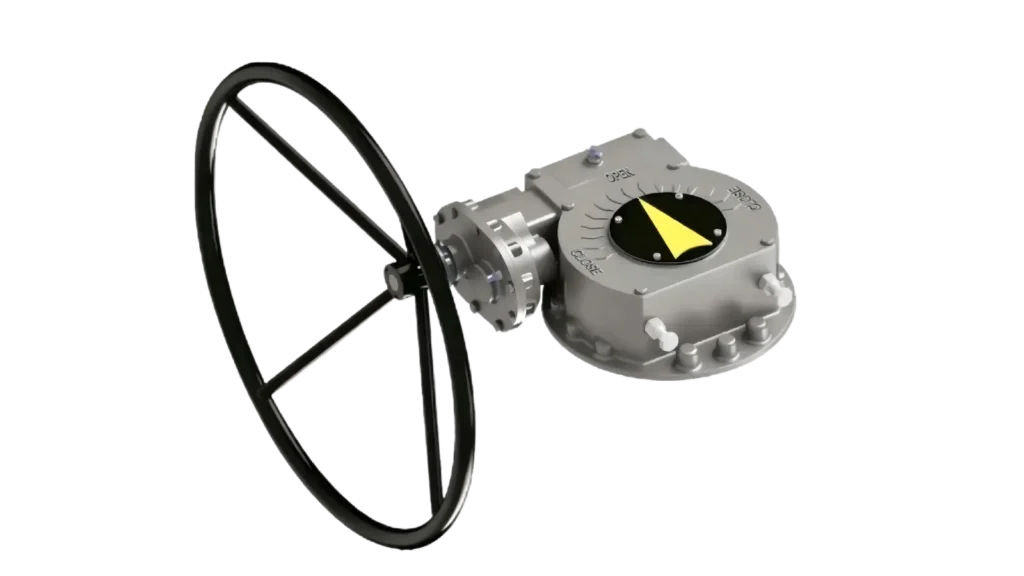
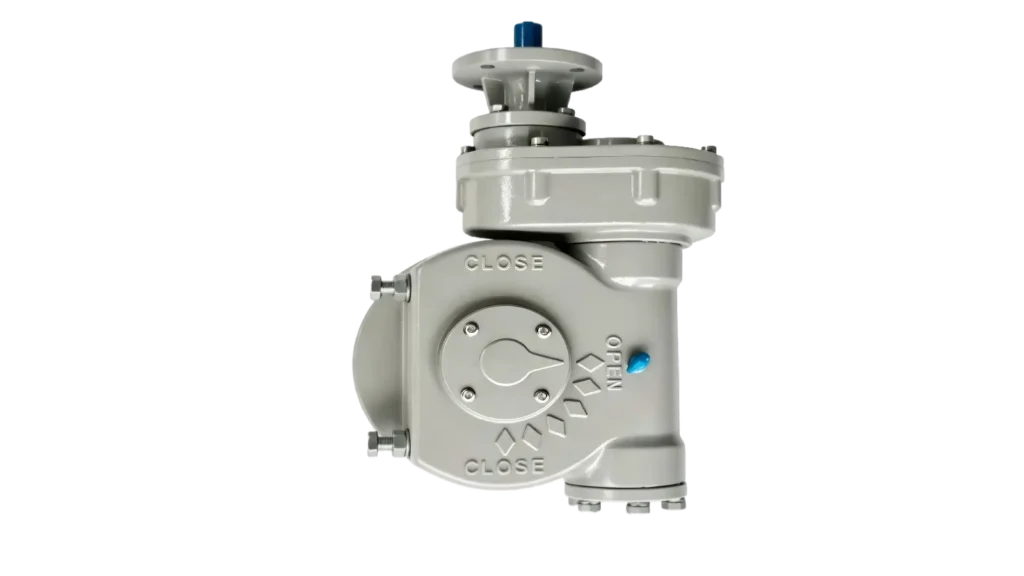
A gearbox does not operate in isolation. It operates under a specific load, with a specific reduction ratio, through a specific gear structure, and inside a specific valve package. A quarter-turn worm gearbox, a bevel gearbox, and a multi-turn gear operator do not lose energy in the same way.3 Even two gearboxes with similar rated torque can behave differently if the sealing, bearing arrangement, tooth contact, and lubrication are different.
For valve applications, the gearbox may spend long periods idle and then operate under high break torque.4 This is different from a continuously rotating industrial transmission. A valve gearbox may need to overcome:
- Initial breakaway torque
- Stem friction
- Seat friction
- Pipeline pressure effects5
- Corrosion or aging resistance
- Low-frequency operation
- Manual or actuator-driven input
- Outdoor temperature and site conditions
These factors influence how useful an efficiency number really is.
| Variable | Why it affects efficiency | Why it matters for valve gearboxes |
|---|---|---|
| Load level | Gear contact and friction change under load | Efficiency at light load may not reflect valve operation |
| Gear structure | Worm, bevel, and spur systems have different loss patterns | Gearbox type must match torque and operating need |
| Reduction ratio | Higher ratios often involve more mechanical interaction | Ratio affects input torque and operating speed |
| Lubrication | Grease or oil behavior changes friction | Poor lubrication can increase input effort6 |
| Bearings and seals | Contact resistance creates losses | Seal resistance can be meaningful in low-speed gearboxes |
| Machining accuracy | Tooth contact quality affects friction | Consistency matters across repeat orders |
| Assembly quality | Alignment and preload affect performance | Poor assembly can reduce reliability |
I treat efficiency data as useful only when I know the conditions behind it. For example, I want to know whether the value was calculated, estimated, or tested. I also want to know the input speed, load percentage, lubrication state, temperature, and gearbox configuration.
A high efficiency value without this context does not help me select the right valve gearbox. It may even push the buyer toward the wrong product. In real procurement work, I prefer a supplier who explains the conditions behind the number rather than one who only offers the highest percentage.
I usually tell buyers this: efficiency is a meaningful engineering parameter, but it is not a complete selection method.
That distinction matters. A procurement team may want a simple number. An engineering team needs a reliable operating result.
How should gear transmission efficiency be evaluated in valve gearbox selection?
Gear transmission efficiency should be evaluated as part of the full valve gearbox selection process. I start with the required output torque, safety factor, valve type, reduction ratio, input method, and operating conditions. Then I review whether the gearbox structure can deliver reliable torque within the application boundary.
The right way to evaluate gear transmission efficiency is to connect it with torque output, reduction ratio, load condition, input method, and safety margin. A technically efficient gearbox is not automatically the best choice if it lacks structural strength, compatible interfaces, stable operation, or sufficient torque reserve for the valve application.

Dive deeper
When I review a valve gearbox inquiry, I rarely start with efficiency alone. I start with the operating problem. The gearbox must allow the valve to open, close, and hold position safely under real conditions.7 If it cannot do that, a better efficiency percentage does not solve the problem.
I usually check these selection inputs first
A better inquiry should include:
- Required valve output torque
- Recommended safety factor
- Valve type
Examples include butterfly valve, ball valve, plug valve, gate valve, or globe valve. - Gearbox type required
Quarter-turn, multi-turn, bevel, or electric-ready configuration. - Reduction ratio
- Input method
Handwheel, chainwheel, pneumatic actuator, electric actuator, or manual override. - Mounting interface
ISO 5211 or project-specific interface. - Valve stem dimensions
- Operating frequency
- Site conditions
Outdoor use, marine environment, high dust, low temperature, or corrosive area. - Required documentation
Drawings, inspection reports, torque test records, material certificates, or traceability files.
Only after these details are clear do I consider how efficiency affects the selection.
Why torque output matters more than the headline number
In valve gearbox selection, output torque is the final practical result. The gearbox may have acceptable efficiency on paper, but it still fails the application if the rated output torque is too low or if the structure is weak under peak load.
A simplified relationship looks like this:
| Selection factor | Practical question I ask |
|---|---|
| Required output torque | Can the gearbox operate the valve safely? |
| Safety factor | Is there enough reserve for real site conditions? |
| Reduction ratio | Is the input torque practical for the operator or actuator? |
| Gear structure | Is the design suitable for the load and movement type? |
| Efficiency | How much input energy is lost inside the gearbox? |
| Durability | Will the gearbox remain stable over repeated operation? |
This is why I avoid treating efficiency as the first ranking factor. In a valve package, an efficient but undersized gearbox can be a higher risk than a slightly less efficient gearbox with correct torque capacity and stronger construction.
Manual and actuator-driven operation are different
A manual gearbox and an actuator-ready gearbox may need different evaluation priorities.
For manual operation, the buyer may care about:
- Handwheel input effort
- Number of turns
- Operator comfort
- Emergency usability
- Gearbox smoothness
For actuator-driven operation, the buyer may care about:
- Actuator sizing
- ISO 5211 compatibility8
- Input flange and shaft details
- Output torque stability
- Back-driving characteristics where relevant
- Long-term interface reliability
In both cases, efficiency matters. However, it matters as part of a system. I want to understand how the gearbox will be used before I interpret the percentage.
If a supplier gives an efficiency value, I suggest asking: “Under what test condition was this value obtained?” That one question can prevent many wrong comparisons.
Can high gear transmission efficiency still lead to poor gearbox selection?
High gear transmission efficiency can still lead to poor selection if the gearbox is not suitable for the valve load, interface, duty cycle, or site condition. I have seen buyers focus on the efficiency percentage while overlooking safety margin, torque reserve, housing strength, sealing, and long-term reliability.
A high efficiency value does not automatically mean a better valve gearbox.9 For valve applications, reliable torque output, correct reduction ratio, structural strength, compatible mounting, lubrication stability, and manufacturing consistency often matter more than a headline efficiency figure.
Dive deeper
I once handled an inquiry where the customer focused almost entirely on efficiency. The project team compared several gearbox suppliers by percentage values. However, after reviewing the application, the more serious issue was that the required break torque was not confirmed. The valve type, pressure condition, and safety margin were still unclear.
That situation is common. The buyer wants a clean comparison, but the engineering risk sits somewhere else.
High efficiency can hide selection problems
A gearbox with a strong efficiency figure may still be unsuitable if:
- The rated output torque is too close to the valve torque.
- The reduction ratio makes manual operation impractical.
- The gearbox interface does not match the valve top flange.
- The actuator mounting dimensions are not confirmed.
- The housing strength is not suitable for harsh operation.
- The lubrication is not suitable for the site temperature.
- The supplier cannot provide stable dimensional consistency.
- The torque testing condition is not comparable with the project condition.
For valve gearboxes, the most expensive failure is not usually “slightly lower efficiency.” The more serious failure is incorrect operation, installation delay, actuator mismatch, premature wear, or field maintenance.
Efficiency versus reliability in procurement evaluation
I do not suggest ignoring efficiency. I suggest ranking it properly.
| Procurement priority | Why it matters | Risk if ignored |
|---|---|---|
| Correct torque capacity | Ensures valve operation | Valve cannot open or close reliably |
| Safety margin | Covers real-world uncertainty | Gearbox may work in test but fail in service |
| Interface compatibility | Supports installation | Rework, delays, or actuator mismatch |
| Gearbox structure | Determines load behavior | Wear, deformation, or poor operation |
| Manufacturing consistency | Supports repeat orders | Batch-to-batch variation |
| Efficiency data | Helps estimate input needs | Misleading if conditions are unclear |
| Documentation | Supports technical approval | Slow project approval or quality disputes |
Why manufacturing quality affects real performance
Even when two gearbox designs look similar, the actual operating feel and performance can differ. Manufacturing quality influences friction, tooth contact, and assembly smoothness.10
Important manufacturing factors include:
- Gear machining accuracy
- Worm and worm wheel contact pattern
- Bearing fit and preload
- Housing machining tolerance
- Seal installation quality
- Lubrication quantity and consistency
- Assembly verification
- Torque testing or functional testing
At TFC, I prefer to discuss these measurable quality factors instead of making unsupported claims. Buyers should ask suppliers for technical drawings, inspection reports, torque test information, material certificates where applicable, and traceability documents. These records do not replace application-specific engineering review, but they help the buyer verify whether the supplier has a controlled manufacturing process.
Efficiency should not become marketing language
A supplier may have valid efficiency data. Another supplier may have different data because the testing condition is different. I do not assume either one is false. I simply ask whether the comparison is equivalent.
A useful comparison needs the same or clearly stated:
- Gearbox type
- Ratio
- Load level
- Input speed
- Lubrication condition
- Temperature
- Testing method
- New or run-in condition
- Measurement method
- Application boundary
Without these details, a percentage can become marketing language instead of engineering data.
What information should buyers provide before asking about gear transmission efficiency?
Buyers should provide valve torque, safety factor, valve type, gearbox type, reduction ratio, input method, interface dimensions, actuator requirements, operating frequency, and site conditions before asking about gear transmission efficiency. This gives the supplier enough context to explain efficiency in relation to real gearbox performance.
I recommend sending a complete technical inquiry before comparing efficiency values. The most useful inquiry includes required output torque, safety margin, valve and stem details, ISO 5211 interface needs, actuator or handwheel input, operating environment, documentation requirements, and any OEM customization expectations.

Dive deeper
A clear inquiry saves time for both the buyer and the supplier. It also reduces the risk of receiving a technically weak quotation. I have seen many inquiries that say only, “Please quote gearbox with high efficiency.” That is not enough for reliable selection.
A better inquiry tells the supplier what the gearbox must do.
Practical inquiry checklist
I recommend using this structure:
| Inquiry item | Example detail | Why it matters |
|---|---|---|
| Valve type | Butterfly valve, ball valve, gate valve | Defines movement and torque behavior |
| Required output torque | Example: 3,000 Nm | Core selection input |
| Safety factor | Example: 1.3 or project-defined | Reduces risk under real conditions |
| Operation type | Manual, electric actuator, pneumatic actuator | Affects input design |
| Gearbox movement | Quarter-turn or multi-turn | Determines gearbox family |
| Reduction ratio | Required or supplier recommended | Affects input torque and speed |
| Mounting standard | ISO 5211 or custom | Ensures compatibility |
| Stem details | Square, round, keyway, dimensions | Prevents installation mismatch |
| Site condition | Outdoor, marine, chemical plant | Affects sealing and coating choices |
| Operating frequency | Daily, monthly, emergency only | Influences wear expectations |
| Documentation | Drawings, inspection reports, certificates | Supports approval and traceability |
| OEM needs | Branding, model configuration, packaging | Supports long-term cooperation |
How I prefer to receive efficiency questions
A strong question looks like this:
“For a quarter-turn worm gearbox rated for this valve torque and this ratio, what efficiency range should we expect under the stated load condition, and how should we size the actuator input torque?”
That question is much better than:
“What is your efficiency?”
The first question gives me an engineering path. The second question gives me almost no application context.
Supplier evaluation should include evidence
When buyers compare suppliers, I recommend reviewing more than the quoted efficiency. A mature supplier evaluation should include:
- Engineering drawings
- Rated torque platform
- Gearbox structure
- Material and component information
- Machining capability
- Assembly process
- Inspection records
- Torque testing approach
- OEM experience
- Delivery stability
- Technical communication speed
- Long-term production consistency
For an engineering-driven manufacturer like TFC, I see this as the correct procurement framework. The goal is not to win a comparison by giving the most attractive number. The goal is to reduce engineering and procurement risk.
Application-specific decisions need qualified review
Valve gearbox selection can affect valve operation, actuator sizing, project approval, and long-term maintenance. I always recommend qualified engineering evaluation for application-specific decisions. Supplier data helps, but it should be reviewed against the actual valve torque curve, project specification, installation condition, and operating requirement.
This is especially important for:
- Large-diameter valves
- High-pressure applications
- Critical pipeline service
- Corrosive environments
- Remote or difficult maintenance locations
- Electric actuator integration
- OEM valve packages with repeat production
The more critical the application, the less I trust a single efficiency number.
How can procurement teams compare gear transmission efficiency between suppliers?
Procurement teams can compare gear transmission efficiency between suppliers only when the data is based on equivalent gearbox type, ratio, load, input speed, lubrication, and test method.11 If those conditions are not aligned, I treat the efficiency number as a reference, not as a direct ranking tool.
A practical comparison should combine efficiency data with torque capacity, safety margin, dimensional compatibility, quality evidence, documentation, and supplier communication. I recommend using a weighted technical score instead of selecting the highest efficiency percentage without verifying the test conditions.

Dive deeper
Procurement teams often need a clear supplier comparison table. I support that. However, the table should not reduce gearbox selection to one percentage. A good comparison protects the buyer from hidden risk.
A better supplier comparison matrix
| Evaluation item | Suggested weight | What to verify |
|---|---|---|
| Torque capacity and safety margin | 25% | Rated output torque and application fit |
| Interface compatibility | 15% | ISO 5211, stem, actuator flange |
| Gearbox structure and ratio | 15% | Worm, bevel, multi-turn design suitability |
| Quality control evidence | 15% | Inspection, torque testing, traceability |
| Efficiency data quality | 10% | Test conditions and load range |
| Documentation support | 10% | Drawings, reports, certificates if required |
| Supplier communication | 10% | Engineering response and clarification speed |
This type of scorecard helps procurement and engineering teams speak the same language. Procurement can still compare suppliers, but engineering risk remains visible.
Questions I would ask each supplier
Before accepting an efficiency value, I would ask:
- Is the efficiency value tested, calculated, or estimated?
- What gearbox type and ratio does the value apply to?
- At what load percentage was it measured?
- What input speed was used?
- What lubrication condition was used?
- Was the gearbox new or run-in?
- What temperature range applies?
- Does the value apply to all ratios or only one model?
- How does the supplier recommend actuator sizing?
- Can the supplier provide torque test or inspection records if required?
A professional supplier should not be afraid of these questions. The answer may be limited by available test data, but the supplier should explain the boundary clearly.
Procurement should avoid false precision
I am careful with numbers that appear too exact without context. For example, if a supplier states an efficiency value with no test condition, I do not reject it automatically. I simply treat it as a preliminary reference.
False precision can create poor decisions. A gearbox listed as slightly more efficient may be less suitable if it has weaker torque reserve, slower documentation support, or uncertain interface compatibility. In industrial valve procurement, the best supplier is usually the one that reduces total project risk, not the one that gives the cleanest brochure number.
For long-term OEM cooperation, I also look at repeatability. One sample may perform well. The harder question is whether the supplier can maintain consistent machining, assembly, testing, documentation, and delivery across many batches.
That is where engineering trust is built.
Frequently Asked Questions
What is gear transmission efficiency in a valve gearbox?
Gear transmission efficiency describes how much input power or torque remains useful after mechanical losses inside the gearbox. In valve gearbox selection, I use it to understand input effort and actuator sizing, but I always evaluate it with torque output, ratio, load condition, and safety margin.
Is higher gearbox efficiency always better?
Higher efficiency is useful, but it is not always the deciding factor. A valve gearbox must first provide reliable torque output, correct interface compatibility, suitable reduction ratio, and enough safety margin. A high efficiency value without clear test conditions can mislead buyers.
Why do worm gearboxes often need careful efficiency evaluation?
Worm gearboxes involve sliding contact, so efficiency depends strongly on ratio, load, lubrication, tooth geometry, and manufacturing quality.12 In valve applications, worm gearboxes are often selected for torque transmission and position holding behavior, so buyers should evaluate the complete application, not only efficiency.
What should I ask a supplier before comparing efficiency values?
I would ask whether the value is tested or calculated, what load and speed were used, what ratio and gearbox type it applies to, and whether lubrication and temperature were controlled. I would also ask how the supplier recommends sizing the actuator or manual input.
Can TFC provide technical support for gearbox selection?
Yes. TFC can support valve manufacturers and OEM partners with gearbox selection discussions, drawings, interface review, OEM configuration, and technical documentation. Application-specific decisions should still be confirmed with qualified engineering review based on valve torque, site conditions, and project requirements.
Conclusion
Gear transmission efficiency is important, but I do not treat it as a standalone supplier ranking number. In valve gearbox selection, I evaluate it together with output torque, reduction ratio, load condition, safety margin, gearbox structure, lubrication, manufacturing consistency, and long-term reliability. If your team is comparing valve gearboxes for an OEM project or industrial valve package, send TFC your torque requirement, valve details, ratio, interface, and site conditions. I will help you review the selection from an engineering-risk perspective.
"Simple gear pair: efficiency and output torque", https://www.eng-tips.com/threads/simple-gear-pair-efficiency-and-output-torque.427633/. Mechanical-engineering references define efficiency as the ratio of useful output power to input power, so a gearbox efficiency value represents the portion of input power remaining after mechanical losses; this source supports the definition generally rather than a valve-gearbox-specific test value. Evidence role: definition; source type: encyclopedia. Supports: A neutral source should define mechanical or transmission efficiency as the ratio of useful output power to input power, with losses accounting for the difference.. Scope note: The support is definitional and does not establish efficiency values for any particular valve gearbox. ↩
"An Experimental Investigation of Parallel-Axis Gear Mechanical Power Losses Operating with Modern Transmission Fluids", http://rave.ohiolink.edu/etdc/view?acc_num=osu1755983446170116. Studies of geared transmissions identify load, speed, lubricant state, gear geometry, bearing losses, sealing losses, and temperature as contributors to mechanical power loss, supporting the view that gearbox efficiency is condition-dependent rather than fixed. Evidence role: mechanism; source type: paper. Supports: A peer-reviewed or technical paper should explain that gear-train efficiency depends on load, speed, lubrication, geometry, bearing losses, sealing losses, and thermal conditions.. Scope note: The source may address geared transmissions generally and not valve gearboxes specifically. ↩
"The Efficiency Of Worm Gear", https://www.chamolgear.com/worm-gear-efficiency/. Engineering references distinguish the contact and friction mechanisms of worm, bevel, and spur-type gearing, showing that different gearbox architectures can have different loss patterns and efficiency ranges. Evidence role: mechanism; source type: education. Supports: An engineering education or reference source should describe how gear type and tooth contact mechanics affect frictional losses and efficiency.. Scope note: The source supports the general mechanical principle and may not evaluate the exact valve-gearbox configurations discussed in the article. ↩
"ACTUATOR SELECTION GUIDE - BALL VALVES", https://www.bray.com/docs/default-source/technical-bulletin/en_tb-1005_act-selectguide-ball-valves.pdf. Valve actuation references commonly identify breakaway or unseating torque as a key sizing condition, supporting the article’s statement that valve gearboxes may face high starting torque after idle periods. Evidence role: general_support; source type: institution. Supports: A valve engineering or standards-oriented source should explain that actuator or gearbox sizing must consider breakaway torque and intermittent valve operation.. Scope note: The source may describe valve actuation broadly rather than quantify idle time or break torque for all valve types. ↩
"Transient Effects on Dynamic Torque for Butterfly Valves - USU Digital Commons", https://digitalcommons.usu.edu/cgi/viewcontent.cgi?article=1253&context=gradreports. Valve-sizing literature treats line pressure and pressure differential as factors in operating-torque calculations, providing contextual support for including pipeline pressure effects in gearbox selection. Evidence role: mechanism; source type: research. Supports: A neutral engineering source should support that line pressure or pressure differential can affect valve operating torque and actuator sizing.. Scope note: The magnitude and direction of the effect depend on valve type, seat design, flow condition, and pressure differential. ↩
"NISI", https://www.nasa.gov/wp-content/uploads/2016/06/517745main_19800009206_1980009206.pdf. Tribology studies show that lubricant regime and lubricant condition affect friction and power loss in geared contacts, supporting the claim that poor lubrication can raise the input effort needed for gearbox operation. Evidence role: mechanism; source type: paper. Supports: A tribology or gear-engineering paper should explain that lubricant condition affects friction and power loss in gears and bearings.. Scope note: The source may discuss gear contacts generally and may not specify manual valve gearbox effort. ↩
"How To Size Pneumatic Actuators", https://www.crossco.com/resources/technical/how-to-size-pneumatic-actuators/. Valve actuation guidance treats actuator and gearbox selection as a function of operating torque, service conditions, and reliable opening and closing performance, supporting the article’s emphasis on safe operation under real conditions. Evidence role: expert_consensus; source type: institution. Supports: A standards body, engineering institution, or valve-actuation reference should support that actuator or gearbox selection is based on required torque, service conditions, and safe operation of the valve.. Scope note: The source may not directly address every form of position holding or every valve-gearbox design. ↩
"(PDF) ISO 5211 2001 Industrial valves Part turn actuator", https://www.academia.edu/34877034/ISO_5211_2001_Industrial_valves_Part_turn_actuator. ISO 5211 specifies requirements for the attachment of part-turn actuators to industrial valves, supporting the article’s use of ISO 5211 compatibility as an interface-selection criterion. Evidence role: definition; source type: institution. Supports: An ISO or standards summary source should state that ISO 5211 specifies attachment dimensions or mounting interfaces for part-turn actuators on industrial valves.. Scope note: The standard addresses interface attachment and does not by itself verify torque capacity, material suitability, or gearbox quality. ↩
"Fundamentals of Gearbox Design", https://covalomotion.com/fundamentals-of-gearbox-design/. Mechanical-design references describe gearbox selection as a multi-factor decision involving torque capacity, service factor, duty conditions, mounting, and reliability as well as efficiency, providing contextual support for the claim that a high efficiency value alone does not establish a better valve gearbox. Evidence role: general_support; source type: education. Supports: An engineering design reference should support that gearbox or reducer selection considers torque capacity, service factor, duty, reliability, and mounting conditions, not efficiency alone.. Scope note: The source supports the selection principle generally and may not rank criteria for a specific valve project. ↩
"Analysis of gear transmission error in helical gear using enhanced tooth contact analysis model considering measured tooth profile errors - PMC", https://pmc.ncbi.nlm.nih.gov/articles/PMC11836367/. Gear-engineering studies associate manufacturing accuracy, surface condition, and tooth-contact quality with frictional losses and operating behavior, supporting the claim that manufacturing quality can influence gearbox performance. Evidence role: mechanism; source type: paper. Supports: A gear-manufacturing or gear-dynamics paper should explain that machining accuracy, surface quality, tooth contact, and assembly alignment influence friction, noise, transmission error, or efficiency.. Scope note: The source may measure effects such as transmission error, noise, or efficiency rather than the subjective term 'assembly smoothness' directly. ↩
"Guidelines for Evaluating and Expressing the Uncertainty of NIST Measurement Results", https://emtoolbox.nist.gov/publications/nisttechnicalnote1297s.pdf. Measurement-science guidance emphasizes that quantitative comparisons require specified methods, controlled conditions, and consideration of uncertainty, supporting the article’s position that supplier efficiency figures are comparable only when gearbox configuration and test conditions are equivalent or disclosed. Evidence role: general_support; source type: government. Supports: A measurement-science or engineering-testing source should support that numerical comparisons require defined methods, controlled conditions, and attention to uncertainty.. Scope note: The source supports the general measurement principle rather than prescribing a valve-gearbox efficiency test protocol. ↩
"Efficiency of Worm Gear Drives Under Transient Operating Conditions", https://asmedigitalcollection.asme.org/tribology/article/141/12/122201/960753/Efficiency-of-Worm-Gear-Drives-Under-Transient. Worm-gear literature describes the mesh as involving substantial sliding contact and identifies geometry, load, speed, and lubrication as important influences on efficiency, supporting the article’s explanation of why worm gearbox efficiency requires careful evaluation. Evidence role: mechanism; source type: paper. Supports: A technical paper or gear-design reference should describe sliding in worm gear meshes and identify variables affecting worm gear efficiency.. Scope note: The source may discuss worm gears generally and may not include valve-specific duty cycles or position-holding requirements. ↩