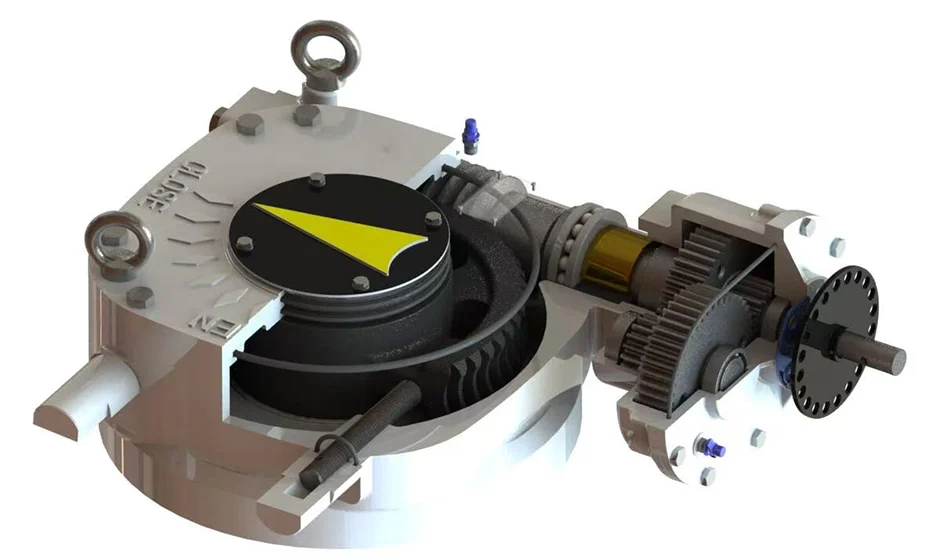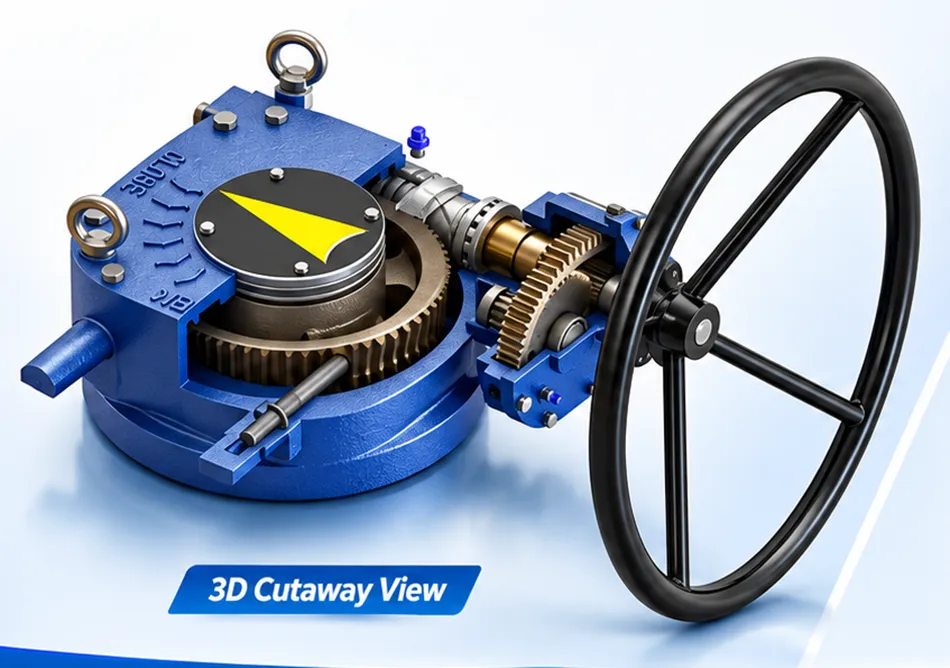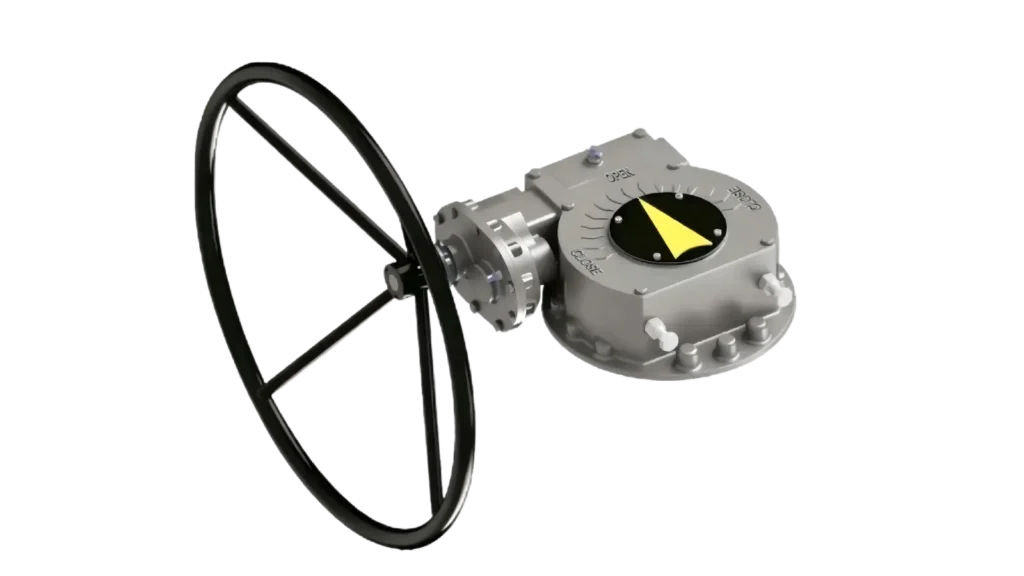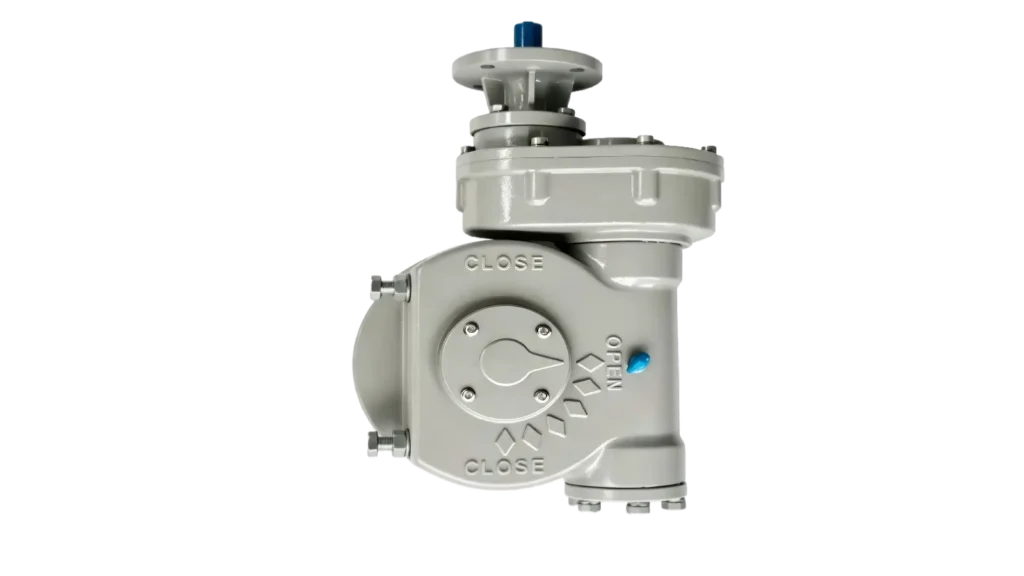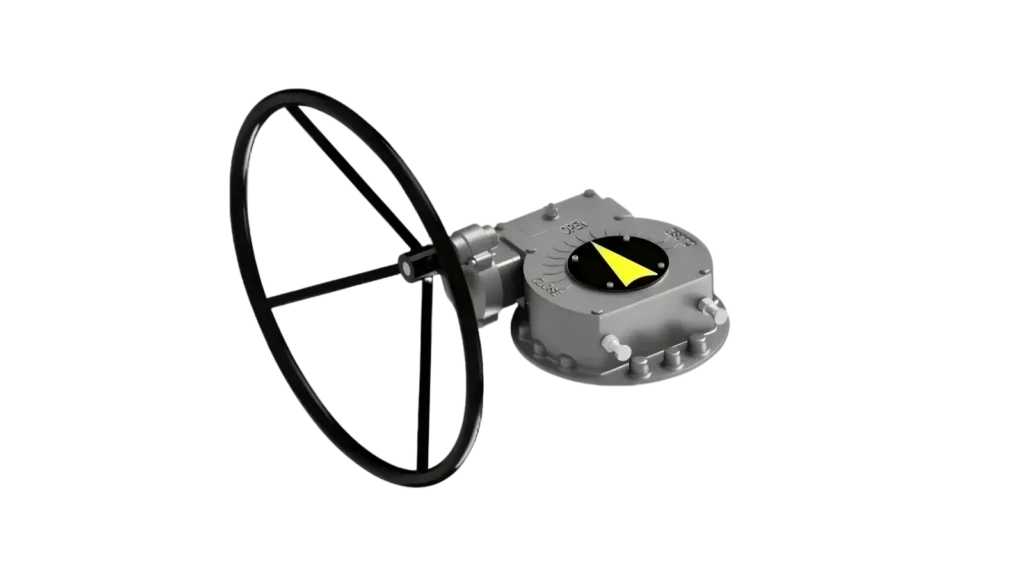

Backlash and transmission accuracy often become the first concern when a valve manufacturer reviews a gearbox for actuator packages or manual operation. The problem is that these terms are often mixed together. That confusion can lead to over-specification, supplier disputes, and unnecessary cost. I prefer to clarify the real valve operating requirement first.
Backlash and transmission accuracy are related, but they are not the same. Backlash describes lost motion between mechanical components, while transmission accuracy describes how closely the output movement follows the intended input or control command.1 For valve gearboxes, suitability depends on the gearbox, valve, actuator, mounting interface, control logic, and positioning requirement together.
In quotation and technical communication, I often see buyers ask for “accuracy” before defining the control task. That is risky. A gearbox for open-close duty does not need the same evaluation as one used for modulating service. The better question is not only “How small is the backlash?” but “What must the complete valve package do?”
What does backlash and transmission accuracy mean in valve gearbox selection?
When a buyer asks about backlash and transmission accuracy, the problem is usually not the vocabulary itself. The real issue is that several different behaviors are being described with one word: “accuracy.” If the terms remain vague, the gearbox selection process becomes slow and the specification becomes harder to verify.
Backlash is the clearance or lost motion before torque transfers after reversing direction. Transmission accuracy is the relationship between intended input movement and actual output movement. In valve gearbox selection, engineers should also separate lost motion, repeatability, and positioning accuracy because each one affects valve operation in a different way.

Backlash is not the whole accuracy story
In a worm gearbox or bevel gearbox, backlash usually refers to the small angular movement that occurs before gear teeth fully engage in the opposite direction. This clearance is not automatically a defect. Mechanical systems need controlled clearance for assembly, lubrication, thermal behavior, manufacturing tolerance, and operating reliability.2
However, backlash can become important when the valve package must reverse direction and stop at a controlled position. I have seen inquiries where a customer asked for “zero backlash” for a simple isolation valve. In that case, the first engineering task was not to quote a special gearbox. The first task was to understand the valve function.
For valve gearboxes, I normally separate four ideas:
| Term | Practical meaning in valve gearbox selection | Why it matters |
|---|---|---|
| Backlash | Mechanical clearance before motion transfers after reversal | Affects reversal response and dead band |
| Lost motion | Total motion lost in the full assembly, including couplings and interfaces | Shows system-level movement loss |
| Repeatability | Ability to return to the same position under similar conditions | Important for repeat control behavior |
| Positioning accuracy | Difference between target position and actual position | Important for modulating or controlled service |
Why these terms get confused
Valve gearboxes sit between the valve and the operator or actuator. That position makes them easy to blame when movement does not match expectation. But the gearbox is only one part of the chain.3
A typical package may include:
- Electric actuator
- ISO 5211 mounting interface4
- Coupling or drive sleeve
- Gearbox input stage
- Gearbox output stage
- Valve stem or shaft
- Valve internal friction
- Control signal and feedback device
- Installation and alignment condition
If the actuator reverses direction and the valve does not immediately move, the cause may be gearbox backlash. But it may also be coupling clearance, valve stem torsion, actuator brake behavior, feedback resolution, flexible mounting, or control dead band.5
I usually treat “accuracy” as a question that needs translation before it becomes a gearbox specification.
A more useful definition for buyers
For procurement and technical evaluation, I suggest defining the requirement like this:
-
What valve type is being operated?
Butterfly valve, ball valve, plug valve, gate valve, globe valve, or another type. -
What is the operation mode?
Open-close, throttling, modulating, emergency operation, or manual override. -
What torque range is required?
Break torque, running torque, seating torque, safety factor, and actuator output torque. -
What positioning behavior is expected?
General open-close movement, repeatable stop positions, or precise control. -
Where is feedback measured?
At the actuator, gearbox input, gearbox output, valve stem, or process side.
This approach helps the buyer avoid asking for a number that may not solve the actual issue. It also helps suppliers respond with relevant engineering information instead of making unsupported promises.
Why is smaller backlash not always better for valve gearboxes?
Many engineers naturally assume that smaller backlash means better gearbox quality. The problem is that this assumption is incomplete. If the valve application does not require tight reversing precision, a very strict backlash target may increase cost, reduce supplier options, and create unnecessary manufacturing constraints.6
Smaller backlash can be useful for certain control tasks, but it is not always the correct requirement. Valve gearbox selection should balance operating duty, torque demand, valve type, actuator control, manufacturing tolerance, cost, and verification method. A tighter number should be specified only when the valve package truly needs it.
Tighter clearance can create real tradeoffs
Backlash is partly controlled by gear geometry, machining accuracy, center distance, tooth contact pattern, bearing support, assembly method, and inspection process.7 Reducing it too much may require tighter machining and assembly control. That can be reasonable for some projects, but it is not free.
For valve gearboxes, the tradeoff often looks like this:
| Requirement direction | Possible benefit | Possible risk |
|---|---|---|
| Lower backlash | Better reversal response | Higher machining cost |
| Lower backlash | Smaller dead band | More difficult supplier qualification |
| Lower backlash | Better perceived control | Longer lead time |
| Very tight clearance | More precise feel | Potential sensitivity to assembly and load conditions |
| Standard controlled backlash | Practical reliability | May not suit demanding modulating control |
I am careful with the phrase “zero backlash.” In practical industrial gearbox manufacturing, this phrase needs definition. Does the buyer mean no measurable lost motion under no load? Does the buyer mean no visible output movement delay? Does the buyer mean a maximum angular value under a specified torque? Each interpretation leads to a different engineering discussion.
The valve task should drive the gearbox requirement
A quarter-turn gearbox for a butterfly valve used in open-close duty may have a different expectation than a gearbox supporting a modulating control valve.8 In open-close service, the most important questions may be:
- Can the gearbox transmit the required torque?
- Is the gearbox compatible with the valve flange and stem?
- Does the gearbox match the actuator interface?
- Is the travel stop arrangement suitable?
- Is the manufacturing quality consistent?
- Can inspection and documentation support the project?
In a modulating application, the buyer may need more detail:
- How often does the actuator reverse direction?
- What control resolution is expected?
- Where is the feedback signal taken?
- Does the valve itself have hysteresis?
- Does the process require fine positioning or broad flow adjustment?
- Is the gearbox only one contributor to total dead band?
The gearbox requirement should change with the duty. If it does not, the specification may become expensive without improving the final valve package.
A common inquiry pattern I see
A customer sometimes sends a short message like:
“Please provide gearbox accuracy. Our actuator needs precise control.”
That message is understandable, but it is not enough for a responsible selection. I usually ask follow-up questions before confirming suitability. I want to know the valve type, torque, actuator model, control method, mounting standard, and expected positioning behavior.
This is not a delay tactic. It protects the buyer. A simple quoted number can look convenient, but it may not explain whether the installed valve package will perform correctly. If the actuator feedback is only at the motor or actuator output, the control system may not see lost motion in the downstream mechanical chain.9 If the valve shaft twists under load, the process position may lag even when the gearbox output appears correct.
When smaller backlash may matter
A tighter backlash requirement may be justified when the project involves:
- Frequent direction reversal
- Modulating control
- Narrow control tolerance
- High sensitivity to dead band
- Position feedback at or near the valve stem
- Documented acceptance criteria
- Clear test conditions and verification method
Even then, the gearbox should be evaluated as part of the complete package. The actuator, coupling, mounting bracket, valve stem, and control settings must support the same target. Otherwise, the gearbox may be improved while the system problem remains.
How should backlash and transmission accuracy be evaluated as a system?
Backlash and transmission accuracy are often discussed as if the gearbox works alone. The problem is that a valve package does not behave like an isolated test sample. Load, valve friction, actuator behavior, coupling fit, mounting rigidity, and feedback location can all change the final operating result.10
Backlash and transmission accuracy should be evaluated at the system level. The gearbox can influence lost motion and positioning behavior, but final performance also depends on the valve, actuator, coupling, interface machining, installation alignment, control logic, and feedback method. Buyers should confirm where the accuracy requirement is measured.
The gearbox is one link in the mechanical chain
A valve gearbox transfers torque. It does not operate in isolation. In a typical industrial valve package, the movement path may look like this:
- Control signal goes to actuator.
- Actuator motor or handwheel generates input movement.
- Actuator output drives the gearbox input.
- Gear stages transmit torque and reduce speed.
- Gearbox output drives the valve stem or shaft.
- Valve closure member moves against process and sealing forces.
- Feedback device reports position to the control system.
Each stage can add tolerance, elasticity, delay, or lost motion. This is why I avoid saying that all positioning problems come from the gearbox. That statement would not be technically fair.
Factors that affect final transmission behavior
Several system factors deserve attention during supplier evaluation:
| Factor | Possible effect on positioning behavior | Evaluation note |
|---|---|---|
| Gearbox backlash | Reversal dead band | Ask how backlash is controlled or inspected when relevant |
| Coupling clearance | Additional lost motion | Check fit between bore, key, square, or spline |
| Mounting interface | Misalignment or flex | Verify ISO 5211 dimensions and bracket rigidity |
| Valve torque curve | Load-dependent movement | Confirm break, run, and seating torque |
| Actuator control | Overshoot or hunting | Review control mode and feedback settings |
| Stem torsion | Elastic lag under load | More relevant on high torque valves |
| Travel stops | Stop repeatability | Confirm whether stops are in actuator, gearbox, or valve |
| Installation condition | Uneven movement | Check alignment and assembly procedure |
This table matters because procurement specifications often focus on one number. But a single number cannot represent the full system unless the measurement location and test conditions are defined.
Measurement location changes the answer
A buyer may ask, “What is the transmission accuracy?” I normally respond by asking, “Measured where?”
The answer changes depending on the measurement point:
- At actuator output: This may ignore gearbox and valve lost motion.
- At gearbox input: This may describe input control but not output behavior.
- At gearbox output: This may show gearbox contribution more clearly.
- At valve stem: This includes coupling and interface effects.
- At final valve position: This includes valve internal behavior.
- At process response: This includes flow characteristics and control loop behavior.
For valve manufacturers, the most practical measurement point is often near the valve stem or gearbox output, depending on the package design. But for process control, the final concern may be the valve’s actual flow or shutoff behavior. That is why engineering confirmation is important.
Open-close service versus modulating service
The system view becomes clearer when we compare duties.
| Duty type | Main concern | Backlash sensitivity | Typical evaluation focus |
|---|---|---|---|
| Open-close isolation | Reliable full travel and seating | Usually lower | Torque capacity, stops, compatibility |
| Manual operation | Smooth operation and durability | Moderate depending on feel | Handwheel turns, effort, ratio |
| Electric open-close | Actuator compatibility and travel control | Moderate | Limit switch setting, torque switch, interface |
| Modulating control | Position response and repeatability | Higher | Dead band, feedback, control logic |
| Emergency operation | Reliable movement under demand | Application-specific | Torque margin, reliability, documentation |
This does not mean backlash is unimportant in open-close service. It means the performance risk may be elsewhere. For example, incorrect torque selection can be more damaging than a moderate amount of backlash.11 A gearbox with excellent clearance control but insufficient torque capacity is still the wrong gearbox.
Documentation should match the application
For procurement evaluation, buyers should request documents that match the actual risk level. Depending on the project, useful evidence may include:
- General arrangement drawing
- ISO 5211 interface drawing
- Output bore and keyway details
- Gear ratio and torque rating
- Material certificates when required
- Dimensional inspection records
- Assembly inspection records
- Torque testing records when applicable
- Traceability information
- Operating and maintenance instructions
Certifications and test reports should be treated as documents to verify, not as slogans. If a project has critical positioning requirements, the buyer should define the acceptance criteria and ask for qualified engineering review. I prefer this approach because it makes both supplier and buyer responsible for the same measurable requirement.
What questions should buyers ask before specifying backlash and transmission accuracy?
Many gearbox discussions start with the wrong question. The buyer asks for a fixed accuracy number, and the supplier tries to answer without enough application data. This creates risk. The better approach is to translate “accuracy” into valve type, torque, actuator interface, control method, and positioning expectation.
Before specifying backlash and transmission accuracy, buyers should ask what the valve package must achieve, how often it reverses, where position is measured, what torque is required, and how the actuator controls movement. These questions help prevent over-specification and identify whether the gearbox is truly the limiting factor.
Start with valve and torque data
The first practical question is not about backlash. It is about the valve.
I usually want to confirm:
- Valve type
- Valve size and pressure class
- Required operating torque
- Maximum torque condition
- Safety factor or service factor expectation
- Stem or shaft connection
- Travel angle or turns
- Mounting standard
- Environmental condition
- Manual or actuator operation
Torque matters because gearbox selection begins with load. If the gearbox is undersized, backlash discussion becomes secondary. The gearbox must first transmit torque safely within the intended duty.
Then define the actuator and control method
The actuator can change the accuracy discussion completely. A manual gearbox and an electric actuator package may use the same basic gearbox family, but the control expectation is different.
Key actuator questions include:
- Is the actuator electric, pneumatic, hydraulic, or manual?
- Is the duty open-close or modulating?
- Where are the limit switches or position sensors located?
- Does the actuator rely on torque seating or position seating?
- What is the actuator output speed and torque?
- Is the gearbox required to match ISO 5211 or a custom interface?
- Is there a handwheel override or declutch mechanism?
When I review a request, I try to understand whether the actuator is controlling position tightly or simply driving the valve to end positions. A gearbox used for end-position operation may not need the same backlash specification as a gearbox used in frequent small corrections.
Define the positioning expectation in plain language
The word “accuracy” should be converted into a practical requirement. A useful specification might answer:
- Must the valve stop at intermediate positions?
- How many positions are required?
- What tolerance is acceptable at the valve stem?
- Does the valve need to repeat the same position after reversal?
- Is the system allowed to approach the target from one direction only?
- Is the feedback taken from actuator, gearbox, or valve?
- Is process feedback used to correct position?
For example, a buyer may say, “We need 1% control accuracy.” That statement may refer to actuator signal, valve travel, flow coefficient, or process control result. These are not the same. A gearbox supplier can support the mechanical part, but the complete requirement needs a system definition.
A practical inquiry checklist
When a customer wants engineering review, I recommend sending the following information:
| Information needed | Why I ask for it |
|---|---|
| Valve type and size | Defines operating movement and load pattern |
| Torque requirement | Confirms gearbox capacity |
| Operation mode | Separates open-close from modulating duty |
| Actuator model or interface | Confirms input compatibility |
| ISO 5211 flange requirement | Checks mounting match |
| Stem size and connection | Confirms output drive |
| Required gear ratio | Affects turns, speed, and torque |
| Positioning expectation | Defines accuracy discussion |
| Feedback location | Clarifies measurement point |
| Project documentation needs | Supports procurement approval |
This checklist reduces ambiguity. It also helps avoid selecting a gearbox based on a single attractive number.
Avoid these specification mistakes
I often see five common mistakes in technical inquiries:
-
Asking for “accuracy” without defining measurement location
The supplier cannot know whether the buyer means gearbox output, valve stem, or final process response. -
Assuming all backlash is harmful
Some clearance is normal and necessary in mechanical systems. -
Ignoring actuator behavior
Control settings, feedback resolution, and actuator mechanics can affect final response. -
Comparing suppliers without common test conditions
Numbers are only comparable when test methods and loads are defined.12 -
Specifying tighter requirements than the valve task needs
This can increase cost and reduce supplier flexibility without improving actual valve operation.
How I prefer to handle the conversation
When a customer asks me for a gearbox recommendation, I try to move from a number-based conversation to a function-based conversation. I may ask:
“Is the gearbox expected to support open-close duty, or does the valve need repeatable intermediate positioning?”
That one question often changes the entire discussion. If the answer is open-close duty, I focus on torque, ratio, interface, stops, and documentation. If the answer is modulating service, I ask more about feedback, reversal frequency, dead band, and system acceptance criteria.
This approach does not avoid the backlash topic. It puts backlash in the right place. Backlash is one part of transmission behavior, and transmission behavior is one part of valve package performance.
Frequently Asked Questions
Is backlash the same as transmission accuracy?
No. Backlash is mechanical clearance or lost motion during direction reversal. Transmission accuracy describes how closely output movement follows the intended input or control command. In valve gearbox selection, both terms should be considered with repeatability, positioning requirement, actuator behavior, and valve load.
Does a valve gearbox need zero backlash?
Most valve gearbox applications do not need “zero backlash,” and the phrase should be defined carefully. Some controlled clearance is normal in gear systems. A very tight backlash requirement should be used only when the valve duty, control method, and acceptance criteria justify it.
Can gearbox backlash cause poor valve positioning?
Yes, gearbox backlash can contribute to poor positioning, especially during frequent reversals or modulating control. However, it is not the only possible cause. Coupling clearance, actuator control settings, valve stem torsion, mounting rigidity, feedback location, and valve friction can also affect positioning behavior.
What information should I provide for gearbox accuracy review?
I recommend providing valve type, torque requirement, operation mode, actuator model or interface, ISO 5211 flange, stem connection, gear ratio expectation, feedback location, and positioning requirement. This information helps the supplier evaluate whether the gearbox is suitable for the complete valve package.
Should backlash be included in procurement specifications?
Backlash can be included when it affects the application, but the specification should define measurement location, load condition, direction reversal method, and acceptance criteria. Without these details, backlash numbers from different suppliers may not be comparable or useful for technical approval.
Conclusion
Backlash and transmission accuracy should be treated as related but different engineering topics. In valve gearbox selection, I prefer to start with the complete valve package: valve type, torque, actuator interface, control method, feedback location, and positioning expectation. This prevents unnecessary over-specification and helps identify the real performance risk. If you want to confirm gearbox suitability, send TFC your valve data, torque requirement, actuator connection, control method, and accuracy expectation for engineering review.
"Backlash (engineering)", https://en.wikipedia.org/wiki/Backlash_(engineering). Engineering terminology sources define backlash as clearance or lost motion between mating mechanical parts and treat transmission error as a separate measure of deviation between intended and actual motion. Evidence role: definition; source type: encyclopedia. Supports: A neutral technical source should define backlash as clearance or lost motion and distinguish it from motion or transmission error.. Scope note: This supports the terminology distinction generally, not any particular valve gearbox tolerance. ↩
"Backlash (engineering)", https://en.wikipedia.org/wiki/Backlash_(engineering). Gear-design references describe backlash or clearance as a normal design allowance that can accommodate lubrication film, manufacturing tolerances, assembly variation, and thermal expansion. Evidence role: mechanism; source type: education. Supports: A mechanical design or gear-engineering source should explain that backlash or clearance accommodates lubrication, tolerances, and thermal effects.. Scope note: The source would support the general mechanism, not prove that every valve gearbox requires the same amount of clearance. ↩
"Backlash (engineering)", https://en.wikipedia.org/wiki/Backlash_(engineering). Research and technical literature on actuated valves treats positioning performance as a system property involving the actuator, mechanical linkage, valve stem, feedback device, and control settings, rather than the gearbox alone. Evidence role: general_support; source type: research. Supports: A valve automation or control-system source should show that actuator, linkage, valve stem, feedback, and control elements all influence positioning.. Scope note: This provides contextual support for the system view, not a quantitative allocation of error among components. ↩
"INTERNATIONAL STANDARD ISO 5211", https://cdn.standards.iteh.ai/samples/62594/99f2c2aed9e24049bf1985c541d19143/ISO-5211-2017.pdf. ISO 5211 specifies dimensions for part-turn actuator attachments to industrial valves, providing context for its use as a valve actuator mounting interface. Evidence role: definition; source type: institution. Supports: An institutional standards source should identify ISO 5211 as a standard for actuator attachments to industrial valves.. ↩
"Teaching Control Valve Friction Using Modeling And Simulation", https://peer.asee.org/teaching-control-valve-friction-using-modeling-and-simulation.pdf. Studies of valve and actuator control identify backlash, dead band, hysteresis, mechanical compliance, and feedback resolution as contributors to positioning error and delayed response. Evidence role: mechanism; source type: paper. Supports: A paper or technical study should connect mechanical backlash, compliance, friction, dead band, and feedback limitations with valve positioning errors.. Scope note: A single source may not discuss every item in the list, so the citation may provide general mechanism support rather than exhaustive validation. ↩
"How Do Tight Tolerances Affect Cost, Lead Time, and Risk? - CMW Global", https://cmwglobal.com/how-do-tight-tolerances-affect-cost-lead-time-and-risk/. Manufacturing engineering literature links tighter dimensional tolerances with increased machining control, inspection effort, and production cost, supporting the claim that strict backlash targets can impose manufacturing constraints. Evidence role: general_support; source type: paper. Supports: A manufacturing engineering source should show that tighter tolerances generally increase production complexity and cost.. Scope note: The evidence would be general to manufacturing tolerances and may not quantify cost effects for this specific gearbox type. ↩
"Guide to Gear Mesh Transmission Backlash: Factors, Types, Measurements & Calculations", https://www.wmberg.com/resources/blogs/guide-to-gear-mesh-transmission-backlash. Gear-design references describe backlash as dependent on gear geometry, tooth thickness, center distance, manufacturing accuracy, alignment, bearing support, and assembly conditions. Evidence role: mechanism; source type: education. Supports: A gear-design source should explain the variables that determine or affect backlash in gear meshes.. Scope note: The citation supports the engineering mechanism broadly and may not address valve gearbox production practices specifically. ↩
"Modulating vs On Off Control 4-20mA Electric Actuator Guide", https://www.delcovalves.com/modulating-vs-on-off-control-4-20ma-electric-actuator-guide/?srsltid=AY6E960Ja2y2xDRLUgvP5rYeizXRBMrWOceE7CbFyKFuQ0agcEPySfNt. Valve actuator standards and control-valve references distinguish on-off service from modulating service, reflecting different requirements for positioning, cycling, and control response. Evidence role: definition; source type: institution. Supports: A standards or institutional source should distinguish on-off valve actuator service from modulating or control service.. Scope note: This supports the duty classification and general expectations, not a specific backlash threshold. ↩
"Backlash and Lost Motion in Position Control | Atlas of Engineering", https://atlasofengineering.com/automation-and-control-engineering/backlash-and-lost-motion-in-position-control/. Control and mechatronics literature shows that feedback sensor location determines which mechanical errors are measured; backlash or compliance downstream of the sensor may not be directly observed by the controller. Evidence role: mechanism; source type: research. Supports: A mechatronics or control-system source should explain that sensor placement affects whether downstream backlash or compliance is observable.. Scope note: The support is contextual and general to mechanical control systems rather than specific to valve gearboxes. ↩
"Control Valve Positioners: Guide to Types & Selection", https://valveman.com/blogs/the-valve-authority/control-valve-positioners-guide?srsltid=AY6E961R9T92R9agcLLhjP30X3We5LNWlb6l1rpRpGcTNnv1EsnTmOhn. Technical literature on actuated valve performance identifies friction, mechanical linkage characteristics, actuator dynamics, load conditions, and feedback configuration as factors that influence final positioning behavior. Evidence role: general_support; source type: research. Supports: A valve-control or actuator-system source should identify mechanical load, friction, actuator dynamics, linkage, and feedback as determinants of position response.. Scope note: The evidence supports the multi-factor system view but may not rank the importance of each factor for a given installation. ↩
"How to Size a Valve Actuator: Torque Calculation & Safety Factor", https://www.delcovalves.com/how-to-size-a-valve-actuator-torque-calculation-safety-factor/?srsltid=AY6E963HQN8SHMAFlL-28FGcuDrFqMdGeW6IhFlBcjmm8oQ5fmvIMpy4. Valve actuator sizing guidance treats required operating torque and service factors as primary selection criteria because insufficient torque can prevent reliable valve travel or seating. Evidence role: general_support; source type: institution. Supports: A valve or actuator sizing source should show that torque selection is a fundamental requirement for reliable valve operation.. Scope note: This supports the seriousness of torque selection but does not prove that torque error is always more damaging than backlash. ↩
"Metrological Traceability: Frequently Asked Questions and NIST Policy", https://www.nist.gov/metrology/metrological-traceability. Metrology standards emphasize that measurement results are comparable only when the measurement method, conditions, calibration basis, and relevant uncertainties are defined. Evidence role: expert_consensus; source type: institution. Supports: A metrology or testing-standard source should establish that comparable measurements require defined methods, conditions, and measurement uncertainty.. Scope note: The citation supports the general principle of measurement comparability, not a valve-gearbox-specific test protocol. ↩