
Practical engineering terminology often decides whether a valve gearbox inquiry moves smoothly or creates repeated drawing checks, torque doubts, and supplier misunderstandings. I see this problem often in presales communication. When teams use terms loosely, small errors become quotation delays or installation risks1. The solution is to treat terminology as a decision tool, not a vocabulary exercise.
Practical engineering terminology means using technical terms to confirm real project decisions: torque requirements, mounting interfaces, actuator compatibility, quality evidence, and supplier capability. For valve gearbox buyers, the goal is not to memorize definitions. The goal is to reduce selection errors, drawing rework, unclear quotations, and project risk.

Why does practical engineering terminology matter in valve gearbox selection?
When a gearbox inquiry starts with unclear terms, the technical risk increases quickly. I have seen buyers request “high torque” or “ISO compatible” gearboxes, but the real selection still depends on valve type, operating condition, flange details, and actuator plans2. Without practical engineering terminology, every team guesses differently.
Practical engineering terminology matters because it converts general technical language into confirmation points. It helps engineering, purchasing, suppliers, and project teams agree on what must be checked before quotation, sample approval, production, and installation. This reduces rework and improves supplier evaluation.
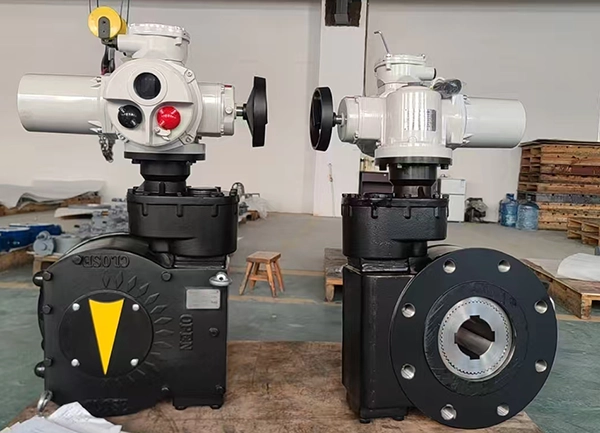
Terms should act as decision signals
In valve gearbox projects, I do not treat terminology as a dictionary. I treat each term as a signal that tells me what information must be confirmed next. For example, when a customer mentions “torque,” I usually need to know more than one number. I need to understand the valve operating torque, the expected safety margin, the gearbox output torque, the operating frequency, and the application environment.
A simple way to think about it is this:
| Term used in inquiry | What I need to confirm | Why it matters |
|---|---|---|
| Torque | Valve torque, safety factor, gearbox rated torque | Prevents under-selection or oversized design |
| ISO 5211 | Flange size, bolt pattern, pilot diameter, mounting orientation | Prevents interface mismatch |
| Bore and keyway | Stem size, connection type, machining tolerance | Prevents assembly problems |
| Electric-ready | Actuator flange, input torque, coupling, space limits | Prevents actuator integration issues |
| Quality inspection | Inspection items, reports, traceability, torque testing | Supports supplier evaluation |
The cost of vague terminology
Vague terminology rarely causes only one problem. It usually causes a chain reaction.
Common results include:
- Delayed quotations because the supplier must ask for missing details.
- Repeated drawing revisions because mounting data is incomplete.
- Wrong sample configuration because stem connection terms are unclear.
- Actuator mismatch because “electric-ready” was not confirmed by drawing.
- Weak supplier comparison because buyers compare prices without comparing technical scope.
From my experience in customer communication, this is especially important for OEM and private-label cooperation. OEM projects often include customized branding, model configuration, actuator compatibility, and long-term production planning. If the terminology is loose at the beginning, the problem can repeat across future batches.
I prefer to slow down during technical confirmation rather than let unclear terms move into production.
How should practical engineering terminology be used for torque confirmation?
Torque terms create problems when buyers treat them as standalone numbers. I often see inquiries that mention only one torque value without valve type, operating condition, or safety margin. That information is not enough for responsible gearbox selection.
Practical engineering terminology should be used to separate output torque, operating torque, break torque, safety margin, and torque range. Each term must connect to the valve application, duty cycle, operating condition, and required reliability before a gearbox model is selected.

Torque is application-dependent3
In valve gearbox selection, torque does not exist alone. A number such as 5,000 Nm or 50,000 Nm may look clear, but the correct gearbox decision depends on the application behind that number.
I usually ask customers to confirm several points:
-
Valve type
A butterfly valve, ball valve, plug valve, and gate valve may require different gearbox structures and operating assumptions. -
Required operating torque
This is the torque needed to operate the valve under defined conditions. -
Maximum or break torque
Some valves require higher torque at the start of movement.4 -
Safety margin
A margin may be required because field conditions are rarely identical to test conditions.5 -
Operating frequency
A gearbox used occasionally may face different selection considerations from a gearbox used frequently. -
Environmental condition
Outdoor installation, marine exposure, chemical plants, mining sites, and power facilities may affect material, sealing, coating, and maintenance expectations.
Common torque terms buyers should separate
| Torque term | Practical meaning | Selection action |
|---|---|---|
| Valve operating torque | Torque required to operate the valve | Confirm with valve manufacturer data |
| Break torque | Higher starting torque under certain conditions | Check if gearbox can handle peak demand |
| Gearbox output torque | Torque delivered by gearbox output | Match with valve requirement and margin |
| Rated torque | Manufacturer’s stated working torque basis | Review conditions and documentation |
| Safety margin | Additional capacity above expected demand | Confirm based on project and valve data |
| Torque range | Platform coverage across models | Use for model narrowing, not final approval |
TFC’s standard torque platform covers 300 Nm to 850,000+ Nm, with higher torque solutions available through engineering customization. However, I would not use that range as the only selection basis. The useful question is not “Can the supplier make this torque?” The better question is:
“Can the supplier confirm the correct gearbox structure, interface, and documentation for this valve and project condition?”
Why oversized selection is not always better
Some buyers assume that a much larger gearbox is safer. I understand the reasoning. However, oversizing can create its own issues. It may increase cost, size, weight, mounting load, actuator requirements, and installation space.6 In some OEM valve packages, a larger gearbox can also affect packaging and documentation.
A practical torque review should balance:
- Mechanical reliability
- Valve compatibility
- Installation space
- Actuator matching
- Commercial reasonableness
- Project documentation requirements
Which interface terms require drawing confirmation?
Interface terms can sound simple, but they create many practical problems when teams rely on labels instead of drawings. I have seen “ISO 5211” used as if it confirms the full connection. It does not. It is only one part of the compatibility review.
Interface terms require drawing confirmation when they affect assembly, mounting, valve stem connection, actuator connection, or site installation. ISO 5211, flange size, bore, keyway, stem connection, bolt pattern, pilot diameter, and mounting dimensions should all be checked against actual drawings.

ISO 5211 is a checkpoint, not a complete answer
ISO 5211 is important because it supports mounting interface standardization between valves, gearboxes, and actuators.7 However, I always remind customers that “ISO 5211 compatible” still requires engineering confirmation8. The standard helps define interface patterns, but the actual product must still match the valve and actuator arrangement.
For a valve gearbox inquiry, I usually want to confirm:
- Flange size
- Bolt circle diameter
- Number and size of bolts
- Pilot diameter
- Mounting face orientation
- Stem height
- Bore size
- Keyway size
- Square or round stem connection
- Position indicator and handwheel direction
- Actuator mounting requirement, if applicable
Bore, keyway, and stem connection need special attention
The stem connection is a small area, but it can cause large problems. If the bore size is wrong, the gearbox may not assemble with the valve. If the keyway is wrong, torque transmission may not work as intended.9 If the stem height is not considered, the mounting may look correct on paper but fail during assembly.
Here is a practical comparison:
| Interface item | Common risk | Better confirmation method |
|---|---|---|
| Flange size | Assumed from ISO label only | Check drawing and bolt pattern |
| Bore | Wrong stem fit | Confirm exact size and tolerance needs |
| Keyway | Torque transmission issue | Confirm keyway width, depth, and position |
| Stem connection | Square/round mismatch | Confirm valve stem drawing |
| Mounting height | Assembly interference | Confirm full installation dimension |
| Actuator interface | Wrong coupling or flange | Confirm actuator model and gearbox input |
Drawing confirmation protects both buyer and supplier
I prefer drawing confirmation because it creates a shared technical record. It protects the buyer from receiving the wrong configuration. It also protects the supplier from producing based on incomplete assumptions.
A good supplier evaluation should therefore ask:
- Can the supplier provide gearbox drawings?
- Can the supplier review customer valve drawings?
- Can the supplier confirm ISO 5211 interface details?
- Can the supplier support customized bore and keyway requirements?
- Can the supplier document confirmed dimensions for future orders?
Does “electric-ready” practical engineering terminology guarantee actuator compatibility?
The term “electric-ready” sounds convenient, but it can be misunderstood. I often see buyers assume that an electric-ready gearbox can fit any actuator without review. That assumption is risky because actuator integration depends on torque, input interface, flange, coupling, space, and control requirements.
“Electric-ready” practical engineering terminology does not guarantee universal actuator compatibility.10 It means the gearbox may be designed with actuator integration in mind, but the actuator model, mounting interface, input torque, coupling arrangement, and project conditions still need technical confirmation.
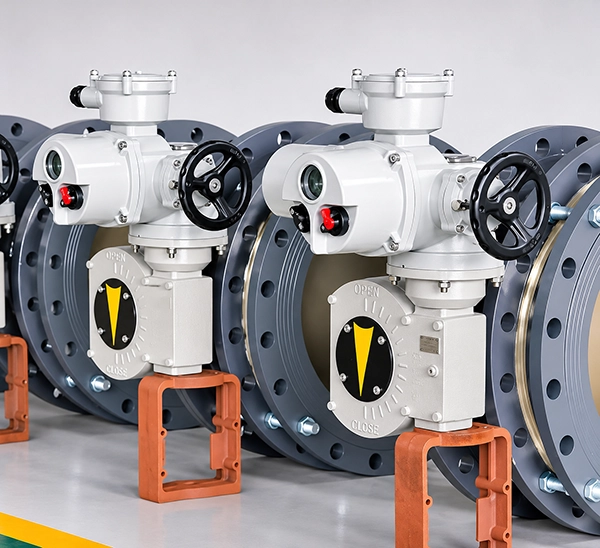
Electric-ready means ready for review, not ready for everything
An electric-ready gearbox usually supports actuator mounting or future automation planning. However, I would not approve actuator compatibility based on that phrase alone. The phrase should trigger a review process.
The review should include:
- Actuator output torque
- Gearbox input torque requirement
- Mounting flange
- Input shaft or coupling
- Bolt pattern
- Manual override needs
- Rotation direction
- Travel angle or turns
- Limit switch setting needs
- Space envelope
- Project environment
A gearbox may be suitable for one actuator brand or model but not another without modification. Even when two actuators follow similar interface standards, the practical assembly details may differ.
Actuator matching connects several disciplines
For example:
| Term | What it should trigger | Who usually cares |
|---|---|---|
| Electric-ready | Actuator interface review | Engineering and purchasing |
| Actuator flange | Mounting compatibility check | Technical manager |
| Input torque | Gearbox-actuator torque matching | Engineering manager |
| Coupling | Shaft connection confirmation | Assembly team |
| Manual override | Operation and maintenance review | Project buyer |
| Duty | Operating frequency and reliability review | End user or EPC team |
In my communication with actuator-related inquiries, I usually ask for actuator drawings or model information early. This avoids a common problem: the buyer selects the gearbox first, selects the actuator later, and then discovers a mounting mismatch.
Why project-specific confirmation still matters
A gearbox can be technically strong and still fail to match a project package if the integration details are wrong. This is especially relevant for valve manufacturers that sell complete valve packages to EPC contractors or infrastructure projects. The gearbox is not evaluated alone. It is evaluated as part of a complete assembly.
Important project-specific questions include:
- Will the valve be manual now and automated later?
- Is the gearbox required to support both handwheel and actuator operation?
- Is the actuator already selected?
- Is the actuator brand fixed by the project specification?
- Does the project require special documentation?
- Does the installation site limit height, width, or maintenance access?
For supplier evaluation, buyers should ask whether the gearbox manufacturer can support actuator interface confirmation and provide drawings. This is more useful than asking only whether the product is electric-ready. Practical engineering terminology makes that difference visible.
How does practical engineering terminology improve quality verification?
Quality terminology can become empty marketing language if it is not connected to evidence.11 Words such as “high quality,” “strict inspection,” and “reliable material” do not help buyers unless they lead to documents, measurements, and traceability.
Practical engineering terminology improves quality verification by connecting each quality term to evidence. Material certificates, heat treatment records, dimensional inspection, assembly checks, torque testing, traceability, and final documentation help buyers evaluate supplier capability more objectively.

Quality terms should lead to documents
When I speak with customers about quality, I try to avoid vague claims. I prefer to discuss what can be checked. For industrial valve gearboxes, typical quality evidence may include:
- Material certificates
- Casting inspection records
- Machining inspection reports
- Gear processing checks
- Heat treatment records
- Assembly verification
- Torque testing records
- Surface treatment checks
- Final inspection reports
- Traceability information
These documents do not automatically prove that a supplier is suitable for every project. However, they give buyers a better basis for evaluation. Buyers should review the documents according to their own project requirements and, when necessary, involve qualified engineering or quality professionals.
Quality evidence supports supplier comparison
| Quality term | Weak interpretation | Practical verification |
|---|---|---|
| Good material | General claim | Material certificate and grade confirmation |
| Heat treated | Unverified process claim | Heat treatment record where applicable |
| Precision machining | Marketing phrase | Dimensional inspection report |
| Torque tested | Broad statement | Test method, test scope, test record |
| Traceable | Unclear promise | Batch, order, or component traceability |
| Final inspection | Generic QC wording | Specific inspection checklist |
Quality control belongs to the full manufacturing process
TFC’s manufacturing context includes casting, precision machining, gear processing, heat treatment, assembly, inspection, torque testing, and final documentation. I mention these steps because each step can create different verification needs.
For example:
- Casting quality affects housing strength and machining stability.
- Machining accuracy affects interface fit and assembly consistency.
- Gear processing affects torque transmission and operating feel.
- Heat treatment may affect gear durability, depending on the component and design.12
- Assembly verification affects backlash, sealing, and operation.
- Torque testing supports performance confirmation within defined conditions.
- Documentation supports procurement approval and future traceability.
This does not mean a buyer should accept every claim at face value. It means buyers should ask for relevant evidence and review it against project needs. If a project has critical service conditions, buyers should request qualified engineering evaluation and any required third-party or project-specific verification.
How can practical engineering terminology align purchasing, engineering, and suppliers?
Many gearbox problems are not caused by one person’s mistake. They happen because different teams use the same word differently. I have seen purchasing, engineering, sales, and suppliers all agree verbally, but each side imagines a different technical scope.
Practical engineering terminology aligns teams by turning shared words into shared confirmation steps. It helps purchasing compare suppliers correctly, helps engineering approve drawings efficiently, helps sales explain scope clearly, and helps OEM or project teams reduce quotation delays and sample mistakes.

Internal alignment reduces delays
In many industrial companies, gearbox selection passes through several hands. A technical manager may define the requirement. A purchasing manager may contact suppliers. A sales engineer may prepare quotations. A project team may review documentation. An OEM partner may request branding or model changes.
If each team uses terms differently, delays appear quickly.
Common examples include:
- Purchasing asks for a quotation before torque data is complete.
- Engineering assumes the supplier has confirmed the bore and keyway.
- Sales describes a gearbox as actuator-ready without actuator model review.
- A project buyer expects inspection documents that were not requested.
- An OEM team changes a model code without updating the drawing record.
A practical communication checklist
I often recommend that buyers structure gearbox inquiries around confirmation categories. This format saves time for both buyer and supplier.
| Category | Information to confirm | Typical document |
|---|---|---|
| Valve data | Valve type, size, torque, operating condition | Valve datasheet |
| Gearbox torque | Required output torque, safety margin | Selection record |
| Interface | ISO 5211, flange, bore, keyway, stem details | Drawings |
| Actuator plan | Manual, electric-ready, actuator model | Actuator drawing |
| Quality evidence | Inspection, testing, traceability | QC documents |
| OEM needs | Branding, model code, packaging, confidentiality | OEM agreement |
| Project needs | Documentation, delivery plan, compliance review | Project specification |
Better terminology improves supplier evaluation
A capable supplier should not only provide a price. A capable supplier should understand the technical terms behind the request and ask reasonable questions when information is missing. In my view, this is an important part of supplier evaluation.
Buyers can observe whether the supplier:
- Requests missing torque data before model confirmation.
- Reviews drawings instead of relying only on labels.
- Clarifies actuator interface before saying “compatible.”
- Provides inspection and testing information when needed.
- Supports OEM configuration records for repeat orders.
- Communicates technical limitations clearly.
At TFC, we position gearbox communication as part of engineering support. We do not try to turn every technical term into a sales phrase. I believe that customers gain more value when terminology supports real decisions: torque selection, interface confirmation, actuator matching, quality verification, and production planning.
Frequently Asked Questions
What is practical engineering terminology in valve gearbox procurement?
Practical engineering terminology means using technical terms as confirmation tools during gearbox selection. It connects words such as torque, ISO 5211, bore, actuator-ready, inspection, and traceability to actual drawings, documents, test records, and supplier evaluation steps.
Why is torque terminology important for gearbox selection?
Torque terminology is important because one torque number is rarely enough. Buyers should confirm valve operating torque, break torque, gearbox output torque, safety margin, duty, and application conditions. This helps prevent undersized selection, unnecessary oversizing, and actuator matching problems.
Does ISO 5211 compatibility mean the gearbox will fit my valve?
ISO 5211 compatibility does not remove the need for drawing confirmation. Buyers should still confirm flange size, bolt pattern, pilot diameter, bore, keyway, stem connection, mounting height, and orientation. The standard supports compatibility, but project-specific details still matter.
What should buyers ask for when suppliers mention quality control?
Buyers should ask for relevant evidence such as material certificates, dimensional inspection reports, assembly checks, torque testing records, traceability information, and final inspection documents. The required documents should match the project’s risk level and customer approval process.
Is an electric-ready gearbox compatible with any actuator?
An electric-ready gearbox is not automatically compatible with every actuator. Buyers should confirm actuator model, mounting flange, input torque, coupling, bolt pattern, rotation direction, and installation space. Engineering review is still required before final approval.
Conclusion
Practical engineering terminology helps buyers move from general words to confirmed decisions. It improves torque review, interface drawing confirmation, actuator matching, quality verification, and supplier communication. I see its value most clearly when engineering, purchasing, OEM partners, and project teams use the same terms in the same way. If your team is reviewing valve gearbox requirements, TFC can support technical communication, drawing confirmation, OEM discussion, and gearbox selection based on practical engineering evidence.
"Reducing Requirements Ambiguity via Gamification - PMC - NIH", https://pmc.ncbi.nlm.nih.gov/articles/PMC9313919/. Research on engineering requirements quality shows that ambiguous or incomplete requirements can contribute to rework, schedule delay, and downstream implementation errors; this supports the article’s point in a general engineering-communication context rather than as valve-gearbox-specific proof. Evidence role: general_support; source type: research. Supports: Ambiguous or incomplete engineering requirements are associated with rework, delays, and implementation risk in technical projects.. Scope note: Contextual support; the source may address engineering requirements broadly rather than valve gearbox procurement specifically. ↩
"Can One Valve Actuator Fit Different Valve Sizes? - Fleyenda Valve", https://www.fleyendavalve.com/can-one-valve-actuator-fit-different-valve-sizes/. Institutional guidance on valve actuator sizing states that actuator selection depends on valve characteristics, service conditions, required torque, and mounting arrangements, supporting the article’s claim that selection requires more than a generic compatibility label. Evidence role: general_support; source type: institution. Supports: Valve actuator or gearbox selection requires information about valve type, operating conditions, torque demand, and mechanical interfaces.. Scope note: Contextual support; such guidance may address actuators generally and may not use the exact term “valve gearbox.” ↩
"3.3 Design Basis Valve Stem Torque", https://www.nrc.gov/docs/ml1134/ml11347a386.pdf. Engineering references on valve actuation describe operating torque as a function of valve design and service conditions, including pressure differential, media, seating friction, and operating state, supporting the article’s statement that torque is application-dependent. Evidence role: mechanism; source type: education. Supports: Valve operating torque is not a fixed value and varies with design and service variables.. Scope note: Contextual support; the source may discuss valve actuation generally rather than a specific gearbox model. ↩
"Ball Valve Torque: Breakaway, Running and Actuator Basics", https://ntgdvalve.com/ball-valve-torque/. Valve actuation guidance commonly distinguishes breakaway torque from running torque and notes that the initial torque required to start valve movement may be higher than subsequent operating torque, supporting the article’s emphasis on confirming break torque during selection. Evidence role: mechanism; source type: institution. Supports: Breakaway torque can exceed the torque required after valve movement begins and is relevant to actuator or gearbox sizing.. Scope note: Contextual support; values and behavior depend on valve design, sealing system, pressure, and service condition. ↩
"Safe-by-Design in Engineering: An Overview and Comparative ... - PMC", https://pmc.ncbi.nlm.nih.gov/articles/PMC8296130/. Engineering design references describe safety or service factors as allowances for uncertainty in loads, operating conditions, materials, and service environments, supporting the article’s statement that a sizing margin may be needed when field conditions differ from test conditions. Evidence role: expert_consensus; source type: education. Supports: Engineering sizing commonly uses safety or service factors to account for uncertainty between nominal/test conditions and real service conditions.. Scope note: Contextual support; the exact margin must be determined by the applicable valve, gearbox, project specification, and engineering review. ↩
"Pros, Cons, and Alternatives to Weight Based Cost Estimating", https://ntrs.nasa.gov/api/citations/20110014954/downloads/20110014954.pdf. Mechanical design literature identifies oversizing as a trade-off that can increase mass, cost, packaging requirements, and interface loads, supporting the article’s caution that a larger gearbox is not automatically the better engineering choice. Evidence role: general_support; source type: education. Supports: Oversizing mechanical components can impose trade-offs such as increased mass, cost, envelope size, and integration constraints.. Scope note: Contextual support; the source may address general mechanical design rather than valve gearboxes specifically. ↩
"ISO 5211:2023 - Industrial valves — Part-turn actuator attachments", https://www.iso.org/standard/86753.html. ISO’s description of ISO 5211 identifies it as a standard for attachments between part-turn actuators and industrial valves, supporting the article’s statement that the standard contributes to mounting-interface standardization. Evidence role: definition; source type: institution. Supports: ISO 5211 defines interface requirements for attaching part-turn actuators to industrial valves.. ↩
"ISO 5211 Actuated Valve Mounting Guide", https://www.onoffvalve.com/iso-5211-actuated-valve-mounting-guide/. The scope of ISO 5211 concerns standardized attachment dimensions for part-turn valve actuators, which supports the article’s point that an ISO 5211 label is an interface checkpoint rather than complete proof of project-specific valve, gearbox, and actuator compatibility. Evidence role: definition; source type: institution. Supports: ISO 5211 concerns actuator-to-valve attachment dimensions, while complete assembly compatibility also depends on project-specific mechanical and performance details.. Scope note: Contextual support; the standard defines the interface scope but does not directly evaluate any specific product combination. ↩
"Key (engineering)", https://en.wikipedia.org/wiki/Key_(engineering). Machine design references describe keys and keyways as elements that transmit torque between shafts and hubs, supporting the article’s statement that an incorrect keyway can prevent the connection from transmitting torque as intended. Evidence role: mechanism; source type: education. Supports: Keys and keyways are used in shaft-hub connections to transmit torque, and incorrect dimensions can impair that function.. ↩
"ISO5211 Standards for Valve Gear Operators and Actuator Mounting", https://valvewormgear.com/support/iso5211-standards/. Valve actuator selection guidance identifies torque capacity, mounting interface, coupling or shaft arrangement, and installation constraints as compatibility factors, supporting the article’s claim that an “electric-ready” gearbox is not universally compatible with all actuators. Evidence role: general_support; source type: institution. Supports: Actuator compatibility depends on mechanical interface and performance requirements, including torque and mounting arrangement, so a generic electric-ready label is insufficient.. Scope note: Contextual support; the source may not use the exact phrase “electric-ready,” but it supports the underlying compatibility factors. ↩
"ISO 9001 and 9002 Requirements by Section", https://faculty-web.msoe.edu/tritt/be4xx/iso9000sum.html. ISO 9001 quality-management principles require organizations to retain documented information as evidence of conformity and to control identification and traceability where applicable, supporting the article’s view that quality terminology should be tied to verifiable evidence rather than unsupported claims. Evidence role: expert_consensus; source type: institution. Supports: Quality management standards require documented information and evidence of conformity where necessary, supporting the need to connect quality claims to records and verification.. Scope note: Contextual support; ISO 9001 establishes quality-management requirements but does not prove any individual supplier’s product quality. ↩
"Micro- and Macroscopic Analysis of Fatigue Wear of Gear Wheel ... - PMC", https://pmc.ncbi.nlm.nih.gov/articles/PMC11242718/. Studies of gear materials and heat treatment show that processes such as carburizing, quenching, or tempering can alter hardness, wear resistance, and fatigue performance, supporting the article’s statement that heat treatment may affect gear durability depending on component design and material conditions. Evidence role: mechanism; source type: paper. Supports: Heat treatment can change gear material properties that influence durability, including hardness, wear resistance, and fatigue behavior.. Scope note: Contextual support; the effect varies by alloy, heat-treatment process, geometry, loading, lubrication, and service environment. ↩