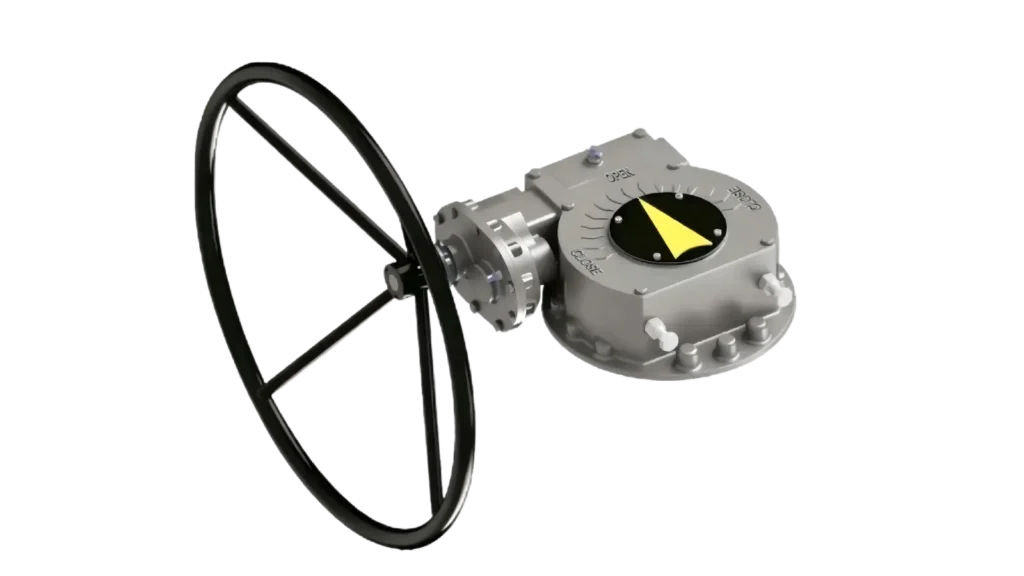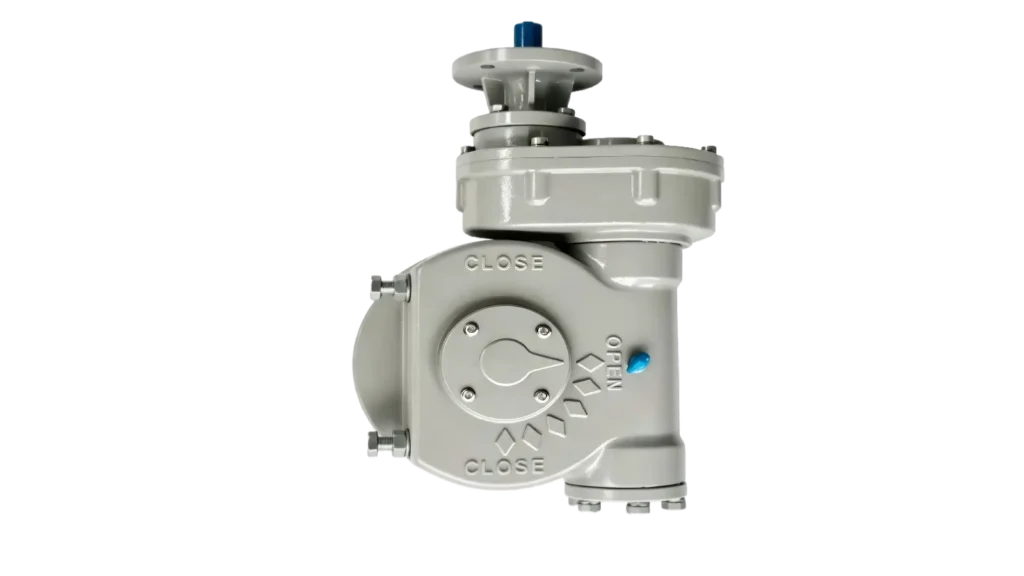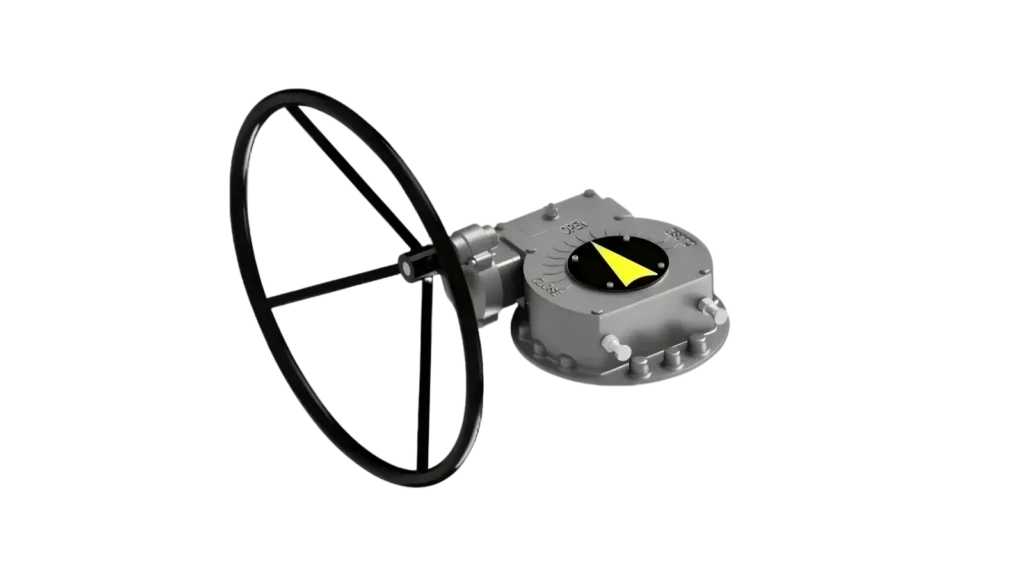

Selecting the wrong valve gear operator is rarely obvious at the point of purchase. The bolt pattern fits. The shaft size checks out. The unit ships on time. The problem surfaces later — under differential pressure, mid-cycle, in a process line that cannot stop. If you are specifying or approving a valve operator, the OEM-vs-aftermarket question deserves more rigour than a price comparison.
The OEM vs. aftermarket operator decision is fundamentally a compatibility and torque-risk verification problem. An aftermarket operator may achieve a dimensional fit without achieving an engineering fit — matching the ISO 5211 bolt pattern and stem connection while failing to meet the valve's actual operating torque requirement under process conditions. Before selecting either path, two gates must pass: verified interface compatibility, and torque rating confirmed against real operating load, not nominal valve size.
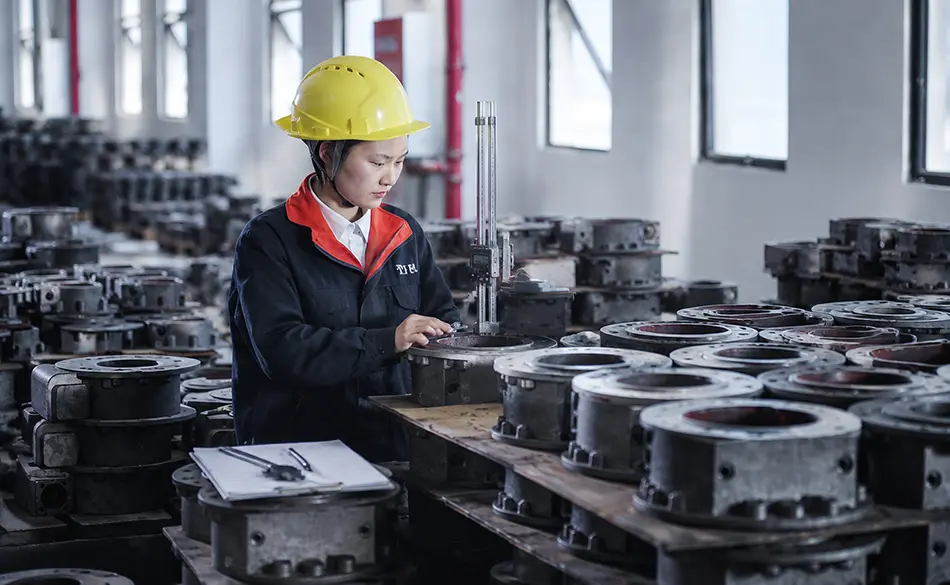
The distinction between dimensional fit and engineering fit is the thread that runs through every section below. Understanding it changes how you evaluate both options — and where you accept risk.
What Does an OEM Operator Actually Include?
When procurement teams ask about OEM operators, the conversation often starts with price. That framing misses the point. The more useful question is: what did the valve manufacturer verify, and what are you buying access to?
An OEM operator is a validated system component, not a premium version of a generic product. The valve manufacturer has tested the operator's torque curve, interface geometry, and load cycle against that specific valve body. When you specify the OEM operator, you are purchasing that verification — along with the hardware.

That distinction has real engineering weight when you look at what the validation actually covers.
What OEM Validation Typically Covers
In our experience working with valve manufacturers on OEM gearbox specifications, the validation process addresses several variables that a dimensional check does not capture:
- Breakaway torque under process conditions. The torque required to unseat a valve under rated differential pressure is substantially higher than the torque needed to continue turning it1. OEM specifications are developed against this figure, not a generic safety factor.
- Stem friction accumulation. Valve stems accumulate friction under thermal cycling, process media contamination, and extended idle periods2. The OEM torque rating accounts for the specific stem geometry and packing load of that valve model.
- Load cycle compatibility. A valve rated for infrequent manual operation and a valve rated for automated cycling place different demands on the gear operator. OEM specifications reflect the intended duty cycle of that valve body.
- Interface geometry tolerance stack. ISO 5211 defines the bolt circle and bore dimensions, but it does not eliminate tolerance accumulation across the full assembly3. OEM cooperation typically involves dimensional confirmation against the actual valve flange, not just the standard.
What the Documentation Delivers
OEM operators generally arrive with engineering documentation that covers the above. For EPC contractors and valve manufacturers supplying to regulated industries, this documentation is not optional — it is part of the project record. A replacement unit that cannot produce equivalent documentation creates a compliance gap independent of its mechanical performance.
It is worth being direct: OEM designation is not a guarantee of quality. It is evidence of system-level verification. Buyers should treat it as a starting point for confirmation, not as a reason to skip technical review.
Where Do Aftermarket Operators Create Risk?
Aftermarket operators occupy a legitimate market position, and the selection error is not choosing them — it is choosing them without completing the verification that OEM cooperation performs by default.
The most common problem we see in technical reviews is the assumption that dimensional fit equals engineering fit. A gear operator that matches the ISO 5211 flange pattern and the stem bore is installable. That does not mean it is correctly rated for the application.
The critical risk with aftermarket operators is torque mismatch — selecting a unit based on valve size or nominal pressure class rather than calculated operating torque. An operator that is undersized for the actual breakaway torque will either fail to operate the valve under load, or generate excess stress on the stem and packing under repeated attempts4.
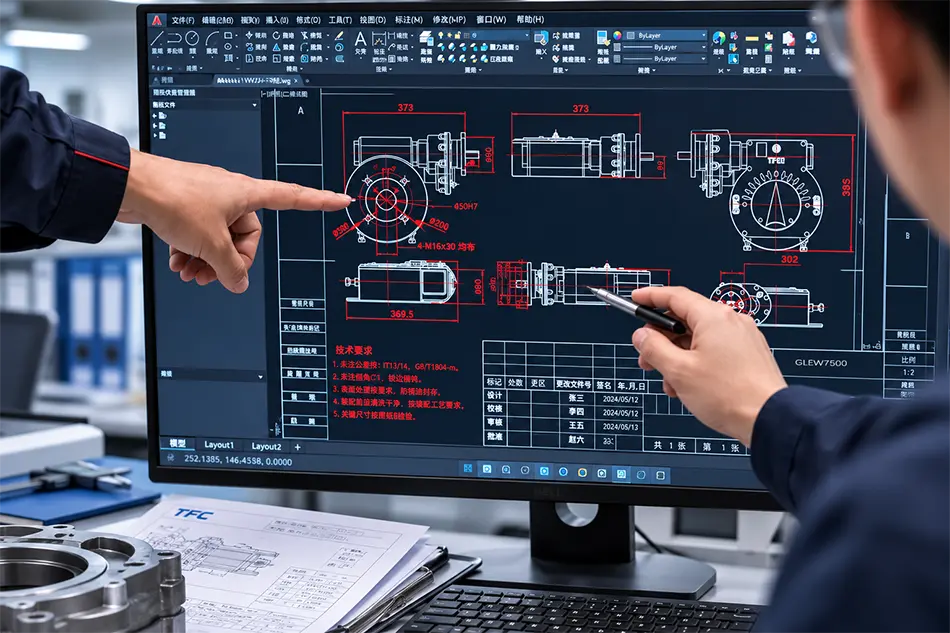
The Two-Gate Selection Framework
What we typically recommend for any operator selection — OEM or aftermarket — is a two-gate verification before approval:
Gate 1: Interface Compatibility — Verified, Not Assumed
| Check | What to Confirm |
|---|---|
| ISO 5211 flange size | Matches valve manufacturer's specified output flange |
| Stem bore and key | Matches stem profile — square, double-D, or keyway as applicable |
| Bore depth | Sufficient for full stem engagement under thrust load |
| Torque transfer geometry | Stem connection transfers load without concentrated stress on valve stem |
A common shortcut is to confirm the ISO 5211 designation (F07, F10, F14, etc.) and assume the rest follows. In practice, the bore and key configuration within a given flange size can vary significantly across valve manufacturers. Confirming the flange size is necessary but not sufficient.
Gate 2: Torque Rating — Calculated Against Operating Conditions
This is where most aftermarket selection errors originate. The torque rating on an aftermarket operator is typically its output capacity. The question is whether that capacity covers the actual demand.
Operating torque is driven by:
- Differential pressure across the valve disc or plug at time of actuation
- Seat and stem packing friction
- Fluid viscosity and temperature effects on seating force
- Safety factor applied to account for degradation over service life
Nominal valve size is a proxy for this figure, not a calculation5. A 10-inch butterfly valve in a low-pressure water line and a 10-inch butterfly valve in a high-pressure gas isolation service can have dramatically different breakaway torque requirements6. Specifying an operator by valve size without calculating operating torque is the selection error that produces field failures.
When Is an Aftermarket Operator the Right Choice?
Aftermarket operators are not an inferior category by definition. In the right conditions, they are a reasonable procurement decision. The conditions need to be stated explicitly rather than assumed.
Aftermarket operators are appropriate when: (1) the application is low-criticality with wide torque margins, (2) the duty cycle is low-frequency, (3) dimensional and torque compatibility have been independently verified against operating conditions, and (4) documentation requirements do not mandate OEM traceability.
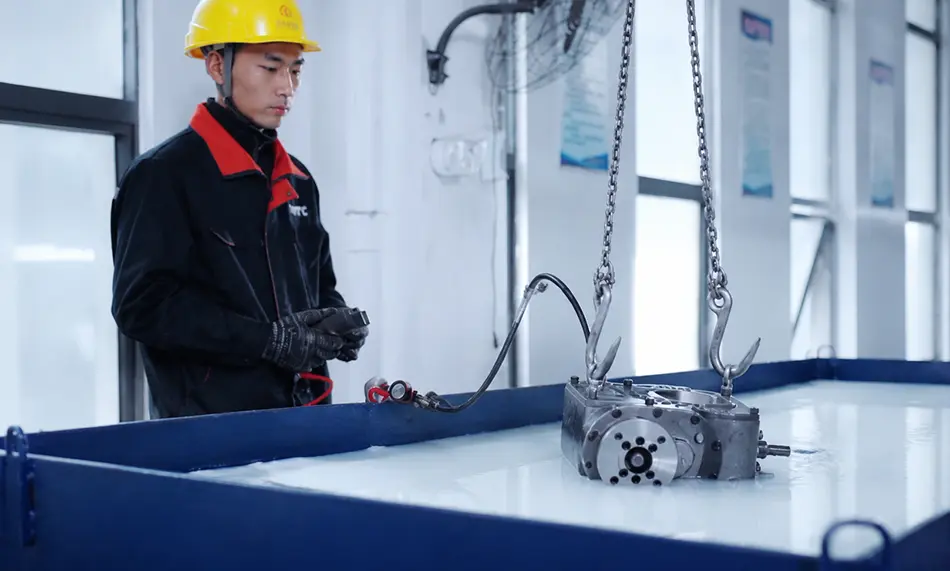
Conditions That Support Aftermarket Selection
- Low-criticality service. Manual isolation valves in non-hazardous utility service, low-pressure water lines, or maintenance bypass positions are typical candidates. Failure consequence is low and operator access for correction is straightforward.
- Wide torque margins. If the calculated operating torque is well below the operator's rated output — and that calculation has been done against actual operating conditions, not nominal size — the risk of torque mismatch is reduced.
- Short or infrequent duty cycles. Valves that operate rarely and under accessible conditions place lower cumulative stress on the operator than automated or high-cycle applications7.
- Replacement in-kind with technical confirmation. Replacing a failed operator with a verified equivalent — same geometry, same or higher torque rating, confirmed through technical comparison — is a different risk profile than specifying from scratch without reference data.
Conditions That Argue Against Aftermarket Selection
- Safety-critical isolation or emergency shutoff applications
- Automated valve service with defined cycle counts
- Projects where the valve manufacturer's warranty is contingent on specified components
- Any application where the operating torque has not been independently calculated
The boundary is not OEM vs. aftermarket as categories — it is whether the two verification gates have been passed.
How OEM Gearbox Cooperation Works in Practice
For valve manufacturers evaluating an OEM gearbox partner, the process is worth understanding separately from the end-user selection question above.
OEM cooperation is not simply purchasing a branded unit from a gearbox manufacturer. It is a technical alignment process that produces a verified operator configuration specific to the valve model.
In OEM gearbox cooperation, the valve manufacturer and gearbox manufacturer work through interface confirmation, torque specification, and documentation alignment before production begins. The output is a gearbox configuration validated for that valve — not a standard product with the valve manufacturer's label.
What the OEM Process Typically Involves
In our work supporting valve manufacturers on OEM operator programs, the technical cooperation typically covers:
-
Torque specification development. The valve manufacturer provides operating torque data by model and pressure class. The gearbox manufacturer confirms that the proposed unit's output torque, gear ratio, and input effort meet the specification across the operating range.
-
Interface geometry confirmation. The ISO 5211 flange, stem bore, and keyway are confirmed against the valve manufacturer's actual production drawings — not assumed from the standard.
-
Drawing package alignment. The gearbox dimensional drawings are reconciled with the valve's interface drawings to confirm fit, clearance, and assembly sequence.
-
Documentation package. Material certificates, inspection reports, torque test records, and dimensional inspection documentation are agreed before production begins.
-
Sample approval. Initial production samples are verified against the valve before volume supply begins.
This process is why OEM operators carry a system-verification value that aftermarket equivalents cannot replicate without performing equivalent work independently.
Frequently Asked Questions
Does ISO 5211 compliance guarantee that an aftermarket operator will fit my valve?
ISO 5211 compliance confirms the bolt circle diameter, bolt size, and output bore dimensions for a given flange category. It does not guarantee that the stem bore profile, key configuration, or bore depth will match your specific valve stem. Interface compatibility requires confirmation against the valve manufacturer's actual stem specification, not just the standard designation.
How do I calculate the operating torque for my valve application?
Operating torque is calculated from differential pressure, valve seat geometry, stem friction, and a service factor. The valve manufacturer's technical documentation typically provides breakaway torque figures by model and pressure rating. If that data is not available, a qualified valve or gearbox engineer should perform the calculation before operator selection — nominal valve size is not a reliable substitute.
Will using an aftermarket operator void my valve manufacturer's warranty?
This depends on the valve manufacturer's warranty terms. Many valve manufacturers specify that warranty coverage is contingent on the use of approved or OEM-supplied operators8. Substituting an aftermarket unit without approval may transfer liability for torque-related failures to the buyer. Confirm warranty terms before aftermarket substitution in any application where warranty coverage is commercially relevant.
What documentation should I request when evaluating an operator supplier?
At minimum: dimensional drawings with ISO 5211 flange confirmation, torque output specifications with gear ratio and input torque data, material certificates for structural components, and an inspection report for the specific production batch. For regulated applications, a full material traceability record and third-party test reports may be required.
When should an aftermarket operator be reviewed by an engineer before installation?
Any time the operating torque has not been independently calculated, the application is automated or high-cycle, the service involves hazardous media or safety-critical isolation, or the dimensional compatibility has not been confirmed against the valve manufacturer's actual stem specification. In practice, these conditions cover most industrial pipeline applications.
Conclusion
The OEM vs. aftermarket operator question resolves more clearly when it is treated as a verification problem rather than a price decision. Valve gear operator selection requires two gates to pass before approval: confirmed interface compatibility at the stem and flange level, and a torque rating calculated against actual operating conditions — not nominal valve size. OEM operators provide a documented system verification that covers both gates by default. Aftermarket operators can meet the same standard, but only when the buyer performs equivalent verification independently. For low-criticality, wide-margin applications with minimal documentation requirements, aftermarket operators are a legitimate choice. For automated service, safety-critical isolation, or any application where torque margin has not been calculated, the OEM path carries less engineering risk regardless of unit cost. If you are specifying a valve gear operator and working through either gate, TFC's engineering team is available to support torque review and interface confirmation as part of the evaluation process.
"Transient Effects on Dynamic Torque for Butterfly Valves", https://digitalcommons.usu.edu/cgi/viewcontent.cgi?article=1253&context=gradreports. Valve engineering literature and actuator sizing standards document that unseating torque under rated differential pressure can exceed running torque by a factor of two or more depending on valve type, seat material, and pressure class; this ratio is a primary input to actuator and gear operator sizing calculations. Evidence role: mechanism; source type: research. Supports: That breakaway (unseating) torque for valves under differential pressure significantly exceeds running torque, and how this ratio varies with pressure class and valve type. Scope note: The precise ratio varies substantially by valve design, seat configuration, and service conditions; a general citation provides context but does not substitute for valve-specific torque data from the manufacturer. ↩
"A Review of Valve Stem Sealing to Prevent Leakage from ...", https://www.academia.edu/99704739/A_Review_of_Valve_Stem_Sealing_to_Prevent_Leakage_from_the_Valve_and_Its_Effect_on_Valve_Operation. Studies on valve packing and stem friction document that operating torque requirements increase over service life due to packing consolidation under thermal cycling, corrosion product accumulation on stem surfaces, and packing swell from process media absorption, with torque increases of 20–50% reported in accelerated aging tests depending on packing material and service conditions. Evidence role: mechanism; source type: research. Supports: That valve stem friction and required operating torque increase over service life as a result of thermal cycling, packing compression, and process media effects. Scope note: Published data on friction accumulation rates is largely application-specific; general figures may not apply to all valve types, packing materials, or service environments. ↩
"ISO 5211:2023 - Part-turn actuator attachments", https://www.iso.org/standard/86753.html. ISO 5211 ('Industrial valves — Part-turn actuator attachment') specifies the dimensions of the interface between part-turn valves and their actuators, including bolt circle diameters, bore sizes, and flange categories (F03 through F40), but does not prescribe stem key profiles or bore depth tolerances, which remain subject to individual manufacturer specification. Evidence role: definition; source type: institution. Supports: What ISO 5211 specifies regarding bolt circle diameter, bore dimensions, and flange categories for part-turn valve actuator interfaces, and what falls outside its scope. Scope note: Access to the full ISO 5211 text requires purchase from ISO or a national standards body; publicly available summaries may not capture all normative requirements. ↩
"Common Valve Actuator Sizing Mistakes to Avoid", https://arpcovalves.com/blog/common-valve-actuator-sizing-mistakes-to-avoid/. Valve failure analysis literature documents that repeated application of torque approaching or exceeding stem yield strength — as occurs when an undersized operator is used against a valve that cannot be unseated — produces progressive stem deformation, packing extrusion, and seat damage; these failure modes are cited in maintenance engineering references as consequences of actuator undersizing in process plant valve applications. Evidence role: mechanism; source type: research. Supports: That applying torque in excess of stem design limits through repeated actuation attempts with an undersized operator can cause stem yielding, packing damage, or seat damage in industrial valves. Scope note: Published failure case studies are often proprietary or application-specific; the mechanism is well-established in engineering practice but systematic published data on failure rates attributable specifically to operator undersizing is limited. ↩
"Common-Cause Failure Event Insights Motor-Operated ...", https://www.nrc.gov/docs/ML0317/ML031710328.pdf. Process plant reliability and maintenance engineering literature identifies actuator and operator undersizing — frequently resulting from selection based on nominal valve size rather than calculated operating torque — as a recurring root cause in valve-related process upsets and maintenance failures; industry bodies including the Valve Manufacturers Association of America (VMA) and the Fluid Controls Institute have published guidance emphasizing torque-based rather than size-based operator selection. Evidence role: general_support; source type: institution. Supports: That valve actuator and operator selection based on nominal valve size rather than calculated operating torque is a recognized source of field failures in process plant applications. Scope note: Systematic industry-wide statistics on the frequency of failures attributable specifically to size-based operator selection are not publicly available; the claim is supported by qualitative engineering consensus rather than quantitative failure rate data. ↩
"The Ultimate Guide to Butterfly Valve Selection", https://www.bray.com/valves-actuators-controls/butterfly-valves/the-ultimate-guide-to-butterfly-valve-selection. Actuator sizing engineering references demonstrate that required operating torque for a given valve nominal diameter scales with differential pressure and seat geometry such that torque requirements for high-pressure gas service can exceed those for low-pressure liquid service by an order of magnitude at the same nominal pipe size, confirming that nominal size alone is an insufficient basis for operator selection. Evidence role: mechanism; source type: research. Supports: That operating torque for a given valve nominal size varies substantially with differential pressure, fluid type, and service conditions, making nominal size an unreliable basis for operator selection. Scope note: Quantitative comparisons depend on specific valve design, seat material, and pressure rating; published examples are illustrative rather than universally applicable. ↩
""Review of Manual Valve Failures."", https://www.nrc.gov/docs/ML2012/ML20125C137.pdf. Mechanical engineering fatigue principles and gear operator manufacturer technical specifications document that gear and worm drive components accumulate fatigue damage proportional to load cycle count and torque magnitude; actuator and gear operator manufacturers typically specify separate duty cycle ratings (e.g., number of operations per hour or total cycle life) for automated versus manual service, reflecting the substantially higher cumulative loading in automated applications. Evidence role: mechanism; source type: research. Supports: That cumulative mechanical fatigue in valve gear operators is a function of operating cycle count and load, such that automated high-cycle service produces substantially greater wear and fatigue loading than infrequent manual operation. Scope note: Quantitative cycle life data is product-specific; general fatigue principles support the directional claim but do not substitute for manufacturer-specific duty cycle ratings. ↩
"Do Aftermarket Parts Void Your Car Warranty? The TRUTH", https://www.ensightauto.com/blogs/news/do-aftermarket-parts-void-your-car-warranty-the-truth-about-the-magnuson-moss-act?srsltid=AYCX9vIQQ6Q3a_miI0hI1jQTVDN50cRIGk2FJTsbQtKX5WhawMI5aCT6. Industry guidance on valve procurement and maintenance notes that original equipment manufacturer warranties for valves and rotating equipment frequently include provisions limiting coverage to configurations using manufacturer-approved components, with substitution of non-approved actuators or operators cited as a common basis for warranty disputes in process plant maintenance records. Evidence role: general_support; source type: institution. Supports: That valve manufacturer warranties commonly include conditions requiring use of specified or OEM-approved operators, and that substitution of non-approved components may affect warranty coverage. Scope note: Warranty terms vary by manufacturer and contract; this claim requires verification against the specific valve manufacturer's warranty documentation for each application. ↩