Choosing a gearbox for a butterfly valve sounds straightforward — until a field failure lands back on your desk six months after installation. Most buyers treat gearbox selection as a torque lookup, pick a size that fits the mounting flange, and move on. That single-variable approach is exactly where preventable procurement mistakes begin.
Choosing the right gearbox for a butterfly valve requires evaluating four interdependent variables: operating torque, installation environment, IP protection rating, and material compatibility. Torque sizing is the entry point, but environment mismatches, under-specified protection ratings, and incorrect material choices are the actual causes of most premature gearbox failures in the field.
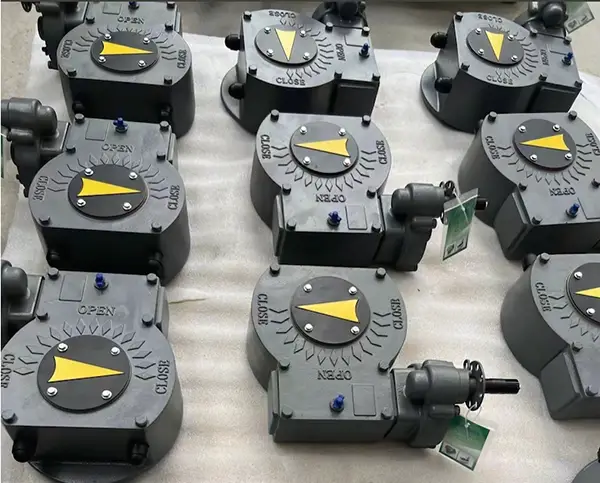
What separates a confident gearbox selection from a costly re-sourcing event is a structured checklist — one that treats torque as a gate to pass, not a finish line. The four sections below walk through each variable in the order it should appear in your evaluation process.
Is Operating Torque Enough to Select a Butterfly Valve Gearbox?
Most procurement requests we receive start with torque — and rightly so. Torque is the non-negotiable mechanical foundation. Without sufficient output torque, the gearbox cannot operate the valve. But torque alone cannot tell you whether the gearbox will still be operating correctly in three years.
Operating torque is a necessary starting point for gearbox selection, but it is not sufficient on its own. A correctly sized torque output must be confirmed against the valve's maximum seating torque, safety factor requirements, and actuator or handwheel input — before any environmental or material criteria are applied.
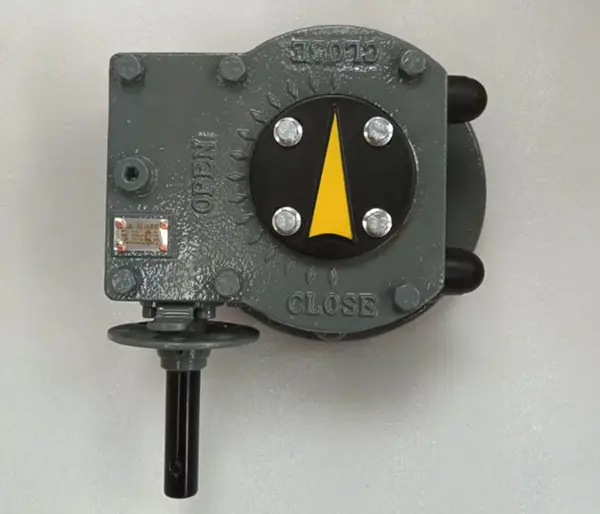
Understanding how torque flows through the selection process helps avoid both undersizing and oversizing errors.
What Torque Values Actually Matter?
Three torque values matter in butterfly valve gearbox sizing:
- Maximum seating/unseating torque — the highest torque demand, usually at the fully closed or fully open seat position
- Running torque — the torque required to rotate the disc through the normal operating arc
- Breakaway torque — the torque needed to initiate movement after the valve has been static under pressure for an extended period
The gearbox output torque must comfortably exceed the maximum of these three values, with an appropriate safety factor applied. The safety factor is application-dependent and should be confirmed with both your valve designer and your gearbox supplier. We would never recommend applying a generic multiplier here — a buried, high-cycle valve in a pipeline system carries very different risk than a low-cycle isolation valve in a clean utility line.
Input Ratio and Handwheel Torque
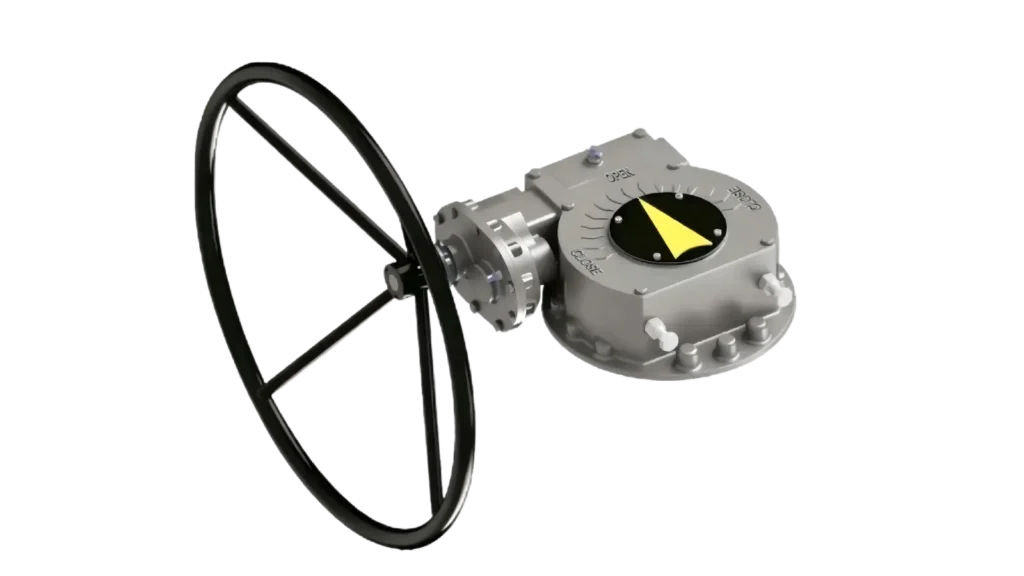
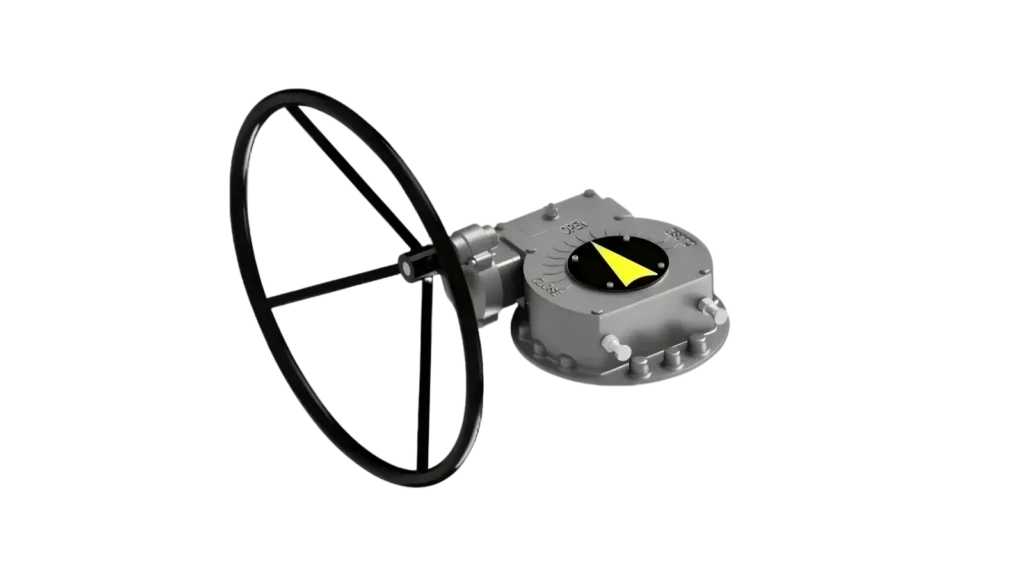
For manually operated butterfly valves, the gear ratio determines how much handwheel effort your operator will need in the field. A common oversight is selecting a gear ratio that meets torque output requirements but demands excessive handwheel force — above acceptable ergonomic thresholds for field personnel1.
| Torque Demand | Typical Gear Ratio Range | Approximate Handwheel Input |
|---|---|---|
| Low (< 500 Nm) | 1:10 to 1:20 | Standard handwheel, one operator |
| Medium (500–3000 Nm) | 1:20 to 1:40 | Standard handwheel, manageable |
| High (3000–15000 Nm) | 1:40 to 1:80 | Extended wheel or double reduction |
| Very High (> 15000 Nm) | 1:80+ or bevel + worm combination | Engineered solution required |
These ranges are indicative only. Always confirm final ratio selection with your gearbox supplier based on your specific valve and actuator configuration.
Electric Actuator Integration
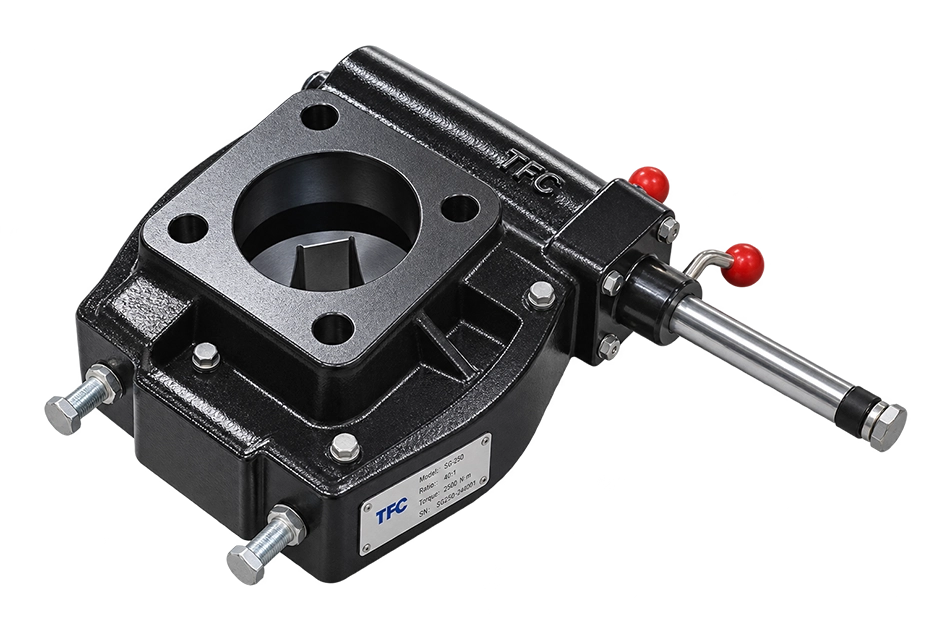
When the butterfly valve gearbox will be driven by an electric actuator rather than a handwheel, the torque sizing logic changes. Input speed, actuator output torque, and ISO 5211 interface compatibility all become critical parameters. The gearbox must be confirmed as actuator-ready — with the correct mounting flange pattern, shaft interface, and torque capacity to accept the actuator without adapter distortion.
Why Does Installation Environment Change the Gearbox Specification?
This is where the most expensive mistakes happen. In my experience reviewing project inquiries, environment-related mismatches are the most recurring cause of premature gearbox failure2 — and the most preventable. Buyers focus on what the gearbox must do mechanically. They frequently overlook where the gearbox will spend the next ten to twenty years.
The installation environment directly determines which gearbox housing design, sealing standard, coating system, and lubrication type are appropriate. Standard gearboxes installed in buried, submerged, offshore, or extreme-temperature environments without environment-specific configurations will typically fail ahead of their rated service life.
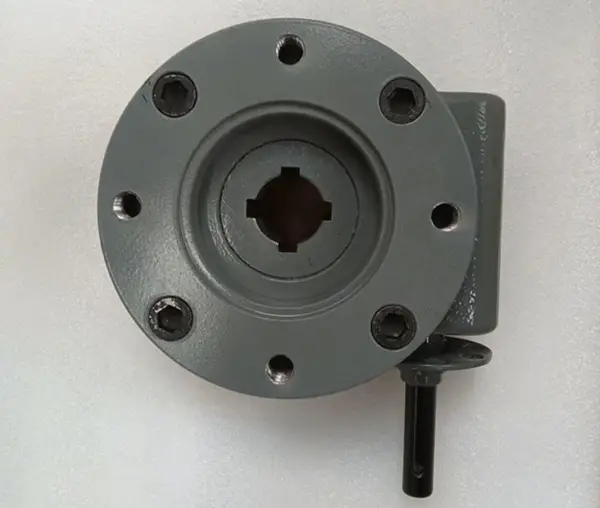
Let me break down the environment categories that most commonly appear in inquiries — and what each one demands from the gearbox specification.
Buried and Underground Installations
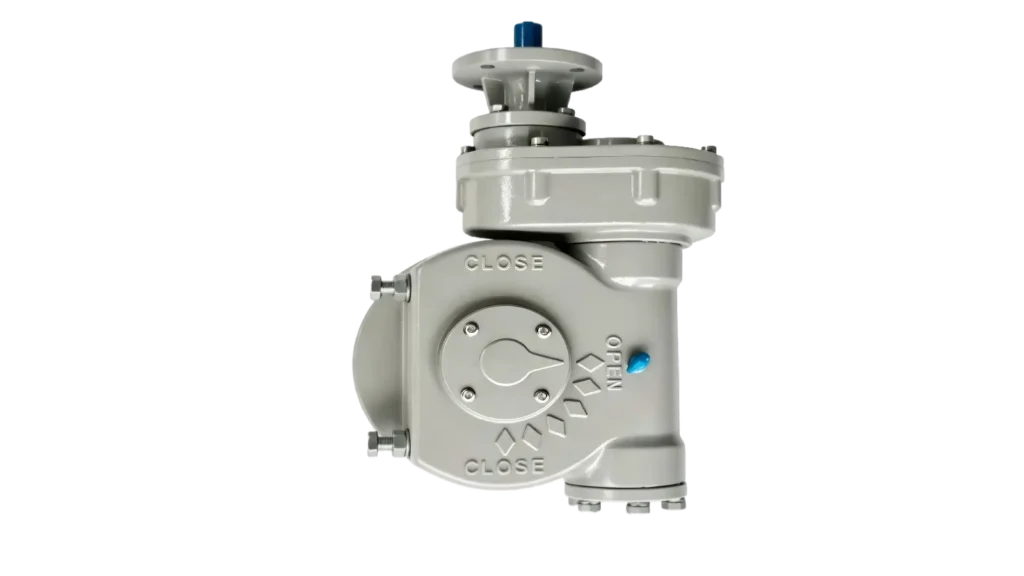
Buried valve applications are one of the most consistently under-specified environments we encounter. A buyer requests a standard quarter-turn worm gearbox for a water distribution butterfly valve — and the installation detail reveals the valve is buried 1.5 metres underground with no vault access.
Key considerations for buried installations:
- Groundwater ingress — hydrostatic pressure can force water past standard seals; IP68 or equivalent submersion ratings may be required
- Soil chemistry — acidic or saline soils accelerate external housing corrosion3
- Vent plug location — standard breather vents allow moisture exchange and are completely inappropriate in buried applications
- Extended stem requirements — buried gearboxes often require extended output shafts or risers for surface-level operation
A standard IP65-rated gearbox is not appropriate for a buried application without engineering review of the specific burial depth and groundwater conditions.
Outdoor and Coastal Environments
Outdoor installations in coastal zones introduce salt-laden air, UV degradation, and cyclic wet-dry corrosion conditions that accelerate paint failure and seal deterioration4. Projects in port infrastructure, offshore platforms, marine terminals, and coastal pipeline corridors all fall into this category.
For these environments, buyers should be asking their supplier:
- What is the coating system specification — primer type, topcoat type, and total DFT (dry film thickness)?
- Has the housing material been selected for coastal exposure, or is it standard carbon steel with standard paint?
- Are the external fasteners stainless steel or treated to prevent galvanic corrosion with the housing?
Cold Climate and Low-Temperature Applications
Projects in Russia, Central Asia, northern Canada, and high-altitude environments frequently involve operating temperatures that reach −30°C to −50°C. This is a recurring pattern in our project inquiries from those regions.
Standard lubricants in worm gearboxes can thicken significantly at sub-zero temperatures, dramatically increasing breakaway torque and reducing gear efficiency5. Seals formulated for standard temperature ranges can also harden and lose their sealing performance in extreme cold.
Low-temperature applications require:
- Cold-rated lubricants confirmed to remain mobile at the minimum expected operating temperature
- Seal materials (e.g., specific elastomers) with confirmed low-temperature flexibility
- Housing materials that maintain impact resistance at minimum temperature — standard grey cast iron becomes brittle in deep cold and may require ductile iron or alternative alloys6
Always ask your supplier to confirm the minimum rated operating temperature in writing, with reference to the lubricant specification and seal material used.
High-Temperature and Chemical Exposure Environments
Power generation, chemical processing, and steam applications present the opposite thermal challenge. In addition to heat, chemical plants may expose gearbox exteriors to solvent spray, acid mist, or corrosive cleaning agents.
For these environments, standard housing paint and standard rubber seals are typically inadequate. The specification review should include the chemical resistance of all external materials, not only the mechanical rated temperature range.
What IP Rating Does a Butterfly Valve Gearbox Actually Need?
IP rating is the most commonly omitted specification in butterfly valve gearbox procurement requests. Buyers list torque, mounting flange, and sometimes shaft size. The protection rating is rarely mentioned. This creates a significant misalignment between the product shipped and the environment it operates in.
IP (Ingress Protection) rating defines a gearbox's resistance to dust and water ingress according to IEC 605297. For butterfly valve gearboxes, the required IP rating is determined by the installation environment — not by product catalog defaults. Common requirements range from IP65 for standard outdoor applications to IP67 or IP68 for submerged or buried installations.
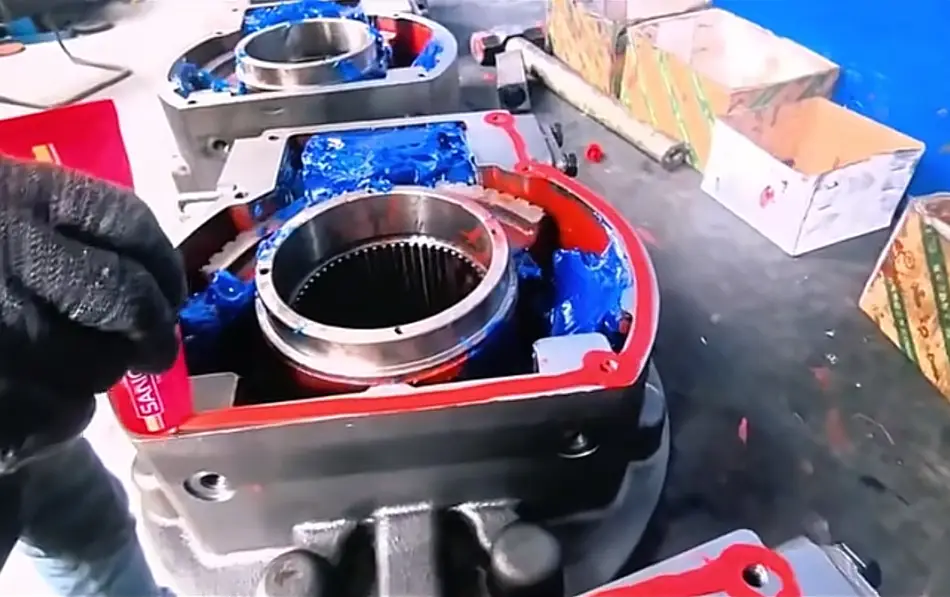
IP Rating Reference Framework
The following table maps typical installation conditions to minimum IP rating requirements. These are starting points for supplier discussion — not absolute thresholds.
| Installation Condition | Minimum IP to Consider | Key Risk Without Correct Rating |
|---|---|---|
| Indoor, clean and dry | IP54 | Dust accumulation in gear cavity |
| Outdoor, exposed to rain | IP65 | Water ingress through seals |
| Outdoor, high-pressure washdown | IP66 | Direct water jet ingress |
| Buried, no groundwater contact | IP67 | Temporary immersion risk |
| Buried, groundwater present | IP68 (specify depth/duration) | Sustained hydrostatic ingress |
| Submerged or tidal zone | IP68 (confirm with supplier) | Full water ingress, corrosion |
| Dusty industrial environments | IP6X minimum | Abrasive particle ingress into gears |
What IP Rating Does Not Cover
IP rating is a measure of ingress protection, not corrosion resistance, UV resistance, or chemical resistance. A gearbox rated IP68 can still fail prematurely due to external coating degradation in a coastal environment. IP rating and environmental coating specification are two separate checklist items — both must be addressed.
Questions to Ask Your Supplier About IP Rating
Rather than assuming the catalog IP rating is sufficient, ask:
- What test standard was used to verify the IP rating — and is the certificate available for review?
- Does the IP rating apply to the complete assembled unit, including the output shaft seal under torque load?
- For buried applications: what is the maximum rated submersion depth and duration?
- Is the vent plug (breather) compatible with the installation environment, or does it need to be replaced or blocked?
These are not unreasonable questions. A supplier with genuine manufacturing control should be able to answer them with reference to specific documentation.
How Do Material Choices Affect Gearbox Performance in Butterfly Valve Applications?
Material selection in butterfly valve gearboxes is often treated as a catalog default — whatever housing material is standard for that size range. In most standard indoor industrial applications, that approach is acceptable. In everything else, it becomes a liability.
Gearbox material selection for butterfly valve applications should account for housing material, seal material, internal lubricant, and external coating grade — each determined by operating temperature range, ambient humidity, surrounding media (seawater, chemical exposure, UV), and maintenance access frequency.
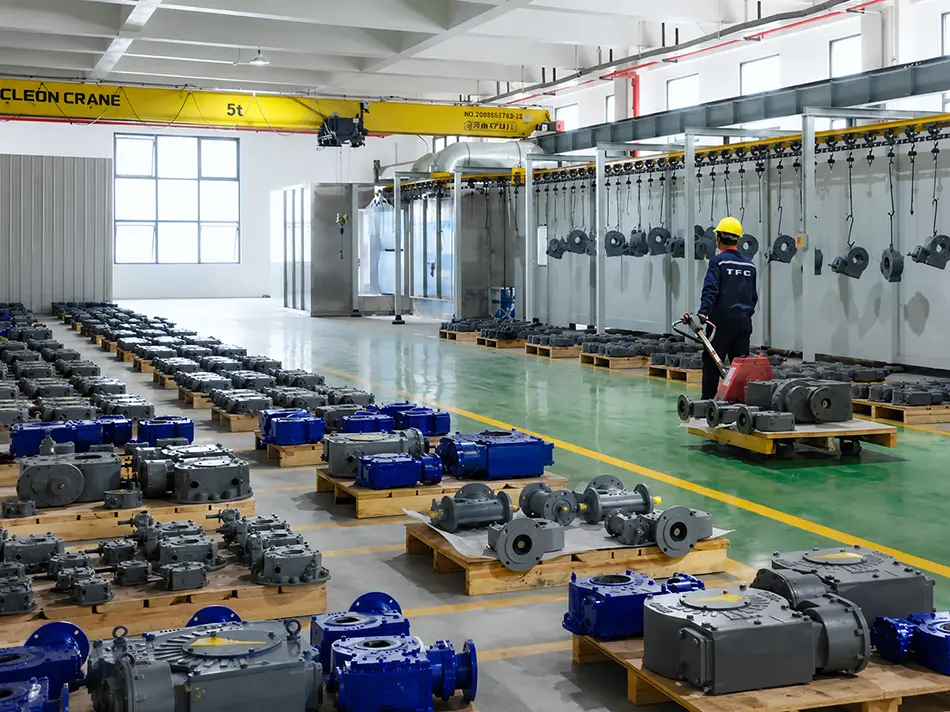
Housing Material Comparison
| Housing Material | Advantages | Limitations | Typical Applications |
|---|---|---|---|
| Grey cast iron (GG25) | Cost-effective, good damping | Brittle in deep cold, moderate corrosion resistance | Standard indoor/mild outdoor |
| Ductile iron (GGG40/50) | Higher impact resistance, low-temp capable | Higher cost than grey iron | Cold climates, buried applications |
| Carbon steel fabricated | High strength, weldable | Requires thorough surface treatment | Heavy-duty structural applications |
| Aluminium alloy | Lightweight, good for portable/small units | Less suitable for large torque, soft surface | Small butterfly valves, compact assemblies |
| Stainless steel | Excellent corrosion resistance | High cost, heavier | Offshore, chemical, pharmaceutical |
Seal Material and Temperature Range
Seal material selection is frequently overlooked. The standard NBR (nitrile) O-rings and lip seals supplied with most industrial gearboxes perform adequately in the −20°C to +80°C range8 in non-chemical environments. Outside that range, or in chemical exposure environments, alternative materials should be considered:
- FKM (Viton): Higher temperature capability, better chemical resistance — confirm specific media compatibility
- EPDM: Better low-temperature flexibility and water resistance, limited oil resistance
- Silicone: Wide temperature range, but lower mechanical durability — typically not preferred for dynamic seals in gearboxes
Confirm seal material with your supplier as a named specification in the order document — not an implicit assumption from the standard catalog.
Coating and Surface Treatment Grades
For external corrosion protection, coating specification should reference a recognized system standard. Common approaches include:
- Standard paint + primer systems — adequate for indoor or mild outdoor use
- Two-component epoxy systems — suitable for outdoor industrial environments
- Hot-dip galvanizing — provides robust base protection for buried or harsh outdoor conditions
- Polyurethane topcoat over epoxy primer — appropriate for UV and coastal exposure
- Specialized chemical-resistant coatings — required for chemical plant environments
When evaluating a supplier, ask for the full coating specification by product name and DFT — not just a general claim of "corrosion-resistant coating."
Frequently Asked Questions
What is the standard mounting interface for a butterfly valve gearbox?
Most industrial butterfly valve gearboxes use ISO 5211 mounting flanges for the actuator interface9 and a corresponding bolt pattern for valve body attachment. The specific flange size and bore dimension must match both the valve stem and the actuator or handwheel. Always confirm dimensional compatibility using engineering drawings before finalizing the specification.
Can I use the same gearbox for both manual and electric actuator operation?
Some gearbox models are designed to accept both a handwheel and an electric actuator on the same housing, using an ISO 5211 top flange for the actuator and a secondary input for manual override. Whether a specific gearbox supports this configuration depends on the housing design. Confirm dual-input compatibility and the override engagement mechanism directly with your supplier.
How do I know if a supplier's IP rating claim is reliable?
Request the actual test certificate referencing IEC 60529 and the specific IP classification tested. For critical applications — especially buried or submerged — ask whether the IP test was conducted on a fully assembled unit, including the output shaft seal under load. Certificate availability and the ability to explain the test scope are reasonable supplier qualification criteria.
What happens if I oversize the gearbox torque rating?
Oversizing has real consequences beyond cost. A gearbox with a much higher torque rating than required typically carries a higher gear ratio, increasing handwheel input cycles per valve operation. It may also be physically larger, creating installation and bracket design complications. Select the torque rating with an appropriate safety factor — not the largest available model.
How often should a butterfly valve gearbox be serviced?
Service intervals depend on operating frequency, environment, and lubricant type. Gearboxes in buried or hard-to-access installations are often specified as sealed-for-life, with long-life grease or synthetic oil fill10. For accessible outdoor installations, a periodic inspection and regreasing schedule is more common. Ask your supplier for the recommended lubrication interval based on the specific application duty cycle.
Conclusion
Choosing the right gearbox for a butterfly valve is a four-variable process: torque sizing, installation environment, IP protection rating, and material compatibility. Torque is where selection starts — but environment mismatches, under-specified IP ratings, and incorrect material choices are where most preventable field failures originate. Buyers who treat gearbox selection as a dimensional catalog exercise consistently face the highest risk of warranty claims and re-sourcing costs. A structured checklist that addresses all four variables, with each parameter confirmed in writing against your specific application, is the most reliable procurement approach. If you are evaluating gearbox options for a butterfly valve product line and need engineering input on your specific application environment, contact TFC to discuss your requirements directly.
"Industrial handwheel actuation and the human operator", https://www.academia.edu/34244052/Industrial_handwheel_actuation_and_the_human_operator_a_review. Ergonomic standards such as ISO 11228-3 and guidance from occupational health agencies including NIOSH establish recommended limits for sustained manual force exertion; these thresholds are relevant to handwheel torque design in valve operation to prevent musculoskeletal injury among field personnel. Evidence role: expert_consensus; source type: government. Supports: Occupational health and ergonomics standards define maximum acceptable manual force levels for sustained and peak hand/arm exertions in industrial settings. Scope note: Specific handwheel force limits for valve operation are not universally codified in a single standard; the applicable threshold depends on the frequency of operation, operator posture, and the ergonomics framework adopted by the relevant jurisdiction or facility. ↩
"Common-Cause Failure Event Insights Motor-Operated ...", https://www.nrc.gov/docs/ML0317/ML031710328.pdf. Failure mode analyses of industrial gearboxes and rotating equipment consistently identify contamination ingress, corrosion, and lubrication degradation driven by environmental exposure as primary contributors to premature failure, supporting the article's assertion that environment mismatches are a leading cause of field failures. Evidence role: general_support; source type: research. Supports: Environmental factors including moisture ingress, contamination, and corrosion are among the leading documented causes of premature gearbox and mechanical seal failure in industrial applications. Scope note: Published failure studies typically cover broader rotating equipment populations rather than butterfly valve gearboxes specifically; the relative ranking of failure causes may differ across industries, installation types, and maintenance regimes. ↩
"Corrosion Issues in Below Ground Utilities And Buried ...", https://www.wbdg.org/ffc/dod/cpc-source/below-ground-utilities-buried-structures. Corrosion engineering literature and standards bodies including NACE International document that low soil pH and elevated chloride concentrations increase the electrochemical corrosion rate of buried ferrous metals by reducing resistivity and promoting anodic dissolution of the metal surface. Evidence role: mechanism; source type: research. Supports: Soil acidity and chloride content are established drivers of accelerated corrosion in buried ferrous metal structures. Scope note: Corrosion rate in buried environments is a function of multiple interacting soil parameters including resistivity, moisture, oxygen content, and microbial activity; soil chemistry alone does not fully predict corrosion severity without site-specific measurement. ↩
"Timescale Correlation between Marine Atmospheric ...", https://ntrs.nasa.gov/api/citations/20110014389/downloads/20110014389.pdf. ISO 9223 classifies atmospheric corrosivity into categories C1 through CX, with marine and coastal environments typically assigned C4 or C5 ratings due to high chloride deposition rates; corrosion engineering literature documents that salt-laden air and wet-dry cycling significantly accelerate organic coating degradation and substrate corrosion. Evidence role: mechanism; source type: institution. Supports: Marine and coastal atmospheres are classified as among the most corrosive for industrial coatings and metal components due to chloride deposition, UV exposure, and cyclic humidity. Scope note: Actual corrosivity at a specific coastal site depends on distance from the shoreline, prevailing wind direction, and local industrial pollution; ISO 9223 classification provides a framework but site measurement is required for precise specification. ↩
"Influence of oil temperature on gear failures", https://www.sciencedirect.com/science/article/abs/pii/S0301679X03000471. The viscosity-temperature relationship of mineral and synthetic gear oils is governed by their viscosity index; at sub-zero temperatures, high-viscosity oils can increase churning resistance and startup torque substantially, a phenomenon addressed in ISO 6743-6 and gear lubrication engineering literature. Evidence role: mechanism; source type: research. Supports: Lubricant viscosity increases significantly at low temperatures, raising churning losses and breakaway torque in enclosed gear drives. Scope note: The magnitude of the torque increase depends on specific lubricant formulation, gear geometry, and operating speed; general lubrication references support the principle without providing application-specific values. ↩
"Mechanism Analysis for the Enhancement of Low ... - PMC", https://pmc.ncbi.nlm.nih.gov/articles/PMC10819957/. Grey cast iron's graphite flake microstructure reduces its notch toughness and promotes brittle fracture at low temperatures, a well-documented materials engineering limitation that distinguishes it from ductile (nodular) iron in cold-service specifications. Evidence role: mechanism; source type: education. Supports: Grey cast iron exhibits reduced impact toughness and increased brittleness at sub-zero temperatures due to its microstructure, making ductile iron preferable for cold-climate applications. Scope note: The precise transition temperature varies with alloy composition and loading conditions; a general materials reference supports the principle but does not substitute for application-specific material testing. ↩
"IP code", https://en.wikipedia.org/wiki/IP_code. IEC 60529 establishes a classification system for the degrees of protection provided by enclosures of electrical equipment, designating resistance to solid foreign objects and water ingress through a two-digit IP code; see the IEC 60529 standard overview or its Wikipedia summary for the full digit-by-digit classification table. Evidence role: definition; source type: encyclopedia. Supports: IEC 60529 is the international standard that defines and classifies degrees of protection provided by enclosures against solid particles and liquids. Scope note: Wikipedia's treatment of IEC 60529 is a secondary summary; the authoritative source is the IEC standard document itself, which requires purchase. ↩
"Temperature Range Charts", https://www.sealmaster.com/engineering/temperature-range-charts/. NBR elastomer temperature performance depends on acrylonitrile content and compound formulation; standard industrial grades are commonly specified for continuous service between −20°C and +100°C, with low-temperature flexibility declining as acrylonitrile content increases. Evidence role: general_support; source type: research. Supports: NBR (acrylonitrile-butadiene rubber) seals are generally rated for service in the range of approximately −40°C to +120°C depending on compound formulation, with practical sealing performance often cited in the −20°C to +100°C range. Scope note: Published temperature ranges vary by manufacturer and compound grade; the article's cited range is conservative and broadly consistent with common industrial specifications, but specific applications require confirmation against the seal supplier's datasheet. ↩
"INTERNATIONAL STANDARD ISO 5211", https://cdn.standards.iteh.ai/samples/62594/99f2c2aed9e24049bf1985c541d19143/ISO-5211-2017.pdf. ISO 5211 specifies the attachment dimensions for part-turn actuators fitted to industrial valves, establishing standardized flange patterns (F03 through F40) and drive shaft configurations to ensure interchangeability between valve and actuator manufacturers. Evidence role: definition; source type: institution. Supports: ISO 5211 defines the dimensions and requirements for mounting interfaces between part-turn actuators and industrial valves, including flange patterns and shaft bore sizes. Scope note: The ISO 5211 standard document requires purchase; secondary descriptions from valve industry associations or manufacturer technical literature provide accessible summaries but are not the authoritative source. ↩
"Buried Service Gearboxes for Industrial Valves", https://tfcvalvegear.com/products/buried-service-gearboxes/. Water utility procurement standards and valve actuator specifications from bodies such as AWWA and UK Water Industry Research (UKWIR) acknowledge the use of sealed, maintenance-free gearbox configurations for buried valve installations, where the cost and difficulty of access make periodic relubrication impractical. Evidence role: general_support; source type: institution. Supports: Water industry and pipeline standards recognize sealed-for-life or extended-service-interval gearbox specifications for buried valve applications where maintenance access is impractical. Scope note: A single universally adopted standard for sealed-for-life buried gearbox specification does not exist; practice varies by utility, country, and project specification, making this a general industry convention rather than a codified requirement. ↩