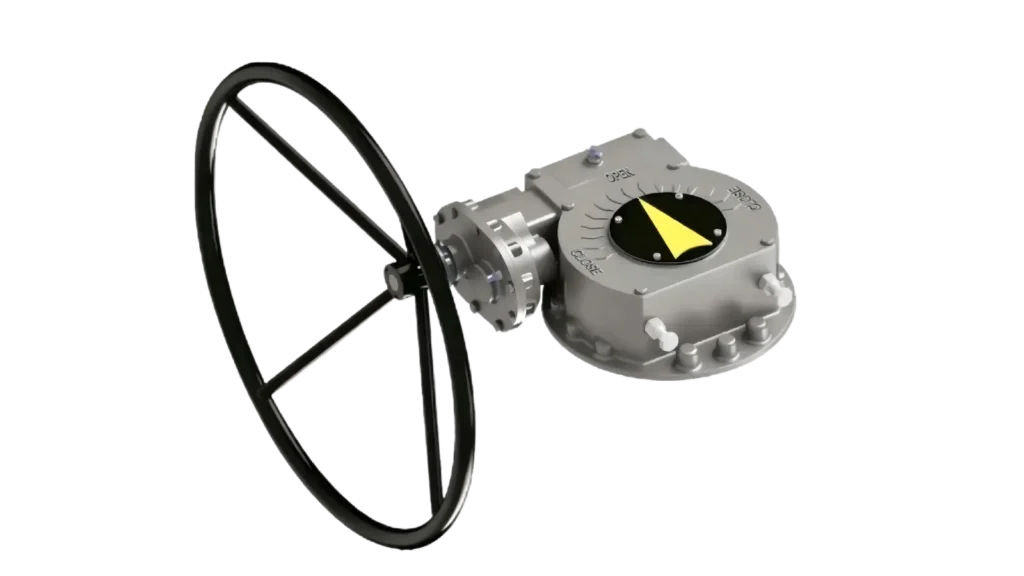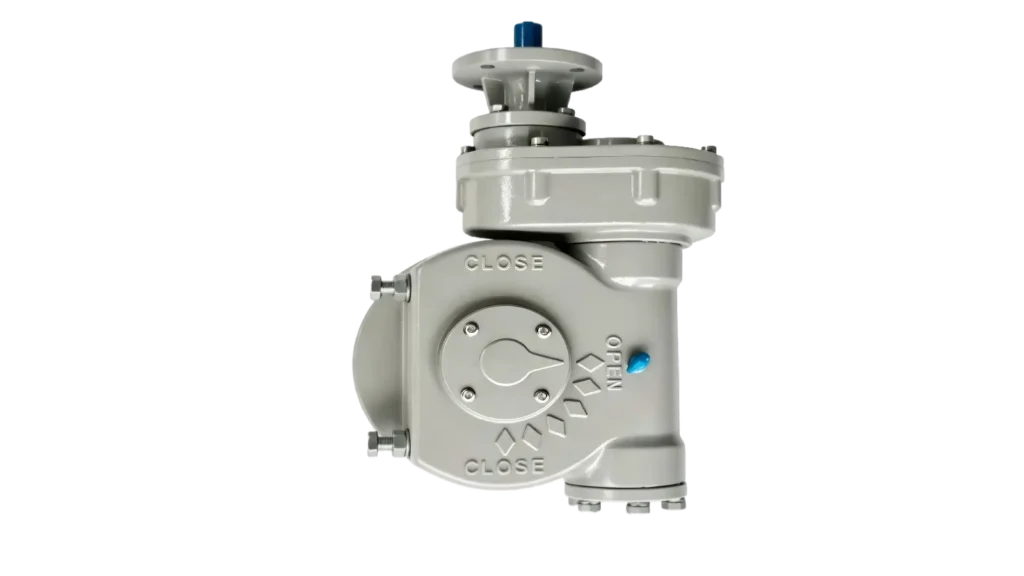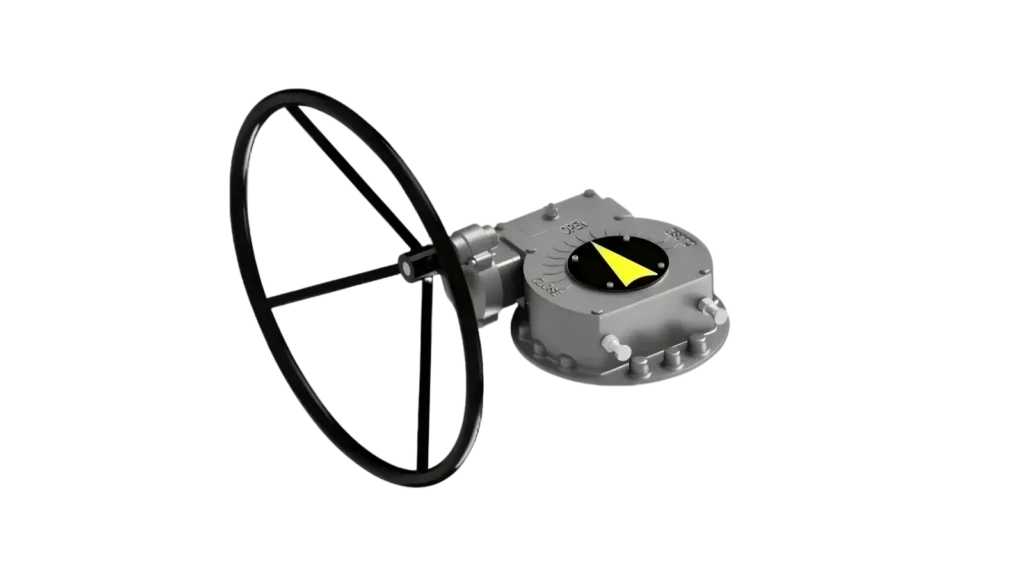

A valve gearbox RFQ is an engineering compatibility check before it is a price request. Missing torque, interface, operation, or application data can lead to costly selection errors.1
The information required before RFQ for a valve gearbox includes valve type, valve size, pressure class, application conditions, maximum and normal operating torque, ISO 5211 flange, stem size, keyway details, mounting direction, and operation method. Complete data helps suppliers select the right gearbox, quote comparable prices, and reduce installation risk.

Buyers often send a photo, old model number, or competitor reference. These help identify a product but rarely confirm fit, torque capacity, or project suitability.
Why Does Pre-RFQ Information Matter for Valve Gearbox Selection?
An incomplete RFQ forces suppliers to make assumptions, risking incorrect torque capacity, mounting incompatibility, or unsuitable environmental protection.2
A valve gearbox RFQ should confirm engineering compatibility before price comparison. Buyers should provide valve data, torque data, interface dimensions, operation method, and application conditions. This allows suppliers to size the gearbox correctly, check mounting compatibility, and prepare quotations based on the same technical scope.

A quotation is not only a price
Procurement teams may need budget prices before technical documents are complete.
However, for industrial valve gearboxes, a quotation is never just a number. It usually reflects several hidden assumptions:
- What torque value did the supplier use?
- What safety margin did the supplier apply?
- Which ISO 5211 flange was assumed?
- Was the stem bore standard or customized?
- Was the gearbox prepared for manual operation or actuator integration?
- Was the environment normal industrial service or a more demanding application?
If these assumptions are different between suppliers, the quotations are not truly comparable.
Why incomplete RFQs create procurement risk
Large price differences may reflect different technical assumptions rather than better value.3
| RFQ condition | Supplier assumption | Possible result |
|---|---|---|
| Torque not provided | Supplier estimates from valve size | Gearbox may be undersized or oversized |
| ISO 5211 flange missing | Supplier assumes standard mounting | Installation may require adapter changes |
| Stem size missing | Supplier quotes standard bore | Gearbox may not fit the valve stem |
| Operation method unclear | Supplier quotes manual type | Electric actuator integration may need redesign |
| Application not described | Supplier quotes standard model | Special confirmation may be missed |
A lower price can sometimes mean that technical scope is missing. This is why I always encourage buyers to clarify the engineering basis before comparing commercial offers.
The real purpose of pre-RFQ communication
Pre-RFQ communication should resolve key uncertainties before quotation.
For valve gearbox procurement, the main purpose is to answer four questions:
- What valve will the gearbox operate?
- How much torque must the gearbox transmit?
- How will the gearbox connect to the valve and actuator?
- How will the gearbox be operated in the actual application?
At TFC, we can help review the requirement and identify missing information. However, the final valve torque, project condition, and selection responsibility should still be confirmed by the customer’s engineering team or qualified project engineer. This keeps the process practical and professionally bounded.
What valve and application data should be included before RFQ?
Valve and application data should be included before RFQ because the gearbox does not work alone. It works as part of a valve package. If the supplier does not know the valve type, size, pressure class, and service condition, the gearbox selection may depend too much on guesswork.
Before requesting a gearbox quotation, buyers should provide valve type, nominal size, pressure rating, application medium, installation environment, operating frequency, and any special project requirement. This information helps the supplier decide whether a standard gearbox is suitable or whether engineering confirmation is needed.

Core valve information
Basic valve data shapes subsequent selection decisions.
I usually recommend sharing the following details:
- Valve type: butterfly valve, ball valve, plug valve, gate valve, globe valve, or other type
- Valve size: DN/NPS size
- Pressure class: PN, Class, JIS, or other standard
- Valve design: soft-seated, metal-seated, triple-offset, resilient seated, etc.
- Valve movement: quarter-turn or multi-turn
- Application industry: water, oil and gas, chemical, power, mining, marine, LNG, or general utilities
- Operating condition: indoor, outdoor, buried, corrosive, marine, high temperature, low temperature, or dusty environment
These details help the supplier understand the duty level. For example, a gearbox for a small water butterfly valve does not face the same engineering concerns as a gearbox for a high-pressure metal-seated ball valve.
Why valve type matters
Different valves create different torque patterns. A butterfly valve usually requires quarter-turn operation. A gate valve normally requires multi-turn operation.4 A bevel gearbox may be used where the stem orientation or handwheel position must change.
The valve type also affects how the gearbox is selected:
| Valve type | Common gearbox type | Main selection concern |
|---|---|---|
| Butterfly valve | Quarter-turn worm gearbox | Seating/unseating torque and travel stop setting |
| Ball valve | Quarter-turn worm gearbox | Break torque and safety margin |
| Plug valve | Quarter-turn gearbox | High friction and operating torque |
| Gate valve | Multi-turn or bevel gearbox | Stem thread, thrust, and turns requirement |
| Globe valve | Multi-turn or bevel gearbox | Rising stem movement and operating force |
This table is not a universal rule. It is a practical starting point. Final selection still depends on the valve design and torque requirement.
Why application conditions matter
Application conditions determine whether a standard gearbox is appropriate.5
Examples include:
- Outdoor service: coating, sealing, and corrosion resistance may need confirmation.
- Marine environment: salt spray exposure may affect material and coating choices.
- High operating frequency: gear wear, lubrication, and durability become more important.
- Low temperature: grease performance and material behavior may need checking.
- Buried service: extension stem, sealing, and accessibility may need review.
- Automation projects: actuator interface and torque output must be coordinated.
I do not like to assume application conditions from a photo. A gearbox may look similar from outside, but the working environment can change the correct configuration.
Photos and old model numbers help, but they are not enough
Existing gearbox photos can show type, handwheel position, mounting arrangement, and nameplate.
However, a photo usually cannot confirm:
- Actual valve torque
- Internal gear ratio
- Stem bore tolerance
- Keyway standard
- Flange drilling
- Travel stop setting
- Environmental requirement
- Previous modification history
Old model numbers and competitor references are also useful starting points. But I treat them as references, not final engineering data. The safer approach is to confirm the actual torque, interface dimensions, and operating conditions before the quotation is finalized.
Why Is Torque Data Essential Before a Gearbox RFQ?
Torque data is the most important Pre-RFQ information because gearbox sizing depends on the torque the valve needs to open, close, and operate safely.6 If torque is unknown, the supplier must estimate. That estimate may lead to wrong gearbox selection or inconsistent quotations.
Buyers should provide maximum operating torque, normal operating torque, break torque, seating torque, or the torque calculation basis when available. Torque data allows the supplier to select a gearbox with suitable output capacity, ratio, input force, and safety margin for the valve application.
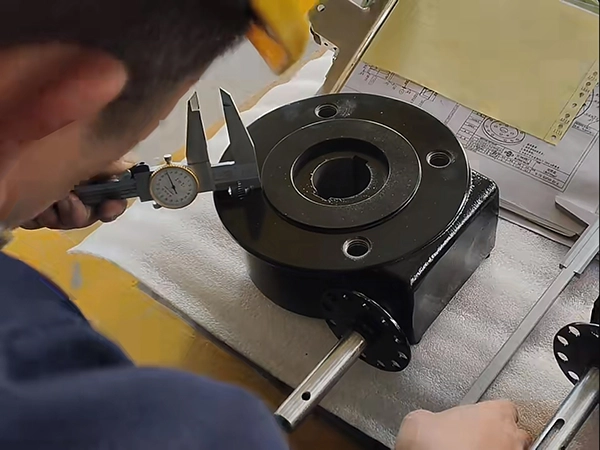
Torque defines the gearbox size
The gearbox must transmit enough torque to operate the valve. This is the core engineering reason that torque data matters.
A valve gearbox is not selected only by valve size.7 Two valves with the same DN size may require very different torque because of differences in:
- Seat design
- Pressure differential
- Medium characteristics
- Stem packing friction
- Valve material
- Operating temperature
- Manufacturing tolerances
- Service history
- Safety factor required by the project
For example, a DN300 butterfly valve for clean water service may not require the same torque as a DN300 high-performance butterfly valve in a demanding industrial process. The size is the same, but the duty is different.
Useful torque values for RFQ
If the buyer has complete valve engineering data, I recommend sharing more than one torque value. This gives the supplier a better technical picture.
| Torque item | Why it matters |
|---|---|
| Break torque | Helps confirm the force needed to start movement |
| Running torque | Helps understand normal operation load |
| Seating torque | Helps protect closing performance |
| Maximum operating torque | Helps define gearbox output capacity |
| Safety factor or margin | Helps align supplier selection with project requirement |
| Torque calculation basis | Helps confirm whether the value comes from test, calculation, or design assumption |
Not every project file contains all these values. That is normal. But the more torque information the buyer provides, the less the supplier must assume.
What happens when torque is missing?
Without torque data, suppliers must qualify their estimates.
A supplier may request torque confirmation or issue a provisional estimate based on similar valves. Only the former supports a reliable final selection.
When torque is unknown, TFC can discuss a preliminary model, but final selection requires confirmed valve torque.
Torque and safety margin
The gearbox rated torque should be reviewed against the valve operating torque and project requirements. A gearbox that is too small can create reliability risk. A gearbox that is much larger than necessary may increase cost, weight, and installation space.
The correct safety margin depends on the application and engineering standard used by the customer or project.8 I do not recommend using a universal margin without context. Instead, I prefer this sequence:
- Confirm the valve torque from the valve manufacturer or engineering calculation.
- Confirm the operating condition and project requirement.
- Select a gearbox torque rating above the required operating torque.
- Review input force, ratio, actuator compatibility, and installation limits.
- Confirm the selection through technical documents before order.
This creates a consistent basis for comparing offers.
A fast quotation without torque data may be useful for budget discussion, but it should not be treated as final gearbox selection.
Which connection dimensions and operation methods should buyers confirm before RFQ?
Connection dimensions and operation methods should be confirmed before RFQ because the gearbox must physically fit the valve and match the intended operation. Even when torque is correct, wrong flange drilling, stem bore, keyway, or actuator interface can cause installation delays.
Buyers should confirm ISO 5211 flange size, bolt pattern, stem diameter, stem shape, keyway dimensions, mounting direction, handwheel or chainwheel requirement, and electric actuator interface. These details help suppliers configure the gearbox for installation, operation, and future automation.
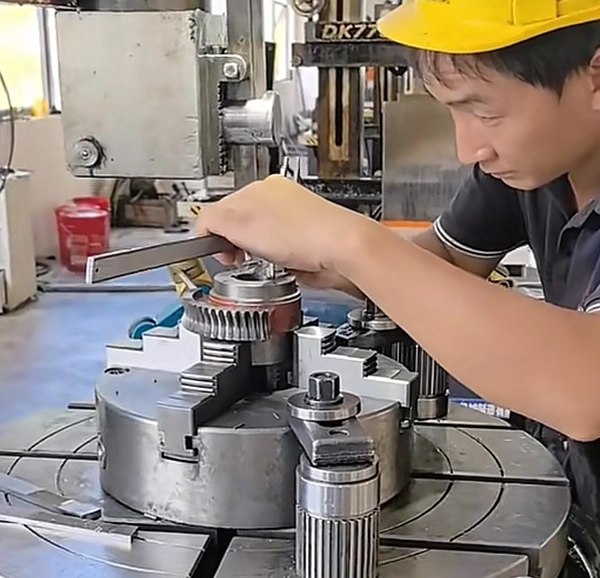
Interface data prevents installation problems
Adequate torque is not enough if the gearbox cannot mount correctly.
The most important interface details include:
- Mounting flange standard: ISO 5211 is common for valve actuator interfaces.
- Flange size: such as F10, F12, F14, F16, or other sizes depending on design.
- Bolt circle diameter: required for matching the valve top flange.
- Bolt hole quantity and size: required for installation.
- Stem diameter: round, square, double-D, or customized form.
- Keyway size: width, depth, and position.
- Stem height or engagement depth: important for torque transmission.
- Mounting direction: horizontal, vertical, rotated handwheel position, or special orientation.
Missing dimensions can lead to incorrect standard-interface assumptions.
ISO 5211 helps, but it does not answer everything
ISO 5211 compatibility is important because it gives a standardized method for connecting valves, gearboxes, and actuators.9 However, the standard does not remove the need to confirm actual dimensions.
A dimensioned drawing confirms details beyond the flange designation.
| Interface item | Why a drawing helps |
|---|---|
| ISO flange | Confirms bolt circle and mounting face |
| Stem bore | Confirms shape, tolerance, and engagement |
| Keyway | Confirms torque transmission detail |
| Travel stops | Confirms open/close adjustment position |
| Mounting orientation | Confirms handwheel or actuator position |
| Adapter requirement | Confirms whether extra machining is needed |
Drawings reduce clarification cycles and quotation errors.
Operation method affects gearbox configuration
Operation method determines gearbox configuration.
Common options include:
-
Handwheel operation
- Used for manual valve operation.
- Buyers should confirm handwheel diameter if there is a space or input force requirement.
-
Chainwheel operation
- Used when the valve is installed at height or in a hard-to-reach location.
- Buyers should confirm chain length, installation height, and access direction.
-
Electric actuator integration
- Used for automated valve operation.
- Buyers should confirm actuator mounting flange, input interface, required input torque, and project automation plan.
-
Future automation
- Used when the valve is manual now but may be automated later.
- Buyers should request an electric-ready gearbox configuration if needed.
At TFC, electric-ready gearbox configuration is a common topic in OEM and valve package discussions. However, actuator integration still requires confirmation of the actuator model, torque output, mounting interface, and project control requirements.
Manual operation is not only about handwheel size
“Manual gearbox” alone does not define the full configuration.
For manual operation, the supplier may still need to check:
- Required input torque
- Number of turns from open to close
- Handwheel diameter
- Operator access position
- Gear ratio
- Direction of rotation
- Travel stop requirement
- Position indicator requirement
If the valve is large, the input force at the handwheel becomes important.10 A gearbox with the correct output torque may still be difficult to operate if the ratio or handwheel configuration is not suitable.
Future automation should be mentioned early
Future automation plans may change gearbox selection.
If future electric actuator integration is possible, the supplier may need to consider:
- Top flange for actuator mounting
- Input shaft design
- Adapter requirements
- Coupling design
- Gear ratio and actuator sizing
- Space limitation around the valve
- Documentation needed by the actuator supplier
If this requirement appears after the gearbox is already selected, the project may need redesign or extra parts. It is better to mention future automation during the RFQ stage, even if the actuator will not be purchased immediately.
How can procurement make gearbox supplier quotations comparable?
Procurement can make gearbox supplier quotations comparable by sending the same technical RFQ package to each supplier. The package should include valve data, torque data, interface dimensions, operation method, application conditions, quantity, documentation requirements, and any inspection or testing expectations.
A comparable gearbox RFQ should define the same engineering scope for all suppliers. If suppliers quote based on different torque assumptions, flange details, materials, accessories, or documentation levels, price comparison becomes unreliable and may favor an incomplete technical offer.
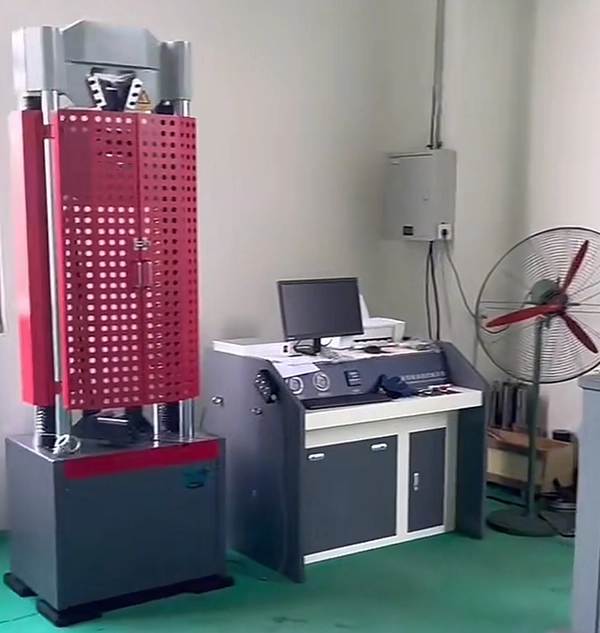
The lowest price may not mean the lowest risk
Compare quotations only when their technical scope matches.
For example, Supplier A may quote a gearbox based on confirmed torque, customized stem machining, ISO flange details, inspection report, and packaging requirement. Supplier B may quote a standard gearbox based only on valve size and photos. Supplier B may look cheaper, but the scope may not be equal.
A fair comparison should check:
- Gearbox model and rated torque
- Gear ratio and input requirement
- Interface customization
- Material and coating requirement
- Accessories such as handwheel, chainwheel, or indicator
- Electric actuator readiness
- Inspection and test scope
- Documentation package
- Packaging requirement
- Delivery basis and commercial terms
A practical RFQ table for buyers
A standard RFQ table reduces omissions and makes supplier offers easier to compare.
| Information group | Data to provide | Why it matters |
|---|---|---|
| Valve data | Type, DN/NPS, pressure class, design | Defines basic application and gearbox family |
| Torque data | Break, running, seating, maximum torque | Defines gearbox size and safety margin |
| Interface data | ISO 5211 flange, stem, keyway, drawing | Confirms installation compatibility |
| Operation method | Handwheel, chainwheel, electric actuator | Defines configuration and accessories |
| Application condition | Medium, environment, frequency, temperature | Confirms whether standard model is suitable |
| Quantity | Pieces, project phases, annual demand | Supports production planning and quotation |
| Documentation | Drawings, certificates, inspection reports | Supports technical approval and procurement review |
| Quality requirement | Testing, traceability, inspection scope | Clarifies evidence required before shipment |
A shared RFQ table helps procurement and engineering avoid repeated revisions.
Documentation expectations should be clear
Documentation requirements can affect cost and lead time.11
Typical documents may include:
- General arrangement drawing
- Mounting dimension drawing
- Material certificate where applicable
- Inspection report
- Torque testing record where required
- Packing list
- Traceability information
- Operation or maintenance instruction
- Project-specific compliance documents
TFC’s quality philosophy is based on measurable engineering evidence. In practical terms, this means buyers should specify which documents they need instead of relying on general quality statements. Certifications and inspection documents should always be verified by the buyer against project requirements.
A better way to send competitor references
Competitor models help identify gearbox families but should be accompanied by engineering data.
A stronger format is:
“We currently use model X as a reference. Please quote an equivalent gearbox based on the attached torque, ISO 5211 flange, stem drawing, operation method, and application condition.”
This prevents copying an unsuitable legacy selection.
What TFC can support before RFQ
In a pre-RFQ stage, TFC can help buyers review available information, identify missing technical points, discuss gearbox model direction, and prepare for a more accurate quotation. This is useful for valve manufacturers, OEM valve companies, distributors, and project buyers who want to reduce engineering risk.
However, we should not replace the customer’s valve design responsibility. The customer should confirm valve torque, project standards, and final suitability for the specific application. A good supplier supports selection with engineering discipline, but the final project decision must be based on complete technical confirmation.
Frequently Asked Questions
Can I request a gearbox quotation with only valve size and valve type?
Yes, you can start communication with valve size and valve type, but the quotation may be preliminary. Accurate gearbox selection usually requires torque data, interface dimensions, operation method, and application conditions. Without these details, suppliers must make assumptions that may affect price and compatibility.
Is a photo enough for a valve gearbox RFQ?
A photo helps identify the general gearbox style, mounting direction, and handwheel arrangement. However, it usually cannot confirm torque, ISO 5211 flange, stem bore, keyway, or internal ratio. I recommend using photos as supporting information, not as the only RFQ basis.
What torque value should I provide before RFQ?
You should provide maximum operating torque when available. Break torque, running torque, seating torque, and the calculation basis are also useful. The gearbox supplier can then review rated torque, gear ratio, input force, and safety margin based on clearer engineering information.
Why do suppliers ask for ISO 5211 and stem details?
Suppliers ask for ISO 5211 and stem details because the gearbox must fit the valve mechanically. Flange size, bolt pattern, stem diameter, keyway, and engagement depth affect installation and torque transmission. A correct torque rating does not solve a wrong mounting interface.
Should I mention future electric actuator requirements before RFQ?
Yes, you should mention future automation plans early. Electric actuator integration may require a suitable top flange, input interface, coupling, ratio review, and actuator compatibility check. If this is discussed too late, the gearbox may need redesign or additional adapter parts.
Conclusion
Pre-RFQ information is not paperwork for its own sake. It is the technical foundation for correct valve gearbox selection, comparable supplier quotations, and lower installation risk. I recommend that buyers prepare valve data, torque values, interface dimensions, operation method, and application conditions before requesting final pricing. If your team is preparing an industrial valve gearbox RFQ, TFC can help review the requirement, identify missing information, and support a more reliable engineering discussion.
"Part 46 - Quality Assurance", https://www.acquisition.gov/far/part-46. Government procurement guidance treats complete technical specifications as a control against nonconforming supplies, rework, and contract disputes, supporting the general claim that missing gearbox RFQ data can create selection and cost risk. Evidence role: general_support; source type: government. Supports: A neutral procurement or engineering guidance source should support that incomplete technical specifications increase the risk of unsuitable purchases, rework, or contract changes.. Scope note: This would support the procurement-risk principle generally rather than quantify valve-gearbox-specific costs. ↩
"SECTION 15100 ELECTRIC VALVE ACTUATOR PART 1", https://www.paulding.gov/DocumentCenter/View/6583. Valve-actuator selection guidance identifies torque requirements, mounting interface dimensions, and environmental service conditions as inputs to correct actuator selection, providing contextual support for the risk of assumptions in an incomplete RFQ. Evidence role: general_support; source type: institution. Supports: A valve or actuator engineering guide should support that actuator and gearbox selection depends on torque, mechanical interface, and service environment data.. Scope note: The source may discuss actuator selection broadly and may not address every valve gearbox RFQ scenario directly. ↩
"15.101-2 Lowest price technically acceptable source selection process.", https://www.acquisition.gov/far/15.101-2. Public procurement guidance emphasizes that price comparisons are meaningful only when offers are evaluated against the same technical requirements and scope, supporting the claim that apparent price differences may reflect differing assumptions. Evidence role: general_support; source type: government. Supports: A procurement guidance source should support that bids or quotations must be compared against the same technical requirements and scope.. Scope note: This is general procurement support and does not prove that a specific gearbox quotation is incomplete. ↩
"Butterfly valve", https://en.wikipedia.org/wiki/Butterfly_valve. Reference descriptions of valve types classify butterfly valves as quarter-turn valves and gate valves as valves commonly opened and closed through multi-turn stem motion, supporting the article’s distinction between valve movement types. Evidence role: definition; source type: encyclopedia. Supports: A neutral valve reference should define butterfly valves as quarter-turn valves and gate valves as linear-stem or multi-turn valves.. Scope note: This supports the general classification and not the exact torque curve of every valve design. ↩
"Lubrication Selection for Enclosed Gear Drives", https://www.machinerylubrication.com/Read/707/enclosed-gear-drives. Engineering design references note that gearbox lubrication, sealing, materials, and protection measures must be selected with regard to operating environment, providing contextual support for assessing whether a standard gearbox is appropriate. Evidence role: general_support; source type: education. Supports: An engineering education or machinery-design source should support that gearbox configuration, lubrication, materials, and sealing depend on service environment.. Scope note: The support is contextual for gearboxes generally and may not address valve gearboxes as a separate product class. ↩
"ACTUATOR SELECTION GUIDE - BALL VALVES", https://www.bray.com/docs/default-source/technical-bulletin/en_tb-1005_act-selectguide-ball-valves.pdf. Valve-actuator sizing guidance identifies required valve operating torque as a primary input for selecting actuator capacity, supporting the claim that gearbox sizing depends on the torque needed to open and close the valve. Evidence role: mechanism; source type: institution. Supports: A valve actuator or gearbox sizing guide should support that required valve operating torque is a primary input for selecting an actuator or gearbox.. Scope note: The source may address actuators generally; applying it to a gearbox assumes the gearbox is part of the valve actuation torque path. ↩
"3.3 Design Basis Valve Stem Torque", https://www.nrc.gov/docs/ml1134/ml11347a386.pdf. Studies and engineering references on valve operating torque show that torque varies with pressure differential, seating design, friction, and service conditions, supporting the claim that nominal valve size alone is insufficient for gearbox selection. Evidence role: mechanism; source type: paper. Supports: A technical paper or engineering reference should support that valve torque varies with factors beyond nominal valve size, such as pressure differential, seat design, and friction.. Scope note: The source may focus on a particular valve type, so its direct applicability may vary across butterfly, ball, gate, and globe valves. ↩
"Factor of safety", https://en.wikipedia.org/wiki/Factor_of_safety. Engineering design references describe safety factors as dependent on loading uncertainty, service conditions, failure consequences, and applicable standards, supporting the article’s statement that gearbox safety margin should be project-specific. Evidence role: expert_consensus; source type: education. Supports: An engineering design source should support that safety factors are selected based on uncertainty, service conditions, consequences of failure, and applicable standards.. Scope note: This supports the design principle generally and may not prescribe a numerical margin for valve gearboxes. ↩
"ISO 5211:2023 - Industrial valves — Part-turn actuator attachments", https://www.iso.org/standard/86753.html. ISO 5211 specifies attachment dimensions for part-turn actuator connections to industrial valves, supporting the statement that the standard provides a common interface framework for valves, gearboxes, and actuators. Evidence role: definition; source type: institution. Supports: The ISO standard description should support that ISO 5211 specifies attachment dimensions for part-turn valve actuators.. Scope note: The standard’s existence does not by itself verify that any particular gearbox and valve will fit without checking the actual dimensions. ↩
"Handwheel valve operation: assessment of four opening ...", https://pubmed.ncbi.nlm.nih.gov/22317064/. Occupational ergonomics guidance identifies required manual force and access posture as factors in equipment operability and worker strain, providing contextual support for considering handwheel input force on large valves. Evidence role: general_support; source type: government. Supports: An ergonomics or occupational-safety source should support that manual handwheel force affects operability and worker strain, especially for high-load equipment.. Scope note: This supports the ergonomic relevance of input force generally and may not provide valve-size-specific thresholds. ↩
"Procurement Manual", https://www.dgs.ca.gov/-/media/Divisions/PD/PTCS/PAU/FISCAL-Financial-Information-System-for-California-Procurement-Manual.ashx?la=en&hash=3806D268BB8CF845E24CEFD6D481541A43687345. Procurement and quality-management guidance recognizes that inspection, certification, and traceability documentation impose verification activities that may affect supplier effort, schedule, and cost, supporting the article’s claim about documentation requirements. Evidence role: general_support; source type: government. Supports: A procurement or quality-management source should support that inspection, certification, traceability, and documentation requirements add supplier work and can affect schedule and cost.. Scope note: The source would support the general procurement principle rather than quantify cost or lead-time effects for valve gearboxes. ↩