Procurement teams at valve manufacturers face a surprisingly common trap: they research gearbox options before confirming the motion requirement. That sequence causes real downstream problems — wrong product families get specified, deliveries get delayed, and projects absorb rework costs that were entirely avoidable1. The fix starts with understanding what actually determines gearbox selection.
The choice between a quarter-turn and multi-turn gearbox is not a product preference decision — it is a valve compatibility decision. The valve's stem motion defines which gearbox type is mechanically appropriate. A ball valve, butterfly valve, or plug valve requires 90° rotation, so it needs a quarter-turn gearbox.2 A gate valve, globe valve, or rising-stem valve requires multiple full rotations, so it needs a multi-turn gear operator.3 No torque calculation or sourcing comparison is relevant until this motion requirement is confirmed.
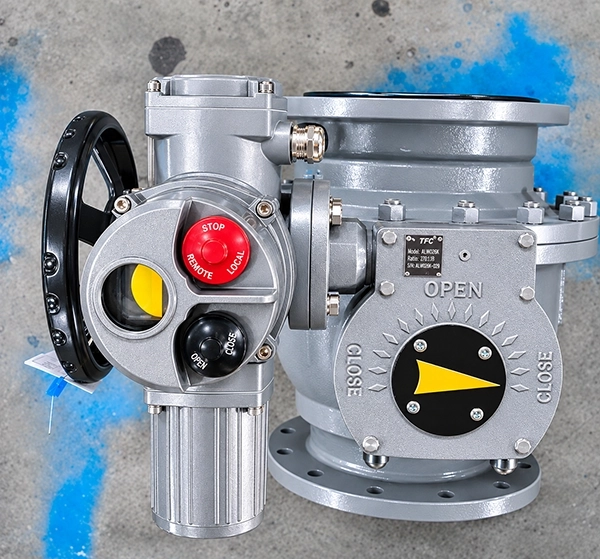
Understanding why the motion requirement comes first — and what goes wrong when buyers skip that step — is what separates a clean specification from a costly one. The sections below walk through that decision logic in the sequence that actually matters.
Does the valve's motion type determine everything?
Most buyers come into a gearbox conversation focused on torque range, mounting standards, or price brackets. The motion requirement rarely leads the discussion — and that is exactly where specification errors begin.
Yes — the valve's stem motion profile is the first and most important variable in gearbox selection. Everything else is secondary. If the motion profile is wrong, the gearbox is wrong, regardless of its torque rating or mounting compatibility.

Before torque numbers, before pricing, before any sourcing comparison, the question is simple: what does the stem actually do? Does it rotate 90° between fully open and fully closed? Or does it travel through multiple full revolutions to open or close?
Quarter-turn motion: 90° and stop
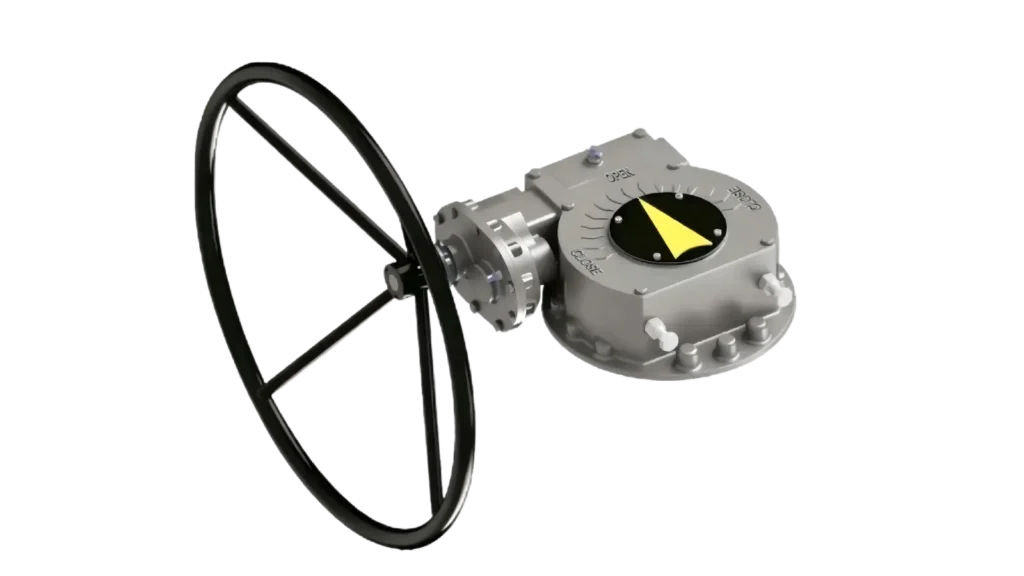
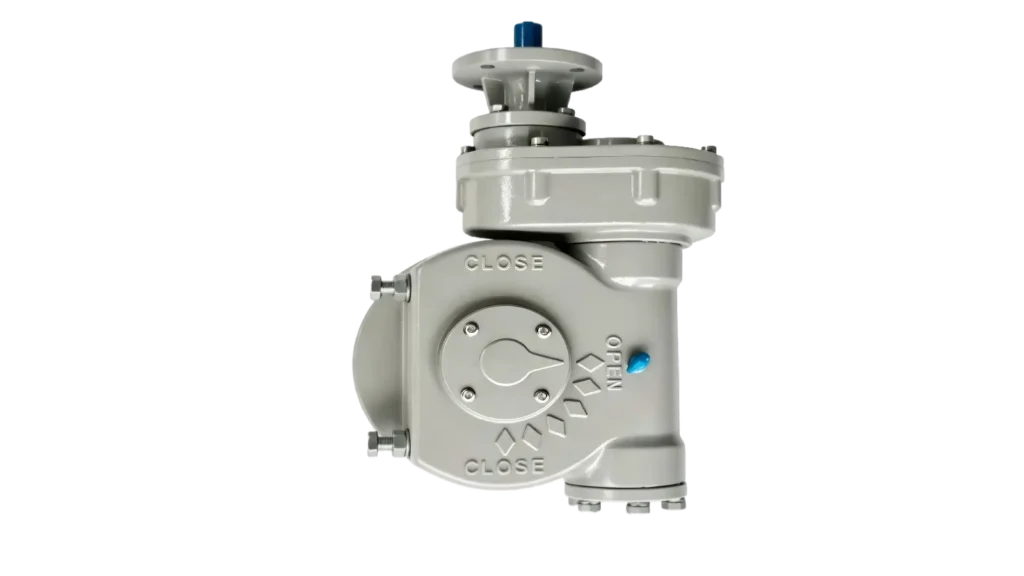
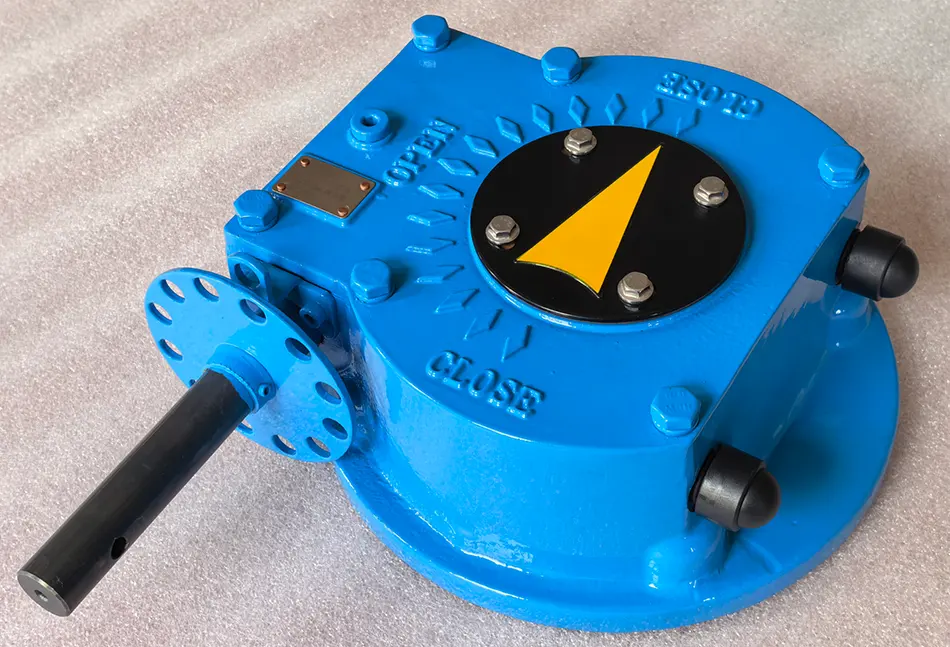
A quarter-turn gearbox operates within a defined 90° arc. The input turns continuously; the output rotates exactly 90° through the worm-and-wheel mechanism, then stops at a hard travel limit.
This motion profile matches:
- Ball valves — the ball bore rotates 90° to align or block flow
- Butterfly valves — the disc rotates 90° between open and closed positions
- Plug valves — the plug element rotates 90° to open or close the port
The gearbox imposes a mechanical stop. There is no travel beyond 90° by design. This is not a limitation — it is the correct mechanical behavior for these valve types.
Multi-turn motion: continuous rotation through full travel
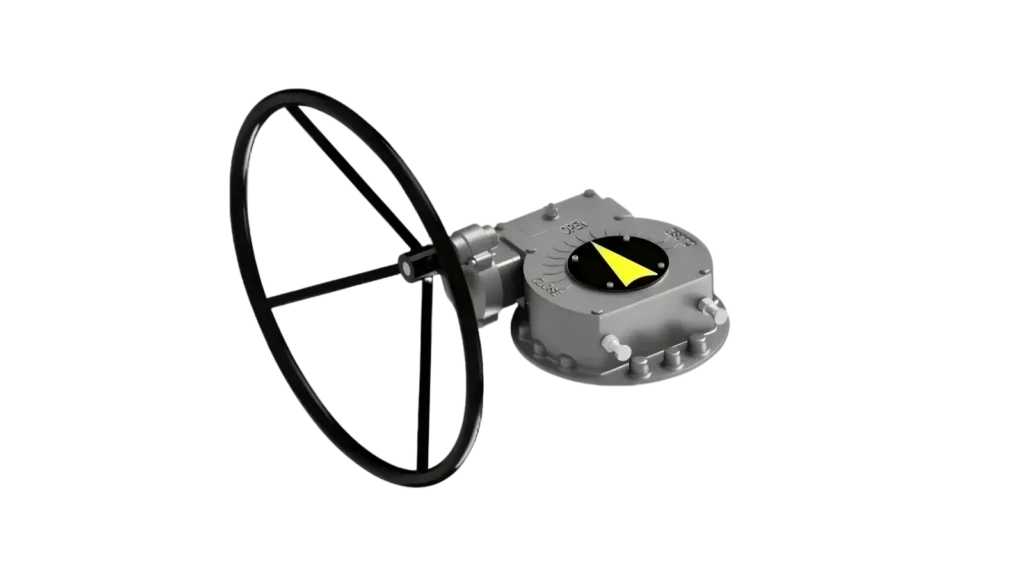
A multi-turn gear operator converts handwheel or actuator input into multiple full output revolutions. The valve stem rises, threads, or otherwise translates through its full stroke across those revolutions.
This motion profile matches:
- Gate valves — the stem threads through a gate mechanism across several turns
- Globe valves — the stem drives a disc or plug through continuous travel
- Rising-stem valves — the stem physically rises as the gearbox turns
A multi-turn operator has no defined 90° stop. It transmits rotation until the valve reaches its mechanical travel limit. The number of turns required depends on the valve's stem pitch and travel length — this is a valve-specific engineering variable, not a gearbox default.
Why this matters before any other specification step
| Variable | Quarter-turn gearbox | Multi-turn gear operator |
|---|---|---|
| Output motion | 90° rotational arc | Multiple full revolutions |
| Travel control | Built-in hard stop | Valve mechanical travel limits |
| Typical valve types | Ball, butterfly, plug | Gate, globe, rising-stem |
| Stem interface | Quarter-turn drive (ISO 5211) | Multi-turn drive socket or stem nut |
| Actuator compatibility | Quarter-turn pneumatic/electric | Multi-turn electric actuator |
If this table is used to compare products side-by-side looking for a "winner," it is being misread. Its purpose is to confirm that these are two incompatible motion systems — not two versions of the same product.
Can you just choose whichever gearbox offers better torque output?
In our experience, this is the most common misframing we encounter in inquiries. A buyer identifies a torque requirement — say, 5,000 Nm — and then asks which product type can deliver it most efficiently. The question sounds reasonable. It leads to the wrong answer every time.
No. Torque output is irrelevant if the motion profile is mechanically incompatible with the valve. A quarter-turn gearbox installed on a gate valve cannot operate that valve, regardless of its torque rating. Motion compatibility must be confirmed before torque calculations begin.

This assumption — that any gearbox producing enough torque will work — is worth examining directly, because it reflects a logic that feels reasonable but fails mechanically.
Why torque comparisons across motion types are meaningless
A quarter-turn worm gearbox converts input torque into 90° of output rotation. A multi-turn gear operator converts input torque into rotational output across many full turns. These are not interchangeable torque delivery mechanisms applied to different applications. They are physically different motion systems with different output shafts, different travel control mechanisms, and different interface requirements.
Comparing their torque specifications as if selecting between two equally applicable options is like comparing a fixed-angle wrench to a ratchet — both deliver torque, but only one is correct for the task.4
Where torque calculation belongs in the process
Torque requirements are real and important. They simply belong at step two, not step one.
The correct pre-selection sequence looks like this:
- Confirm valve type — ball valve, gate valve, butterfly valve, etc.
- Confirm stem motion — 90° quarter-turn or multi-turn rising/non-rising
- Confirm required torque — based on valve size, pressure class, and service conditions
- Confirm actuator interface — manual, pneumatic, electric, or actuator-ready
- Confirm mounting standard — ISO 5211 for quarter-turn, stem nut specifications for multi-turn5
Inquiries that arrive at step three without completing steps one and two require redirection before we can quote responsibly. This is not a commercial constraint — it is basic engineering process.
"Which is easier to source?" is also the wrong question
We occasionally see procurement teams frame the selection as a sourcing problem: which type has shorter lead times or broader supplier availability? This logic imports sourcing convenience into an engineering decision. If a gate valve project selects a quarter-turn gearbox because it was easier to source that week, the result is a mechanically incorrect installation — not a clever procurement shortcut.
What application variables should you confirm before specifying?
Once the motion requirement is established, several downstream variables shape the final gearbox specification. Skipping these produces a technically valid product family selection that still results in a mismatched unit.
Before finalizing a gearbox specification, confirm: valve type, stem motion profile, required output torque, actuator interface (manual or automated), mounting standard, environmental conditions, and whether ISO 5211 compatibility is required. These variables determine the specific model — the motion profile determines the product family.

Quarter-turn gearbox: application variables that matter
For quarter-turn applications, the key variables beyond motion confirmation include:
- Torque range — TFC's quarter-turn worm gearboxes cover from 300 Nm to over 850,000 Nm; application torque must be confirmed by engineering calculation, not estimated
- ISO 5211 flange interface — this standard governs the mounting and drive connection between the gearbox and valve; confirming the valve's flange pattern and drive bore before selection is essential
- Travel stop adjustment — some applications require adjustable or factory-set travel stops; this should be specified at inquiry stage
- Actuator readiness — if the assembly will eventually be automated, the gearbox must be compatible with the intended actuator's torque and mounting interface
Multi-turn gear operator: application variables that matter
For multi-turn applications, the variables shift:
- Number of turns to full open/close — this is determined by the valve's stem pitch and travel length; it must be provided by the valve manufacturer or calculated from drawings
- Stem nut specification — the gearbox output must match the valve stem thread or spline exactly; this is frequently a custom detail
- Handwheel diameter — manually operated multi-turn operators require a handwheel sized for the input torque required; this is a human-factors engineering variable as well as a mechanical one
- Electric actuator interface — multi-turn applications are frequently automated; the gear operator must be sized and interfaced correctly for the actuator's torque and speed output
Environmental and service conditions
Both product families require service condition inputs that affect material selection, sealing specification, and surface treatment:
- Ambient temperature range
- Exposure to corrosive media or outdoor conditions
- Required ingress protection rating
- Paint or coating specification for export or project compliance
Inquiries that provide these details upfront allow the engineering team to confirm compatibility without iterative back-and-forth. Those that skip service conditions typically require a second or third round of technical clarification before a responsible specification can be issued.
Frequently Asked Questions
Can a quarter-turn gearbox be modified to operate a gate valve?
No. A quarter-turn gearbox is mechanically designed to deliver 90° of output rotation with hard travel stops. A gate valve requires multiple full output revolutions to reach full open or closed position. No modification makes a quarter-turn unit mechanically appropriate for multi-turn valve operation. The correct solution is a multi-turn gear operator matched to the valve's stem specification.
How do I calculate how many turns a multi-turn operator needs to deliver?
The number of output turns is determined by the valve stem's thread pitch and the total stem travel length from fully closed to fully open.6 This calculation requires valve drawings or confirmed stem specifications from the valve manufacturer. It is a valve-specific variable — not a gearbox default — and must be confirmed before a multi-turn operator can be properly selected.
Is ISO 5211 relevant to multi-turn gearboxes?
ISO 5211 defines the mounting flange and drive interface standard primarily applied to quarter-turn valve actuators and gearboxes.7 Multi-turn applications typically use stem nut interfaces rather than ISO 5211 flanges. Some multi-turn operators include an ISO 5211-compatible top flange for actuator mounting, but the drive connection to the valve stem follows a different standard. Confirm the specific interface requirement with both valve and actuator specifications before specifying.
What is the most common selection error TFC encounters in customer inquiries?
The most common error is specifying a torque range before confirming valve type and stem motion. Buyers arrive with a torque figure and ask for a matching product — but without confirming whether the application is quarter-turn or multi-turn, we cannot issue a valid selection. The second most common error is assuming that because a gearbox fits physically on a valve, it is mechanically appropriate. Physical mounting and mechanical compatibility are different requirements.
Does TFC offer gearboxes that can handle both quarter-turn and multi-turn applications?
No. These are distinct product families with fundamentally different motion mechanics and output configurations. A single gearbox unit cannot perform both functions. TFC's product range includes both quarter-turn worm gearboxes and multi-turn gear operators — but the application determines which product family is appropriate, and that determination requires engineering confirmation before any configuration is discussed.
Conclusion
Quarter-turn and multi-turn gearboxes are not competing options — they serve mechanically distinct valve motion requirements. The valve's stem motion defines the product family. Everything else — torque calculation, actuator interface, mounting standard, environmental specification — follows from that confirmed starting point. Skipping the motion confirmation and jumping to torque comparisons or sourcing discussions is the step where most specification errors begin.
From TFC's position as a gearbox engineering partner to valve manufacturers, the most reliable inquiries are those that arrive with valve type and stem motion already confirmed. When those variables are clear, gearbox selection is a structured engineering process, not a guessing exercise. If your project has the motion requirement confirmed, the right product family is already obvious — and that is the decision clarity this article was written to deliver.
"7 Engineering Gaps That Increase Cost, Rework & Delays", https://petronashengineering.com/industrial-project-cost-overruns-engineering-rework-delays/. Research on engineering change orders and procurement errors in industrial manufacturing projects consistently identifies misspecification at the design or procurement stage as a significant driver of rework costs and schedule delays. Evidence role: general_support; source type: research. Supports: That engineering specification errors in industrial procurement lead to measurable rework costs and project delays.. Scope note: Available research addresses specification errors in industrial projects broadly; studies specific to valve gearbox misspecification are not widely published in open literature. ↩
"Motor Operated Valves Course - 02", https://www.nrc.gov/docs/ML1134/ML11346A637.pdf. Ball valves, butterfly valves, and plug valves are classified as quarter-turn valves because their closure elements rotate 90° between fully open and fully closed positions; this rotational characteristic is a defining feature of their operating mechanism. Evidence role: definition; source type: encyclopedia. Supports: That ball, butterfly, and plug valves operate through a 90-degree rotational arc of the stem or closure element.. Scope note: General engineering references describe this as a design characteristic; specific torque or travel-stop behavior may vary by manufacturer and valve size. ↩
"What are the differences between Quarter-turn & Multi-turn valves?", https://www.seallonvalve.com/res15. Gate valves and globe valves are classified as multi-turn valves; their stems travel through multiple full rotations to move the closure element across its full stroke, distinguishing them mechanically from quarter-turn valve types. Evidence role: definition; source type: encyclopedia. Supports: That gate valves, globe valves, and rising-stem valves require multiple full stem revolutions to travel between open and closed positions.. Scope note: The exact number of turns varies by valve size and stem pitch and is not a fixed value across all gate or globe valve designs. ↩
"Valve Actuator Matching Guide: ISO 5211, Torque & Signal Compatibility", https://www.folsv.com/blog/how-to-match-valve-actuators-with-existing-pipeline-systems. Industry standards bodies and valve actuator engineering references classify quarter-turn and multi-turn actuators as distinct product categories defined by their output motion profile; the two types are not interchangeable, as their output shafts, travel control mechanisms, and valve interface configurations are designed for fundamentally different stem motion requirements. Evidence role: expert_consensus; source type: institution. Supports: That quarter-turn and multi-turn valve actuators and gearboxes are mechanically distinct product categories with incompatible output motion profiles, not interchangeable torque sources.. Scope note: This classification is well established in actuator engineering practice but is described across multiple standards and manufacturer references rather than in a single consolidated source. ↩
"INTERNATIONAL STANDARD ISO 5211", https://cdn.standards.iteh.ai/samples/62594/99f2c2aed9e24049bf1985c541d19143/ISO-5211-2017.pdf. ISO 5211 specifies the interface dimensions between part-turn actuators and industrial valves, including flange patterns and drive bore configurations, and is the internationally recognised standard governing quarter-turn actuator-to-valve mounting. Evidence role: definition; source type: institution. Supports: That ISO 5211 defines the mounting flange and drive interface for part-turn valve actuators, including quarter-turn gearboxes.. Scope note: ISO 5211 covers part-turn actuators broadly; its specific applicability to a given gearbox model depends on the manufacturer's compliance and the valve's flange pattern. ↩
"Gate Valve Open Thrust Required During Potential Pressure Locking ...", https://www.nrc.gov/docs/ml0036/ml003699420.pdf. The number of output revolutions required to drive a multi-turn valve from fully closed to fully open is a function of the stem thread pitch and total stem travel; this relationship is a standard mechanical engineering calculation applied in valve actuator sizing. Evidence role: mechanism; source type: education. Supports: That the number of turns required for a multi-turn valve operator is derived from the stem thread pitch and total stem travel distance.. Scope note: The specific formula and its inputs must be confirmed from valve manufacturer drawings, as stem geometry varies across valve designs and pressure classes. ↩
"ISO 5211:2017 - Industrial valves — Part-turn actuator attachments", https://www.iso.org/standard/62594.html. ISO 5211, published by the International Organization for Standardization, defines the dimensions and tolerances of the interface between part-turn actuators and industrial valves, including flange face dimensions, bolt circle patterns, and drive bore configurations. Evidence role: definition; source type: institution. Supports: That ISO 5211 is the internationally recognised standard specifying the interface between part-turn actuators and industrial valves.. Scope note: Compliance with ISO 5211 is manufacturer-declared; the standard does not itself certify individual products, and users should confirm conformance with the specific gearbox and valve supplier. ↩